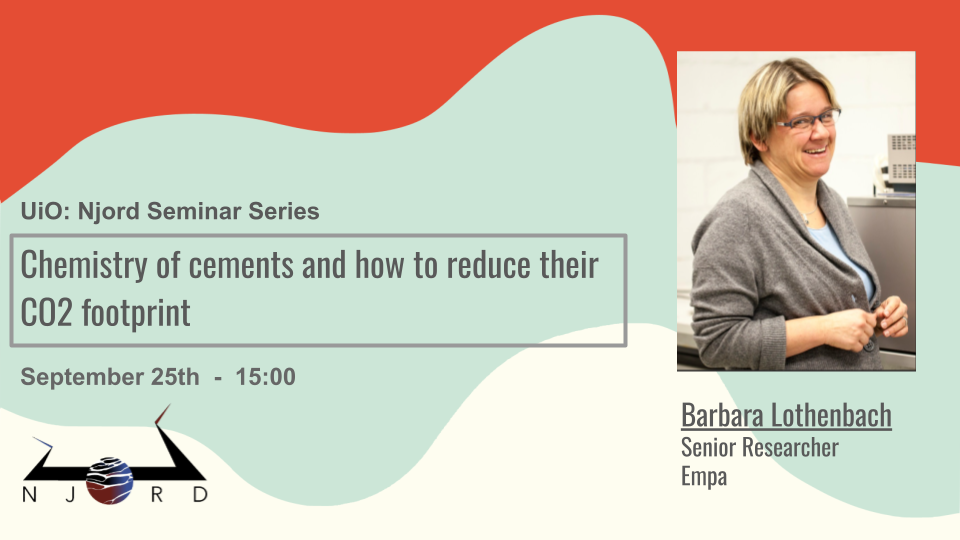
Chemistry of cements and how to reduce their CO2 footprint
Concrete is the world’s most widely used construction material, and demand continues to increase with population growth, urbanization, and infrastructure development. At the same time, cement production, which accounts for about 8% of global CO₂ emissions, is expected to rise substantially by 2050. While supplementary cementitious materials such as slag, fly ash, calcined clays, and limestone can significantly lower the carbon footprint of concrete, the availability of key industrial by-products is declining. Alternative binders, including calcium sulfoaluminate and alkali-activated cements, offer promising solutions but face economic and environmental challenges. Consequently, limestone-free magnesia (MgO)-based cements have attracted increasing interest as a low-carbon binder technology.
Among these, magnesium carbonate cements are particularly promising because they harden through CO₂ uptake and can theoretically sequester up to 1 tonne of CO₂ per tonne of MgO. Their strength development is associated with hydrated magnesium carbonate phases rather than brucite. Blending reactive MgO with hydrated magnesium carbonates, especially hydromagnesite or nesquehonite, enables strength development under ambient conditions through the formation of hydrous carbonate-containing brucite (HCB), a poorly crystalline binding phase.
At the same time, improving the durability of concrete is essential for reducing its environmental impact. Longer-lasting structures require fewer repairs, replacements, and reconstruction, thereby reducing cement consumption and associated CO₂ emissions. Premature deterioration caused by chloride ingress, carbonation, sulfate attack, reinforcement corrosion, or alkali-silica reaction (ASR) can significantly shorten service life. ASR results from the reaction of cement alkalis with reactive silica in aggregates, producing expansive products that induce cracking in concrete. Recent measurements using an extended Surface Force Apparatus demonstrated that dissolved silica and calcium can generate solidification pressures of 6-13 MPa, sufficient to crack aggregates and drive the expansion of ASR-affected concrete. Understanding such degradation mechanisms is critical for designing durable, low-carbon concrete and cementitious materials
Short Bio: Barbara Lothenbach is a distinguished Senior Researcher and Head of Cement Chemistry and Thermodynamics Group at Empa's Laboratory of Concrete and Asphalt, where she has worked since 2002. She is also Associate Professor at the University of Berne and Adjunct Professor at the Norwegian University of Science and Technology (NTNU). Based at Empa in Dübendorf, Switzerland, she is internationally recognized for her expertise in cement chemistry, sustainable construction materials, and the long-term performance of cementitious systems. Her research focuses on the hydration, durability, and environmental impact of cement-based materials, contributing to the development of low-carbon and resource-efficient construction solutions. Through her scientific leadership, collaborative projects, and extensive publication record, she has played a significant role in advancing knowledge and innovation in sustainable cement and concrete technologies.
To get news, invitations to seminars and more from Njord, please go here to subscribe to our newsletter.