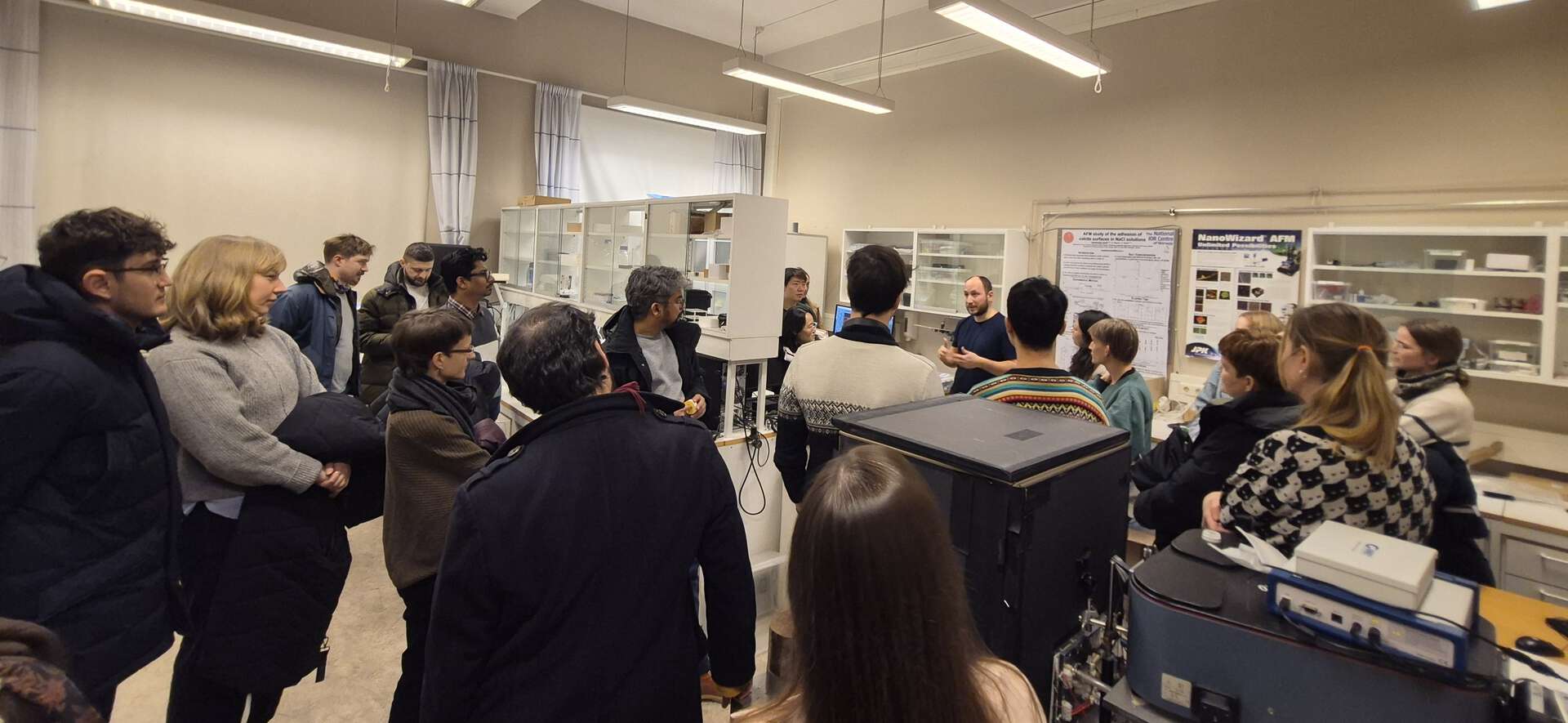
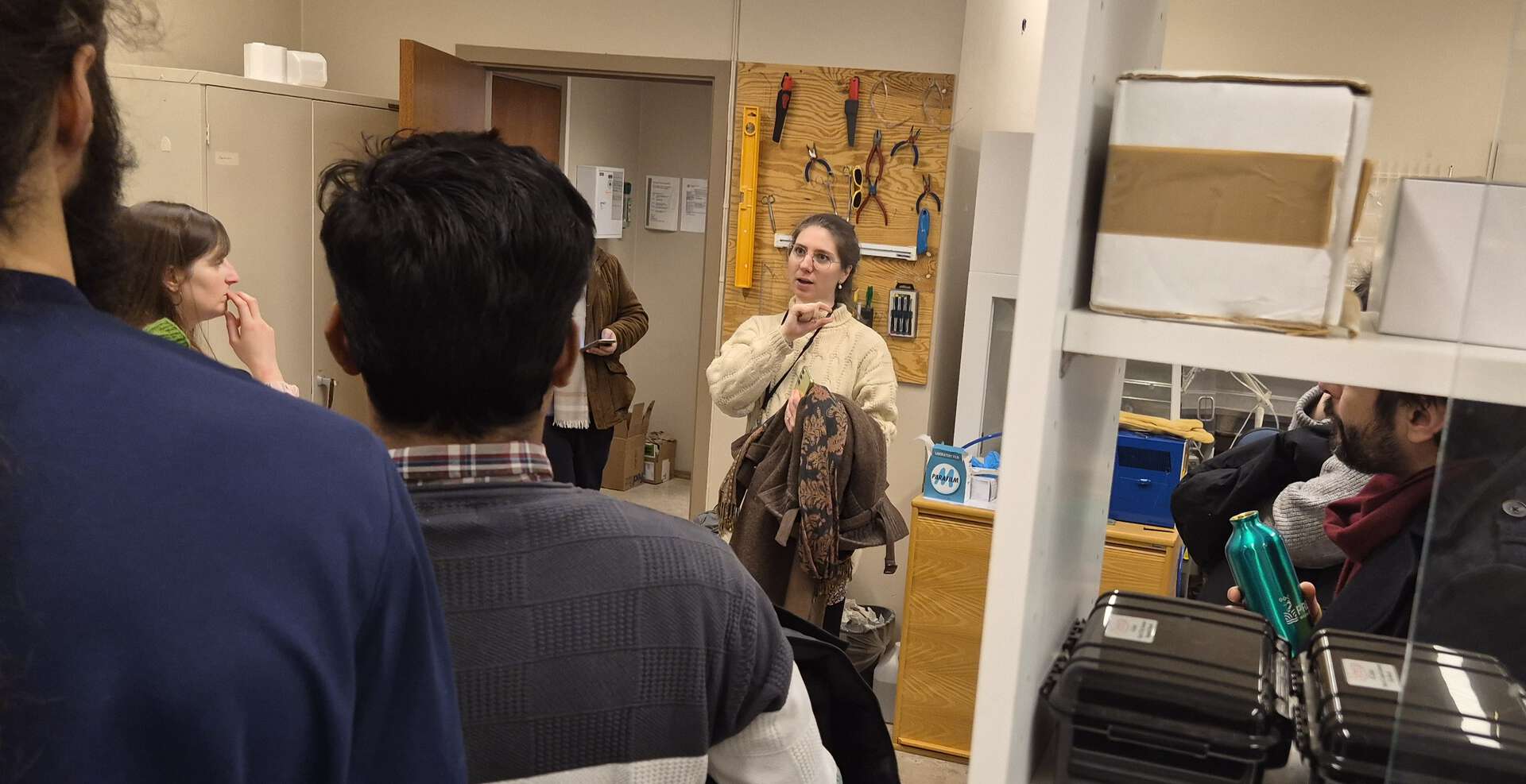
We had a great time sharing what we’re working on with colleagues from the Njord Lab. Together, we explored how our two current projects, REACT and VICCO, bring geoscience, chemistry, and physics together to understand how minerals and rocks behave at the smallest scales.
Viktoria (REACT) and Anton (VICCO) presented their newly launched projects, which use two powerful instruments: a surface forces apparatus (SFA) and an atomic force microscope (AFM). These tools allow us to zoom in from nanometers to micrometers to see how minerals recrystallize and form new structures, including in small pores under strong geometrical confinement.
By studying these processes up close, we can learn how precipitating minerals influence the strength and cohesion of porous rocks and identify the preferential sites for mineral precipitation inside rocks — knowledge that can help us better understand everything from CO2 mineralization inside basalts to geological changes in upper-crust rocks transformed by percolating fluids, as well as the transformation of mineral-based materials such as concrete.