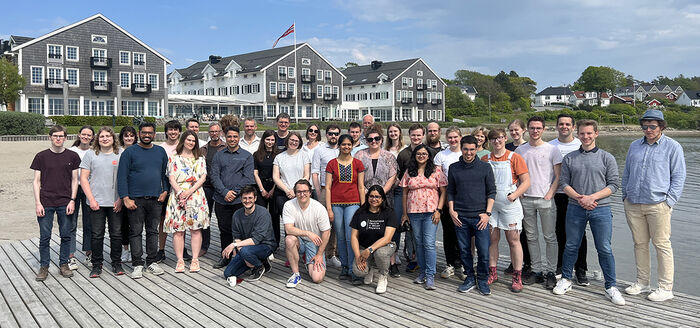
Today, the Rosseland Centre for Solar Physics (RoCS) celebrated its 7th anniversary as a Centre of Excellence, commemorating seven years of groundbreaking research and global collaboration in solar physics.
2024
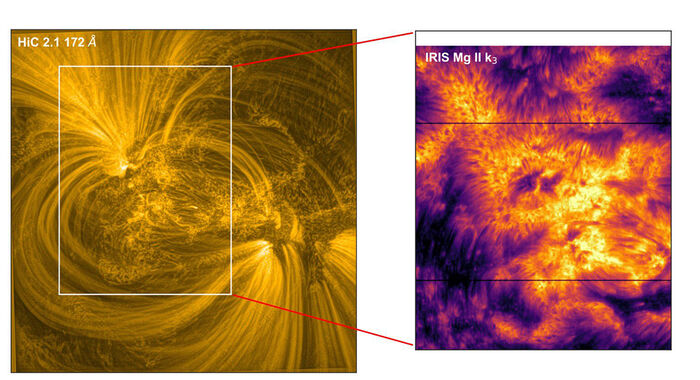
For two weeks, both ground-based and space telescopes collaborated to capture the evolution of an active region, providing unprecedented insights into our Sun.
Solar researchers at RoCS have come closer to finding an answer.
- My name is Prasanta Gorai and my research focuses on the impact of evolved stars on galactic chemical enrichment.
The ESA-led Solar Orbiter has detected the largest solar flare of the cycle, highlighting the importance of observing the Sun from all sides to improve space weather forecasting.
ESA’s Solar Orbiter has linked solar wind measurements with high-resolution images of the Sun’s surface, enabling solar physicists to trace the origins of the solar wind more accurately.
- My name is Elisabeth, and I’m from Os. I am pursuing a joint PhD between RoCS and the University of St Andrews in Scotland.
The sixth annual report of the Rosseland Centre for Solar Physics (RoCS) was published on April 1st. With 61 individuals from 19 different nationalities across three continents, the researchers at this Center of Excellence continue to maintain a high pace.
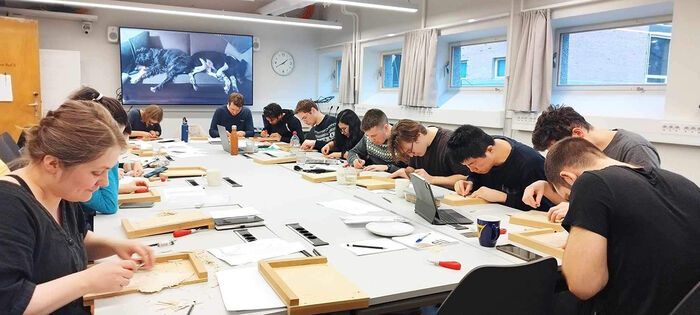
REAL art artist Laila Kongevold, geologist Henrik H. Svensen, and RoCS PhD candidate Mats Ola Sand invited students and researchers to a printmaking workshop.
Receiving recognition for years of dedicated work is a significant milestone in any career. RoCS' Postdoctoral Fellow, Nicolas Poirier, shares his reflections on what it means to him.