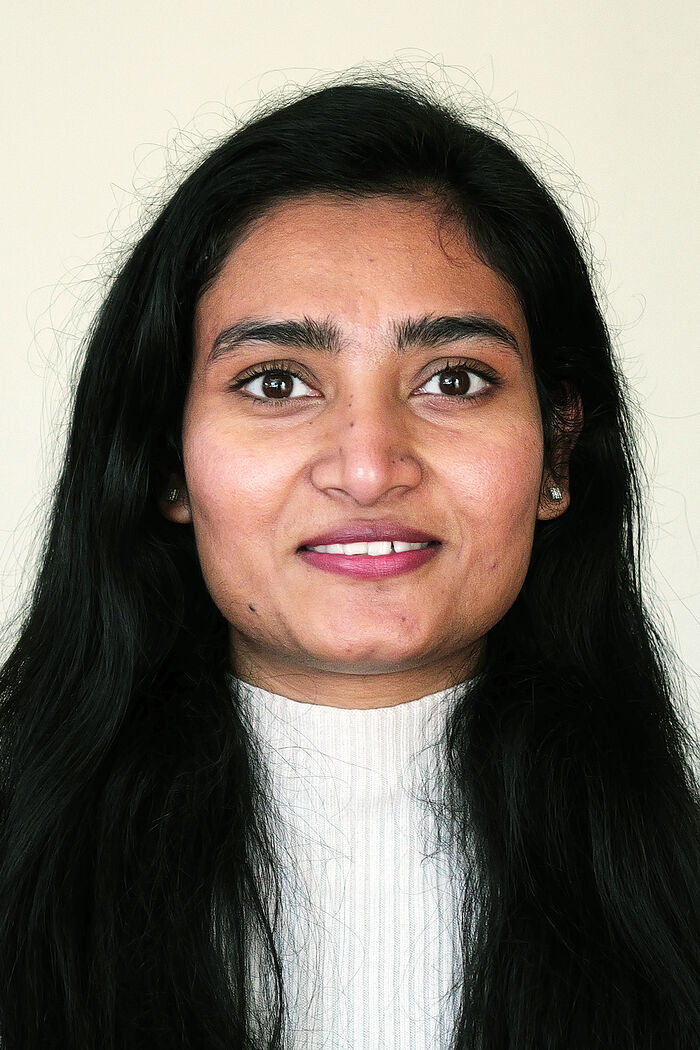
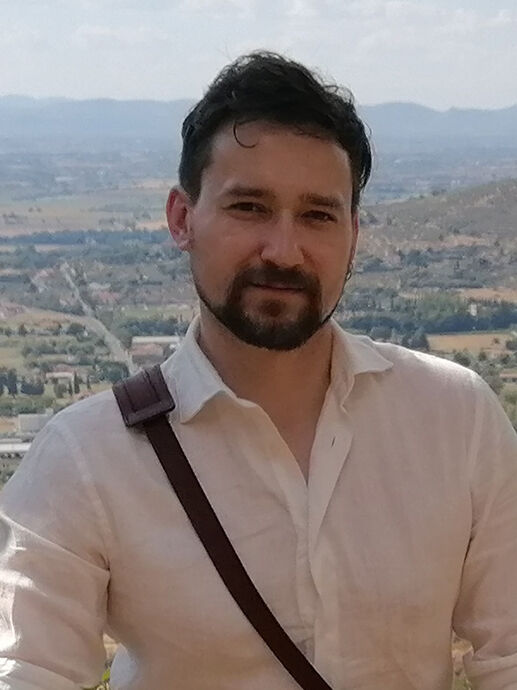
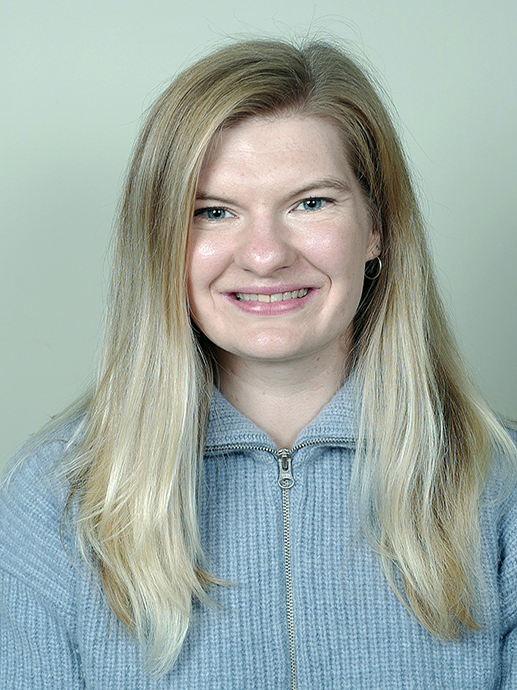
Coming from the sunny shores of Tenerife to the changing seasons of Norway, doctoral research fellow Oscar Soler is embarking on a new adventure—exploring the physics of our closest star at the Rosseland Centre for Solar Physics (RoCS).
News
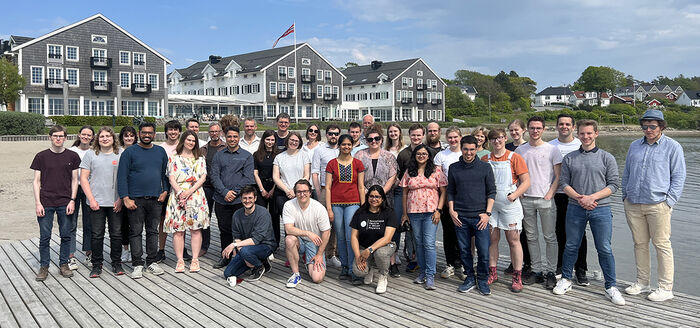
From 21 to 24 September 2026, the ISWAT team studying the origins of spectral irradiance held its annual meeting at RoCS.
Experiencing a total Solar eclipse is a highlight for many solar physicists. For RoCS researchers Reetika Joshi, Pooja Devi and Guoyin Chen, the Solar MHD 2026 meeting in A Coruña combined scientific discussions on solar eruptions with a spectacular total Solar eclipse on the Spanish coast.
A planned centre on the Sun and space weather has been invited to submit a full application in the Research Council of Norway’s Centres of Excellence (SFF) call.
The Sun’s invisible magnetic fields shape everything from solar flares to space weather at Earth. At RoCS, postdoctoral fellow Harsh Mathur is developing new tools to read these fields from the light we observe.
The SST’s exceptional spatial and temporal resolution is a key reason she chose to work at RoCS. Meet Pooja Devi, postdoctoral researcher.
Algerian solar physicist visited Rosseland Centre for Solar Physics.
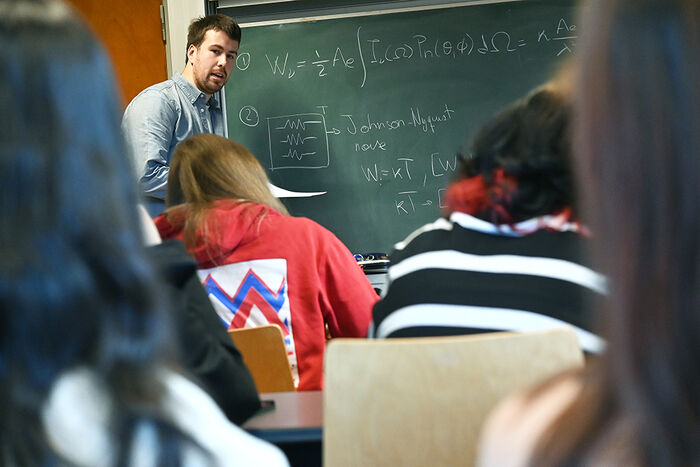
– Good teaching sparks curiosity and makes a difference, says Ignasi Josep Soler Poquet.
The Research Council of Norway has awarded a FRIPRO Young Researcher grant of NOK 10 million to ReCon² — "Resolving the Solar Convective Conundrum," led by Andrius Popovas at RoCS - Rosseland Centre for Solar Physics.
With a diverse academic background across several countries, Yixiao Zhou primarily focuses on computational stellar physics.
The prestigious 2025 Giancarlo Noci Early Career Researcher Prize has been awarded to Valeriia Liakh at RoCS.
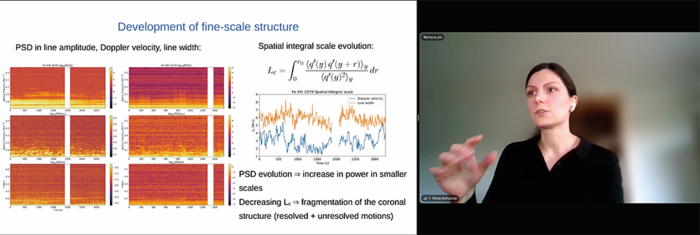
Researcher Petra Kohutova, who has been with RoCS since 2018, receives funding for the project MultiSCORE: Multi-Scale Structure of the Coronal Environment.
With a rich academic background from esteemed institutions, Valeriia Liakh's work is driven by her passion for computational plasma astrophysics.
Dean Solveig Kristensen signed a collaboration agreement at the Italian embassy in Oslo on May 12. This marks an important milestone for space weather forecasting in both Norway and Italy.
Five years into its mission, Solar Orbiter has captured a stunning new image of the Sun. This detailed view reveals the Sun’s million-degree hot atmosphere, known as the corona, as seen in ultraviolet light.
Meet Aline Rangøy Brunvoll: A doctoral research fellow at RoCS taking on solar mysteries.
Semya Amouche Tønnessen joined RoCS with a strong foundation in computational science and practical experience in solar research.
Today, the Rosseland Centre for Solar Physics (RoCS) celebrated its 7th anniversary as a Centre of Excellence, commemorating seven years of groundbreaking research and global collaboration in solar physics.
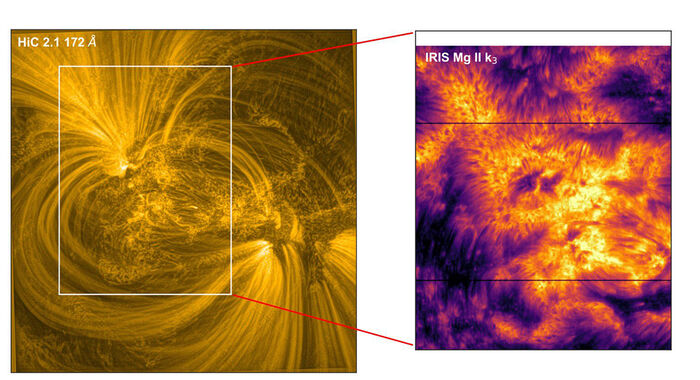
For two weeks, both ground-based and space telescopes collaborated to capture the evolution of an active region, providing unprecedented insights into our Sun.
Solar researchers at RoCS have come closer to finding an answer.
- My name is Prasanta Gorai and my research focuses on the impact of evolved stars on galactic chemical enrichment.
The ESA-led Solar Orbiter has detected the largest solar flare of the cycle, highlighting the importance of observing the Sun from all sides to improve space weather forecasting.
ESA’s Solar Orbiter has linked solar wind measurements with high-resolution images of the Sun’s surface, enabling solar physicists to trace the origins of the solar wind more accurately.
- My name is Elisabeth, and I’m from Os. I am pursuing a joint PhD between RoCS and the University of St Andrews in Scotland.
The sixth annual report of the Rosseland Centre for Solar Physics (RoCS) was published on April 1st. With 61 individuals from 19 different nationalities across three continents, the researchers at this Center of Excellence continue to maintain a high pace.