

Background
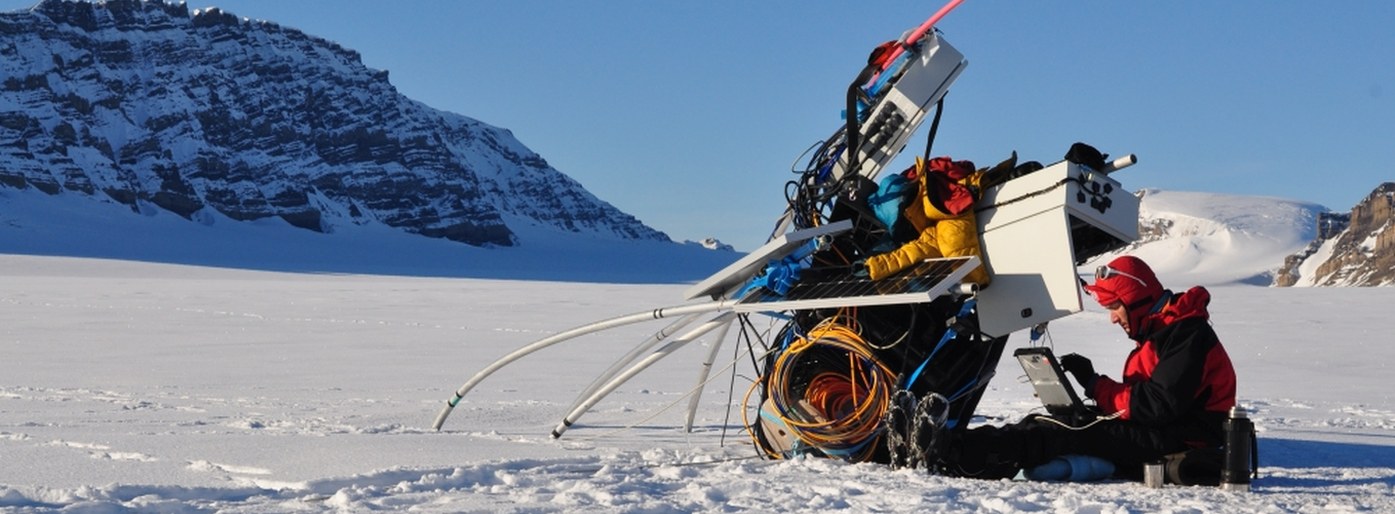
While advances in satellite remote sensing have revolutionized our ability to monitor cold region environments, and especially the cryosphere (e.g., snow, glaciers, permafrost), direct in-situ field observations are important for the understanding of these regions and to validate remote sensing data. Thus it is important to train a workforce that can undertake accurate field measurements in northern regions where field measurements are often complicated by challenging weather conditions and remoteness. Students undertaking fieldwork for their thesis work often have no or little training in field safety and field instrumentation prior to their field campaigns.
FieldEX addresses this gap by (a) developing and running its own specialized field courses, (b) funding graduate students to participate in existing field courses at partner institutions, (c) supporting the participation of students in fieldwork with project partners, and (d) producing open-source best practice guides for cold region field measurements.
Objectives
- Improve the field skills, preparedness and safety training of graduate students working in cold climate regions with the ultimate goal to train a workforce that can undertake accurate field measurements in cold region environments
- Develop sustainable courses and relationships.
- Create open-source material for the wider scientific community on best practices for field measurements.
FieldEX Activities
Only students actively enrolled in a MSc or PhD student program at any of the partner universities are eligible to partcipate in the FieldEx exchanges and field work opportunities. Students (co-)advised by any of the project partners and students who plan to work on topics related to their FieldEx exchange will be prioritized. Norwegian-based students can join field campaigns or take classes at any of the partner institutions abroad, while students from the partner universities outside Norway can only participate in field activities and classes organized by Norwegian partner institutions.
The list of activities below will continously be updated as new field and course opportunities emerge. Where appropriate, active participation in field campaigns by partner institutions may shape the scope of your thesis and lead to the integration of the collected data into your thesis.
You apply by filling in this form. Please refrain from submitting the form again if there are any changes on your end. Instead, just return to your previous submission and update any entries that require adjustments.
1. Participation in field expeditions
Field expeditions for students based in Norway
NEW 9/2026
Fieldwork in Yukon (by University of Ottawa)
Location: Kluane National Park, Yukon
When: 1-2 weeks in July or August 2027 and possibly 2028.
Description: The fieldwork is part of a long-term project to monitor changes in the dynamics, mass balance and hydrology of glaciers in the St. Elias Mountains, Yukon, Canada. Fieldwork mainly involves servicing and downloading GNSS stations, timelapse cameras and weather stations, and undertaking air photo surveys. It may also include assisting with geophysical measurements and hot water borehole drilling on Dan Zhur (Donjek) Glacier as part of a joint project with Christine Dow, University of Waterloo. Accommodation and food will usually be at Kluane Lake Research Station, with fieldwork undertaken as day trips by helicopter or ski plane. The field work may be combined with participation in the field course offered in 2027 at Kluane Lake Research Station (see course under "University courses" below). It is also possible to design a MSc thesis topic based on the field work and existing data related.
Requirements: Participating students must have completed the minimum of a standard First Aid/CPR course within the past 3 years, and have some documented skills in glacier safety techniques. Participants must possess the physical fitness for long days in the field, be comfortable flying in helicopters and small aircraft, and have proper clothing and backpack including warm clothing and boots suitable for crampons.
How to apply: Fill in this form and email the contact (with cc to R Hock) that you filled in the form.
Contact: Luke Copland (luke.copland @ uottawa.ca)
Fieldwork in the Alaska Range (by University of Alaska Fairbanks)
Location: Canwell Glacier, Alaska, USA
When: 5-7 days during summer/fall 2026-2028, possibly longer in spring 2026
Description: Fieldwork is part of a long-term project to monitor snow pack changes in a proglacial and glacial area. This will involve regular UAV surveys, timelapse cameras, weather stations, and snow pack monitoring. Other possible research targets are slope instabilities and thermal characterization of glacial debris cover. Regular trips will be via car from Fairbanks and snow machine for field access. Participants will camp. Further details to be determined.
Requirements: Participating students must have completed the minimum of a standard First Aid/CPR course within the past 3 years, and have some documented skills in glacier safety techniques, if the project requires glacier access. Participants must possess the physical fitness for long days in the field, be comfortable traveling on a snow machine (in relatively easy terrain), and have proper clothing for potentially very cold and wet conditions.
How to apply: Fill in this form and email the contact (with cc to R Hock) that you filled in the form.
Contact: Martin Truffer (mtruffer2 @ alaska.edu)
Fieldwork in the Chugach Mountains, Alaska (by DGGS)
Location: Barry and Cascade glaciers, Alaska, USA
When: 5-7 days during summer/fall 2026, possible in 2027.
Description: Fieldwork is part of a long-term project to monitor glaciological and hydrometeorological variables near a large paraglacial landslide complex in Barry Arm fjord. This will involve airborne lidar, ice-penetrating radar, and photogrammetric surveys, timelapse cameras, weather stations, and snow pack monitoring. Other possible research targets are other glacier-related slope instabilities in Prince William Sound, Alaska. Seasonal trips will be via car/air from Fairbanks to Anchorage/Whittier, Alaska, then by air/boat from those locations. Duration is several days with house or hotel lodging. Fieldwork is highly weather dependent with detailed plans to be determined closer to the time of seasonal campaigns.
Requirements: Participating students must have completed bear and firearm training, or be available to enroll in local training courses, and must have the minimum of a standard First Aid/CPR course within the past 2 years, and have some documented skills in glacier safety techniques, if the project requires glacier access. Participants must possess the physical fitness for long days in the field, be comfortable working on skis or snowshoes, willing to travel by fixed-wing or rotary aircraft and boat, and have proper clothing for potentially very cold and wet conditions.
How to apply: Fill in this form and email the contact (with cc to R Hock) that you filled in the form (no need to repeat the information in the form).
Contact: Gabriel Wolken, DGGS/UAF (gjwolken @ alaska.edu)
Fieldwork in Patagonia (by Hokkaido University)
Location: Southern Patagonia Icefield
When: Ca. 3 weeks (likely around 1 December to Christmas 2026)
Description: Fieldwork at Grey Glacier and its progracial lake Lago Greve is planned as a part of a project funded by JSPS (Japan Society for the Promotion of Science). Various field measurements will be performed, including hot-water drilling, borehole measurements, GPS, radar, lake survey and sampling.
Requirements: Participants should have experiences of field activity in a cold environment. They are also expected to have physical fitness, proper clothes and boots for glacier fieldwork.
How to apply: Fill in this form and email the contact (with cc to R Hock) that you filled in the form (no need to repeat the information in the form).
Contact: Shin Sugiyama (sugishin @ lowtem.hokudai.ac.jp)
Fieldwork in Ecuador (by Carnegie Mellon University, USA)
Location: Cayambe, Ecuador, possibilities for other locations in Ecuador
When: 10-14 days in January 2027 and 2028
Description: Fieldwork is part of an NSF-funded project that seeks to improve estimates of glacier runoff for downstream water resources. Fieldwork will include the deployment of automatic weather stations, ablation stakes, GNSS systems, and potentially other sensing systems related to glacier mass change or related measurements (e.g., albedo or ice thickness).
Requirements: Participating students must possess the physical fitness for long days in the field and document skills in mountaineering and glacier safety techniques. The student must be prepared for high altitudes (upwards of 5000 m) and should be aware of specific challenges and illnesses that come with high altitude fieldwork. The student must have proper clothing and backpack including waterproof clothing and boots suitable for crampons. Students may need to spend a few days in Pittsburgh prior/after the fieldwork. Students are potentially welcome to stay longer in Pittsburgh prior or after the fieldwork and may be provided with office space, although this requires special approval that must be obtained months in advance.
How to apply: Fill in this form and email the contact (with cc to R Hock) that you filled in the form (no need to repeat the information in the form).
Contact: David Rounce (drounce @ andrew.cmu.edu)
Fieldwork in Greenland (by Hokkaido University)
Location: Qaanaaq in northwestern Greenland
When: 2-3 weeks in July-August 2027-2029
Please note that due to very high travel costs to Qaanaq, we may only be able to accept a FieldEx student if additional external funding can be secured.
Description: Fieldwork is a part of a Japanese Arctic research project from 2025 to 2030. Various field measurements, including mass balance and ice speed, will be conducted on Qaanaaq Glacier near the village of Qaanaaq. Requirements: Participants should have experiences of field activity in a cold environment.They are also expected to have physical fitness, proper clothes and boots for glacier fieldwork.
How to apply: Fill in this form and email the contact (with cc to R Hock) that you filled in the form (no need to repeat the information in the form).
Contact: Shin Sugiyama (sugishin @ lowtem.hokudai.ac.jp)
Field expeditions for students based in Canada, USA, Japan
Field work in mainland Norway (by NVE)
Location: Jotunheimen, southern Norway, possibilities for other locations in mainland Norway.
When: 2-5 days in early August (stake measurements and hut maintenance) or 2-5 days in September (glacier measurements) in 2027 and 2028
Description: The field work is part of regular mass balance measurements of NVE and the Copernicus project of NVE. Field work includes mass balance and front variation measurements (stake reading, snow measurements, snow line mapping, glacier outline mapping).
Requirements: A completed 5-day glacier course is required as basic skills. Participating students must possess the physical fitness for long days in the field and document mountaineering experience. The student must have proper clothing and backpack including waterproof clothing and boots suitable for crampons. Students will probably need to spend a few days in Oslo prior/after the field work. Students are welcome to visit NVE prior or after the field work.
Webpage: NVE website (see Safety on and near glaciers - NVE)
How to apply: Fill in this form and email the contact (with cc to R Hock) that you filled in the form (no need to repeat the information in the form).
Contact: Liss M. Andreassen (lma @ nve.no)
Field work in Svalbard (by Univ. of Oslo)
Location: Ny Ålesund in northwestern Svalbard
When: 2-3 weeks in April/May each year 2026-2028
Description: Various field measurements including mass balance and ice speed will be conducted on Kongsvegen glacier and neighboring glaciers near the Ny Ålesund research station.
Requirements: Participants should have field experiences in a cold environment and have adequate physical fitness.
How to apply: Fill in this form and email the contact (with cc to R Hock) that you filled in the form (no need to repeat the information in the form).
Contact: Thomas Schuler (t.v.schuler @ geo.uio.no)
2. University field courses at partner universities
University courses abroad for students based in Norway
GEG4100 Glaciology (in Iceland by University of Ottawa)
Location: Southern Iceland
When: 9 days in mid- to late-May each year (next course in May 2028)
Credits: 3 credits in uOttawa system (equivalent to 5 ECTS)
Number of students: 16 total for course, 1 or 2 places available for FieldEx students
Level: Senior Bachelor’s level, but MSc and PhD students can join Description: The aim of the course is to provide an introduction to glaciology, with a particular focus on field observations and measurements. The majority of the course will take place during a field trip to southern Iceland, with daily visits to explore glaciers, glacial lakes, volcanoes and previously glaciated areas. Lectures will be held ahead of time (in hybrid format, with in-person or Zoom attendance) to provide a theoretical grounding in glaciology and to provide background information for the field trips. The course will include a review of the impacts of climate change on glaciers in this region, as well as the unique interactions between volcanoes and glaciers in Iceland and associated natural hazards.
Further information: see Website and course description for 2026
Application deadline: Dec. 1 annually (but not in 2027)
Contact: Luke Copland
NEW 9/2026
GEG4001 Northern Field Research (in Yukon Territory, Canada, by University of Ottawa)
Location: Kluane Lake Research Station, Yukon, adjacent to Kluane National Park
When: 3 weeks in 2027
Credits: 6 credits in uOttawa system (equivalent to 10 ECTS)
Number of students: 12 (1 slot available for FieldEx student student)
Description: The course covers topics such as glacier dynamics, snow properties, permafrost, river measurements, lake sampling and hydrology. It provides an introduction to the physical geography of northern Canada and Alaska, with a particular focus on field research and field measurement techniques. The Kluane region contains some of the largest mountains and glaciers in Canada. The course will involve daily field excursions, with supplemental laboratory work and lectures to help understand the field measurements. A 5-day trip to the Icefield Discovery camp close to Mt. Logan will be made for the ice, snow and mountain safety parts of the course. Access to this site is provided by ski plane. A 5-day trip to Alaska is made at the end of the course. The course can also be combined with the field work opportunity at Kluane Lake Research Station (see above).
Level: Senior Bachelor’s level, but MSc and PhD students can join
Further information: TBD
Application deadline: December 1, 2026
Contact: Luke Copland (luke.copland @ uottawa.ca)
Snow and Ice Field Course in Moshiri (in Japan by Hokkaido University)
Location: Moshiri in northern Hokkaido, Japan
When: 4 days in the 3rd or 4th week in January
Credits: 2 credits in the Japanese university system (equivalent to 5 ECTS?)
Number of students: ~10-15 students in total (~1-2 students from FieldEX)
Level: Master course level (PhD students can join)
Description: Moshiri, a small village in northern Hokkaido, is well known for deep snow and cold temperature in winter time. This course offers an opportunity to experience field measurements under a cryospheric environment, temperature below -20°C and snow depth of 2 m. The program includes snow pit measurements, snow survey in a mountain, and climatic observations. These activities offer unique experiences to learn cryosphere science in the coldest and snowiest area of Japan. Participants will be accommodated in cozy lodging offered by Forest Research Station in Moshiri, Hokkaido University.
Further information: See website
Application deadline: The schedule and application deadline will be announced in November.
Contact: Shin Sugiyama (sugishin @ lowtem.hokudai.ac.jp)
Swiss Alps Glacier Field Course (in Switzerland by Hokkaido University)
Location: Switzerland
When: 2 weeks from end August to early September
Credits: 2 credits in the Japanese university system (equivalent to 5 ECTS?) Number of students: ~10 students in total (1-2 students from Field EX)
Level: Master course level (PhD students can join)
Description: This two weeks field course visits Switzerland to study glaciers and glacierized landscape in the Swiss Alps. The participants work on beautiful Swiss glaciers for field measurements and observations. The program includes lectures on glaciers and climate offered by professors in ETH, visits of research institutions in Switzerland and presentation of field data collected during the course.
Further information: See course website, Course description in 2025 (description for 2026 coming soon), photo album (2025), video (2025),
Application deadline: No specific date but indicate interest to R Hock and the contact asap.
Contact: Shin Sugiyama (sugishin @ lowtem.hokudai.ac.jp)
More courses may be listed in the future.
University courses in Norway for students based in Canada, USA, Japan
GE4-303 Snow science and avalanches (Sogndal)
Location: Western Norway University of Applied Sciences, campus Sogndal
When: 7-8 weeks full-time in Jan-Feb each year
Credits: 10 ECTS
Number of students: up to 25 students
Level: MSc students
Description; The course includes three modules: (1) snowpack processes, (2) avalanche formation and (3) avalanche hazard evaluation and mitigation. In the first module, students follow the snow on its way from the atmosphere to the ground with attention to processes leading to formation of layers in the snowpack. In the field, students get snow pit training and learn to differentiate layers in the snow with respect to grain size, grain shape, hardness, density and humidity. In the second module, students work with the physics behind snowpack stability and avalanche formation including snow mechanics and fracture mechanics. On one to two field days students evaluate snowpack instability and spatial variability through a variety of stability and shear tests. In the third and final module, students become familiar with the general risk management approach, avalanche forecasts, protection measures, hazard zoning including snow avalanche dynamics and modelling. Risk management approach and protection measures are exemplified during a one day field excursion.
Further information: See course website
Application deadline: 1 December, annually
Contact: Denise Rüther (Denise.Christina.Ruther@hvl.no) (cc to Thorben Dunse)
PL4-303 Runoff Management (Sogndal)
Location: Western Norway University of Applied Sciences, campus Sogndal
When: 7-8 weeks full-time in Mar-April each year
Credits: 10 ECTS
Number of students: up to 25 students
Level: MSc students
Description: Climate change affects the hydrological cycle and water balance from a catchment to global scale. More frequent extreme weather events along with population growth and urban compaction call for new approaches in water-resource and stormwater management. The course aims to provide students with knowledge about the principles of physical hydrology, which then form a basis for knowledge-based runoff management. Students will gain an understanding of the physical processes that govern the movement and storage of water within a catchment and learn to quantify hydrological variables, such as river discharge, from both field observations and calculations. Through seminars and case-based project assignments, this course provides students with skills to assess hydrological problems and make recommendations about strategies and plans for urban and rural runoff management that mitigate the challenges of climate change.
Further information: See course website
Application deadline: 1 December, annually
Contact: Thorben Dunse (Thorben.Dunse@hvl.no)
GE4-306 Natural hazards in spatial planning (Sogndal)
Location: Western Norway University of Applied Sciences, campus Sogndal
When: 7-8 weeks full-time in May-June each year
Credits: 10 ECTS
Number of students: up to 25 students
Level: MSc students
Description: The course provides the student with insights into different kinds of natural hazards. Focus is laid on geohazards and hazard types that may be sensitive to climatic factors and changes, e.g. landslides, floods and wildfires. In addition, the course gives insights into processes that, in turn, may affect weather and climate. Examples of these phenomena are investigated further during practical exercises. An important part of the training aims to enable the student to recognize and understand the potential danger of natural hazards and assess their risk. This training allows the student to evaluate the need for mitigation measures and the potential in risk reduction for different types of measures.
Further information: See course website
Application deadline: 1 December annually
Contact: Paula Snook (Paula.Snook@hvl.no) (cc to Thorben Dunse)
More courses to be listed soon.
3. Short FieldEX field courses/excursions
As part of FieldEX we will develop and organize 5 short courses (with approx. 1 week duration) during 2025 to 2028, each with student participation from all participating partner countries
Drones, radar, time-lapse cameras, and velocity tracking, 2027 (Canada)
- Barrier Lake Field Station, Kananaskis, Alberta, Canada.
- 28 June - 4 July 2027. | Organized by: Copland, Dow.
- This course will focus on practical and theoretical training on the operation of drones, radar, time-lapse cameras and velocity tracking systems. Drones will be used to produce high resolution orthophotos and digital elevation models to determine surface change. Terrestrial and airborne radar will be used to measure properties of snow, glacier and permafrost terrain.Time-lapse cameras and low-cost velocity trackers will be constructed suitable for measuring surface change (e.g., glacier motion, iceberg drift, movement of unstable slopes) using open source hardware and software.
- Course is open to MSc and PhD students from all partner universities. Approx 16 participants are expected. Costs including transportation (flights/trains) and housing are covered by FieldEx.
- Application: Fill in this online form. Deadline: 12 January 2027.
Snow and under-water instrumentation, 2028 (Japan)
- Uryu Experimental Forest Research Station, Hokkaido, Japan.
- Jan/Feb 2028. | Organized by: Sugiyama
- This course will provide practical training on snow cover measurements, including snow stratigraphy, density, temperature and water equivalent, as well as meteorological and ocean/lake measurements including a sonar, conductivity-temperature-depth (CTD) profiler, water sampler and transponders. The course includes training in the evaluation, quality control and reporting of collected data.
- Course is open to MSc and PhD students from all partner universities. Approx 16 participants are expected. Costs including transportation (flights/trains) and housing are covered by FieldEx.
PAST COURSES
Past course: Meteorological, ice, snow and river measurements relevant to hydropower, summer 2026 (Norway)
- Jostedalen and Sognefjell, Norway.
- 30 August - 5 September 2026. | Organized by: Dunse, Andreassen, Loe.
- This course will provide training focused on field measurements relevant to hydropower generation in snow and glacier-dominated basins. It includes training on the operation of automatic weather stations and ablation stakes to quantify melt and the contributions from snow and ice melt to runoff, as well as measurements of glacier front variations and lake extents. Students will also be trained to perform river discharge measurements and learn about gauging stations used to quantify and monitor stream flow. The course also includes training in the evaluation, quality control and reporting of collected data. The course will be held in an area home to multiple hydropower reservoirs.
- Course is open to MSc and PhD students from all partner universities. Approx 16 participants are expected. Costs including transportation (flights/trains) and housing are covered by FieldEx.
- See workshop description
Past course: Glaciology, June 2026 (Alaska, USA)
- This course is a part of the International Summer School in Glaciology in Alaska
- McCarthy, central Alaska, USA
- 6 -16 June 2026. | Organized by: Hock, Truffer
- This course provides graduate students with a comprehensive overview of the physics of glaciers. As part of FieldEX the curriculum will be expanded to include training in glaciological field observations. Students will also conduct field-based projects including field measurements and data analyses. See previous courses for more information.
- In total 28 graduate student participants, with approx. 5 students sponsored by FieldEx.
- Application deadline 10 January 2026
Past course: Field safety, preparedness and field instrumentation in snow-covered areas, March 2026 (Norway)
- Finse Alpine Research Station, Norway.
- 8-13 March 2026. | Organized joinly by UiO (Hock, Guillet, de Vaate) and Univ. of Bergen, UiB (Robson)
- This course will focus on safety training including travel over glacier and snow-covered terrain (ii) training in best practices in preparing field campaigns in remote environments including topics around handling of field equipment, permitting and cultural awareness of land ownership (iii) training in field techniques related to measurements.The course provides training relevant for potential participation in field campaigns by partner universities (see above).
- Course is open to MSc and PhD students from UiO, HVL and U Bergen. Approx 15 student participants are expected, with approx. 8 from FieldEx partners. Costs of transportation (flights & train to/from Finse) and housing are covered by FieldEx.
- Detailed course description and information (pdf). Course schedule (pdf).
Past course: Field safety and preparedness, April 2025 (Norway)
- Finse Alpine Research Station, Norway.
- 6-12 April 2025. | Organized by: Hock, Copland, Bij de Vaate
- This course will primarily focus on (i) safety training led by professional mountain guides to enable safe operations in polar and alpine regions, including travel over glacier and snow-covered terrain, as well as introduction of risk scenarios and risk management in polar environments and (ii) training in best practices in preparing field campaigns in remote environments including topics around handling of field equipment, permitting and cultural awareness of land ownership but also include field techniques related to measurements of snow cover. The course provides training relevant for potential participation in field campaigns by partner universities (see above).
- Course is open to MSc and PhD students from all partner universities. Approx 15 student participants are expected. Costs of transportation (flights & train to/from Finse) and housing are covered by FieldEx.
- Detailed course description and information (pdf).


