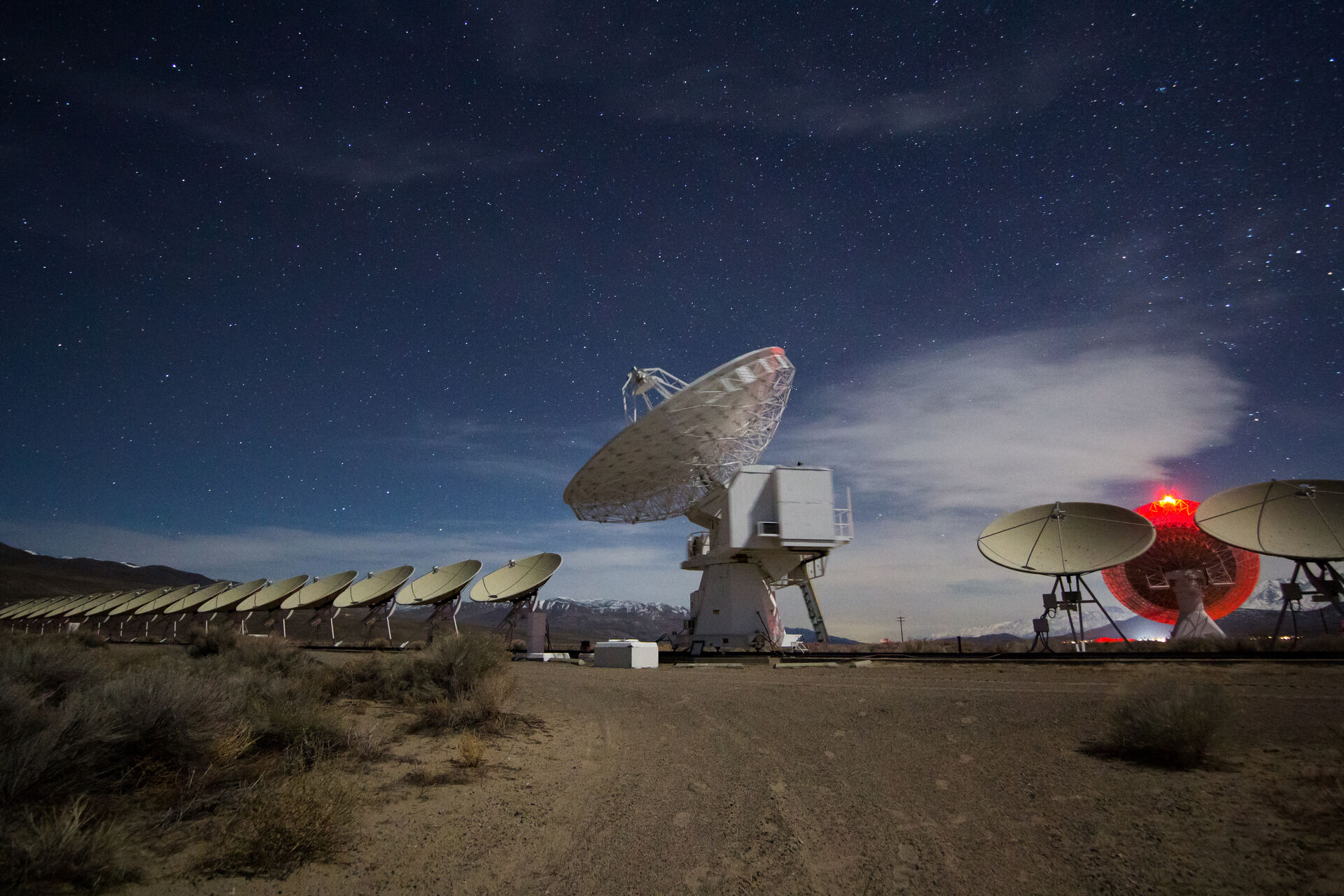
Modern cosmology has uncovered many details of the evolution and content of the Universe by studying the cosmic microwave background (CMB) at early times and the large-scale galaxy distribution of the late Universe. However, eras in between, like the Epochs of Reionization (EoR) and Galaxy Assembly (EoGA), remain data-starved. Line intensity mapping (LIM) aims to fill this gap by mapping the large-scale aggregate line emission of all bright and diffuse cosmic sources in 3D.
In this thesis, I contribute to this effort by developing a data analysis pipeline for the CO Mapping Array Project (COMAP) LIM experiment. COMAP aims to map the large-scale distribution of star-forming carbon monoxide gas emitted around the EoR and EoGA. I present a robust method for cleaning and calibrating the data, ultimately generating 3D sky maps of CO emission. My analysis assesses the statistical properties of the maps to extract insight into the physics of the star-forming Universe. This work yields the strongest constraints on the large-scale cosmic carbon monoxide reported in the literature, and COMAP is enroute towards a world’s first detection.
Lastly, I propose future improvements to the COMAP pipeline based on the Bayesian sampling techniques originally developed for CMB surveys.