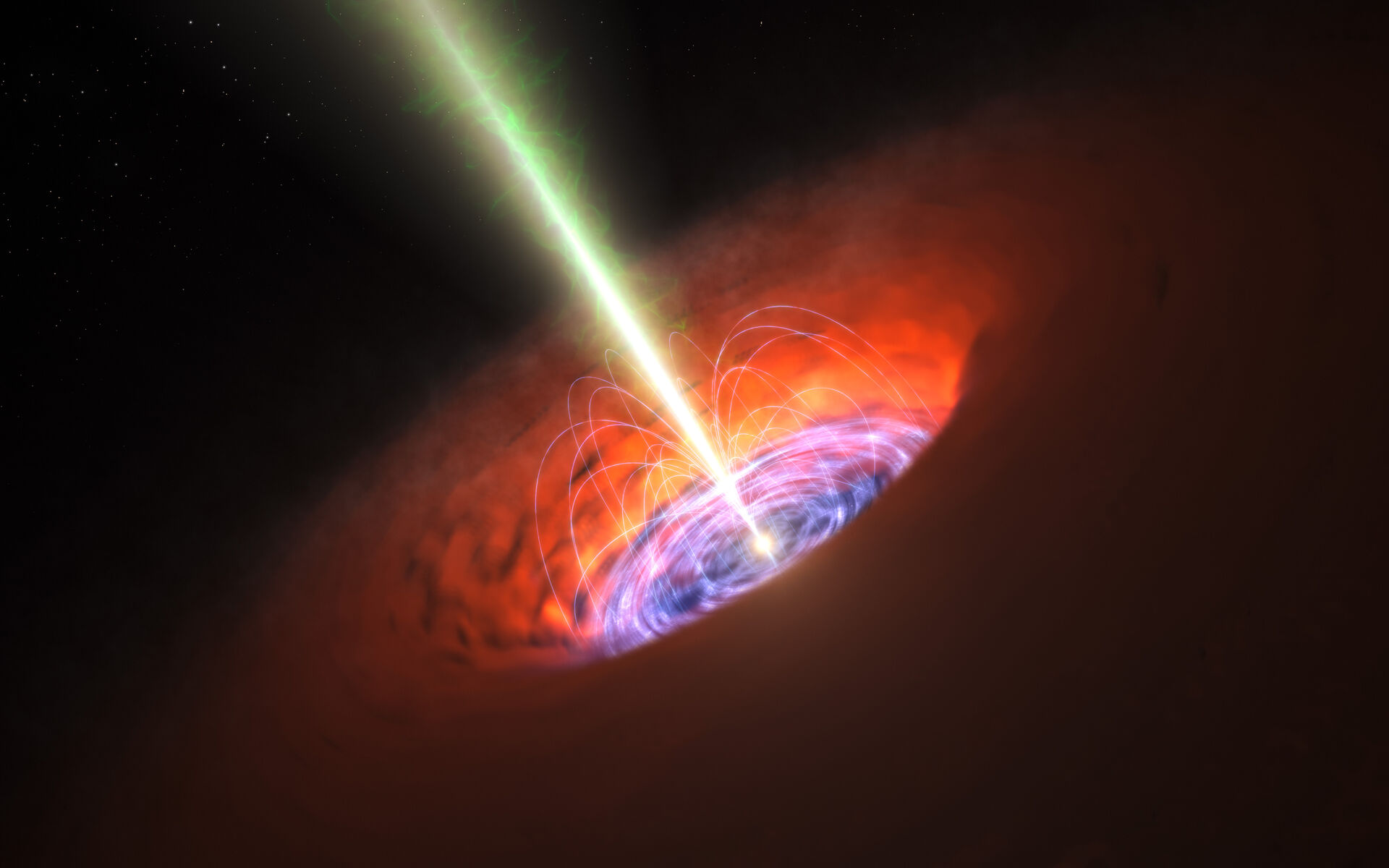
Accretion onto supermassive black holes (SMBH) power some of the most luminous objects in the Universe, giving rise to active galactic nuclei (AGN). The energy released from this accretion flow couples to the surrounding medium, with observations showing a strong correlation between the central AGN and the properties of its host galaxies. Understanding the physics of accretion is therefore critical in understanding the growth and evolution of galaxies across cosmic time. Yet, current models for the accretion flow are limited. Standard disc models match only to zeroth order in predicting the substantial energy dissipated in optically-thick material. Closer inspection show limitations in predicting the detailed spectrum and a complete failure in reproducing the variability.
In this talk I will explore, and try to untangle, the structure of the inner accretion flow near the central black hole. Starting with a combined sample from eROSITA and Subaru Hyper SuPrime Cam, I will show new results highlighting the wide variety of accretion structures present throughout the wider SMBH population.
I will then discuss how the variable nature of AGN can be used as a microscope to uncover the physical conditions of these flows, that would otherwise be inaccessible to other techniques, and show recent and ongoing work from the intensive black hole monitoring campaigns; setting the scene for the era of time domain astronomy with the upcoming LSST.
Scott Hagen is currently a final year PhD student at Durham University, working on the physics and structure of accretion flows onto supermassive black holes (SMBH). He is especially interested in utilising the variability properties of accreting SMBHs to uncover their structure, with the long-term goal building realistic models for the accretion flow that can be used robustly in a cosmological context.