Cosmological models in which matter components interact with dark energy through pure momentum transfer with no energy exchange (i.e. elastic interactions) provide compelling scenarios to address the apparent lack of structure at low redshift. In particular, it has been shown that measurements of the S8 (or ∑8) parameter may exhibit a statistically significant preference for the presence of elastic interactions.
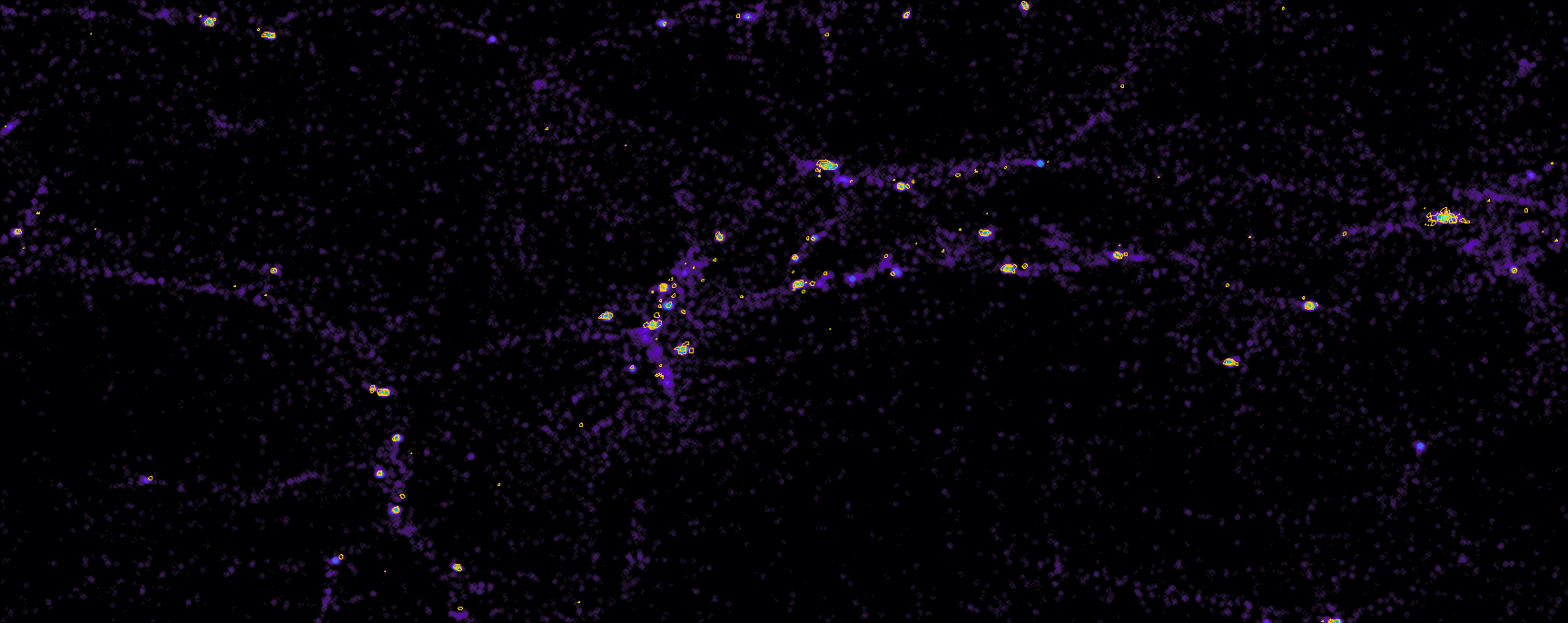
In this colloquium, I will introduce possible realizations of these scenarios and explore both the linear and non-linear regimes. On linear scales, we will see how these models induce a suppression of linear structure growth as a consequence of the freezing of matter perturbations once the interaction becomes efficient. On non-linear scales, these models predict that fewer massive halos form and that halos are more compact than in the standard model. A general reduction in structure formation is also found in the non-linear regime.
Finally, I will present how these alternatives to ΛCDM behave when confronted with different observational datasets.