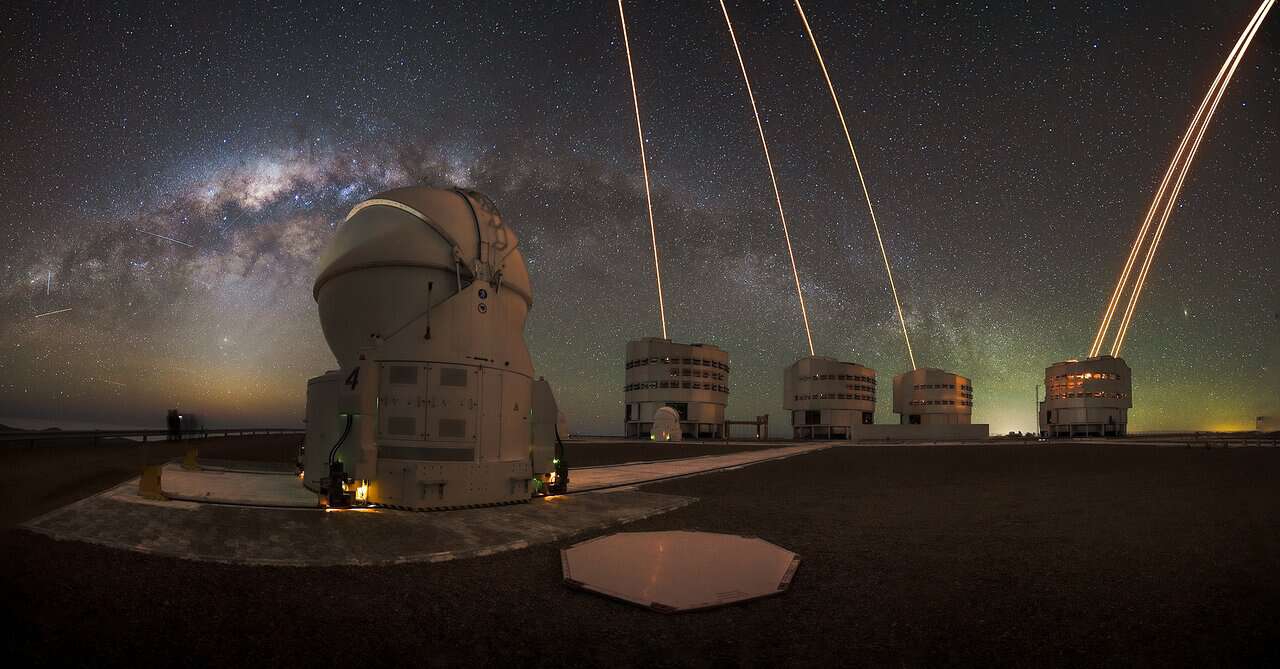
The European Southern Observatories (ESO) have been a cornerstone of European astronomy for more than five decades and is today the leading ground-based observatory on the planet. It manages the Paranal and La Silla observatories and is the European partner in the ALMA observatory, and in a few years the Extremely Large Telescope (ELT) and Cherenkov Telescope Array Observatory (CTAO) will become operational also in the Paranal region.
In this talk, I will give a brief overview of where ESO is today, some examples of the high-impact science it now enables. I will then turn to look at the near future, with a particular emphasis on the 39m Extremely Large Telescope (ELT) which will be the world's largest optical telescope by some margin when it is completed in 2030. I will report on the current status, instrumentation and the scientific aims. I will close with a look at the future beyond the ELT and ESO’s Expanding Horizons process which aims to identify the major ESO programme in the 2040s.