Geometric Reasoning as the Bridge between Mathematics and Physics
The toolbox of algebraic manipulations that students traditionally learn to use in second-year calculus is not a good match for many applications in other disciplines, such as physics. Mastery of electromagnetism, for example, requires a geometric understanding of vector fields and their derivatives.
Furthermore, most mathematical modeling requires a robust understanding of the relationship between discrete data and its idealization as smooth mathematical objects. These applications require students to have rich concept images of differentiation and integration that go well beyond what is typically taught in second-year calculus.
This talk describes efforts at Oregon State University to help students master the use of geometric reasoning in such physical and geometric contexts, in both mathematics and physics courses. Several examples will be presented where language differences between disciplines lead to student difficulties, as will some of the methods and tools that we have developed to address them.
Short Bio
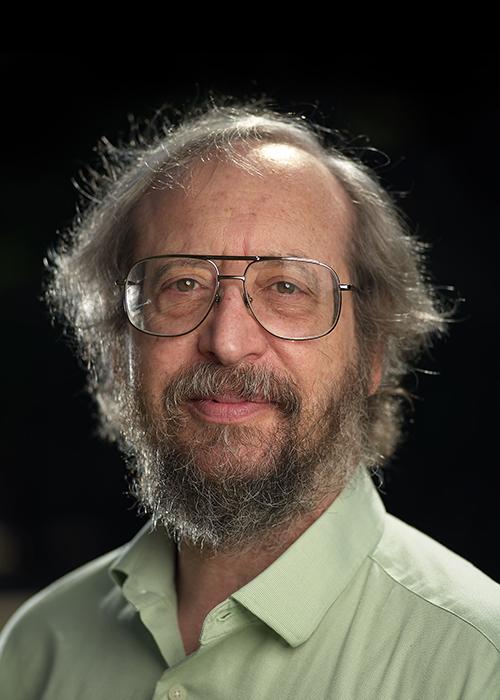
Tevian Dray is a Professor at the Department of Mathematics, Oregon State University.
The bi-weekly ODD seminar series at CCSE
The Open Discussions on Didactics (ODD) is a seminar series on Mondays at 13.00 every other week (odd week numbers).
The seminar is an informal arena to present and discuss learning theory, educational research and teaching experiences within computational science. To cater to the highly heterogeneous backgrounds and interests of students, teachers and researchers in our environment, we aim for seminars that introduce listeners to new ideas within a broad spectrum of aspects, and that invites reflection and discussion.
Presentations need not be mature and polished - to the contrary we hope that as many as possible wants to share undigested observations and reflections in short presentations of varied form and topics. We hope to have enough contributions to frequently have the meetings as lightning talk sessions, where three different speakers will each give a 5-10-minute presentation followed by discussion.
Published June 1, 2023 4:43 PM
- Last modified June 1, 2023 4:43 PM