Events
Upcoming
Marthe Arntzen is a PhD candidate at The Norwegian Centre for Science Education.
Previous
This week, Amund Solum Alsvik will hold the seminar. Amund is an MSc Student at CCSE, writing his thesis with Morten Hjorth-Jensen. He will give a journal club talk about Shapira, Mozes, and Biham's paper on error correction.
This week, we will hear from Fikriye C. I. Kaya, who is an Assistant Professor at OsloMet. Please find her title and abstract, as well as bio below.
This term, qGap will consist of journal-club style talks discussing interesting papers in quantum science and technology.

Henning V. Myhrehagen er PhD-kandidat ved CCSE og KURT.

Esmeralda Campos is a guest researcher from University of Vienna. She will kick off the Fall 2026 ODD seminar series by giving a talk about her and her colleagues' work in Physics Education Research at the Austrian Educational Competence Centre (AECC) .
On the 25th of June, at 15.30 in the CCSE seminar room, bachelor student Jonas Jørgensen Telle will defend his project.

Nicoline Berit Campbell Birkeland er PhD-student ved Senter for tverrfaglig utdanning (INTED).

Ane K. Espeseth is a PhD Candidate at INTED and will give a talk about her work.
Helene Lane is a PhD Candidate at CCSE and will present her work on using text embeddings of research papers to study trends in Physics Education Research.

Welcome to this international workshop to build connections and share ideas on how generative AI and natural language processing can be used as a research tool in physics education research
Please note that this event is only open for invited participants.
Kjetil Børkje is a professor of physics at the University of South-Eastern Norway, and will tell us about recent work on macroscopic quantum systems and state preparation.
Professor Francesco Massel will continue his lectures on quantum sensing.

Over the last 3 years, generative AI has rapidly entered science and physics classrooms, teacher education, and educational research. But what does the empirical literature on AI in science education actually show?

The use of Machine Learning (ML) models in research is not a novel concept, especially in quantitative spaces. Yet, many questions arise from qualitative researchers in connection with the trustworthiness of the results due to the "black box" nature of the models and the overall decision-making process. Of the different types of qualitative data, text is most associated with the application of ML methods, specifically from the domain of Natural Language Processing (NLP).
Professor Francesco Massel will continue his lectures on quantum sensing.
Professor Morten Hjorth-Jensen: Quantum control is essential for quantum technologies, but designing optimal control protocols can be challenging. Reinforcement learning offers a powerful way for algorithms to discover control strategies through interaction with a quantum system. This talk provides a pedagogical introduction to these ideas and their role in modern quantum technologies.
An expert committee led by Anders Malthe-Sørenssen was set down by the Norwegian government to analyze how AI is impacting higher education. The committee will deliver its final report in november 2026. The committee will address how learning outcomes should be adjusted to account for the AI, how teaching and learning will be impacted by AI and how assessment must be adjusted in an age of AI. In this talk, I address the preliminary report from the expert committee with particular focus on recommendations on assessment practices.
This week, Francesco Massel from USN will lead the fourth lecture on sensing theory. Please find the schedule for what will be discussed, as well as exercises for this week: Lecture plan Sensing theory.xlsx
We particularly encourage Master's students to come!
This week, Francesco Massel from USN will lead the third lecture on sensing theory. Please find the schedule for what will be discussed, as well as exercises for this week: Lecture plan Sensing theory.xlsx
We particularly encourage Master's students to come!
This week, Marius Kalleberg Hope will tell us about how to prepare squeezed states. Marius is a PhD student at NSM and USN who is currently visiting us at CCSE as well. Abstract:
Francesco Massel from USN will lead the second lecture on sensing theory. You can find the schedule for what will be discussed, as well as exercises for this week, here: Lecture plan Sensing theory.xlsx
The talk will be given by Maria Elena:
High-fidelity quantum state preparation is fundamentally limited by non-unitary dynamics and environmental decoherence. While gradient-based Optimal Quantum Control methods—such as GRAPE—are effective for unitary evolution, they often encounter significant computational bottlenecks when integrated with the Lindblad Master Equation in high-dimensional Hilbert spaces. In this talk, we present AI-based frameworks designed to autonomously discover control protocols in dissipative environments and also some results.
Maria Elena is a PhD student at UiA working with Prof. Francesco Massel at USN.
We start with a quantum sensing theory workshop led by Francesco Massel.

Welcome to our annual Christmas seminar! After the seminar, we'll continue with dinner in our wonderful facilities.
Since AI chatbots were first released, new ways of using large language models have been developed, like AI agents and integrated coding tools. AI chatbots themselves have also changed enormously, and new models are constantly being released to the public as private companies compete to offer the very best models.
For invited people.
Joakim Bergli:
Quantum synchronization is often studied using a master equation, typically the Lindblad equation. This gives the time evolution of the density matrix. If we study the response to a periodic external signal, synchronization is detected by a steady state density matrix that is in phase with the external signal.
Students use AI. This can be beneficial, but it also creates challenges in the classroom. Careless use of AI can make students expose their sensitive data, bypass their own learning and harm their teachers' trust. Teachers see these risks, but lack the time explore AI tools themselves and develop effective pedagogy.
Viktor Svensson:
Majorana bound states are quasiparticles which could be used to make qubits protected from noise. This protection relies on the spatial separation between Majoranas. These statements make sense in non-interacting theories, where quasiparticles and their location can be defined, but how can one generalize this to interacting systems?
Zhao Zhang: We show that the ground states of the singly hole-doped Infinite-U Hubbard model on one- and infinite-dimensional lattices of corner-sharing tetrahedra doped are partially dimerized resonant valence bond states.
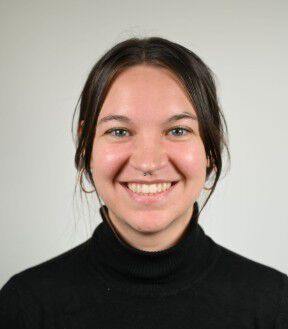
In the modern day, we are surrounded by unimaginably vast amounts of literature. As the number of publications continues to increase, as does the demand for analyzing this data in a systematic and transparent way.
Vytautas Zalandauskas: First-principles density functional theory calculations as a valuable tool for determining the chemical origin of point defects and characterizing their various properties.
Cecilie Glittum:
The groundbreaking ideas of the resonant valence bond (RVB) liquid initiated a transformative shift in modern physics. Extensive implications influenced a broad spectrum of fields, from high-temperature superconductors to quantum computing, and gave birth to key concepts in physics, such as quantum spin liquids, emergent gauge symmetries, topological order, and fractionalisation. Despite extensive efforts to demonstrate the existence of an RVB phase, a definitive realisation has proven elusive.
Generative AI is here to stay. For physics educators, the question isn’t whether to use it, but rather how. In this talk I will reflect on the opportunities and challenges of integrating AI into physics education.
We are pleased to welcome former master's student Nils Taugbøl, who will share insights about his transition from academia to DNV. He will discuss the challenges he faced during his thesis, his experiences during the final exam, and his journey into the professional world, including the work environment and culture at DNV.
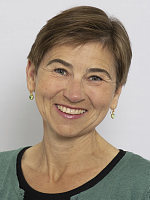
In this Odd seminar, we will look at how thematic analysis was described in the much cited 2006 paper by Braun and Clarke, how these authors have later developed and described it, and critique against (uncritical) use of thematic analysis. Finally, we will discuss the use of thematic analysis and which alternatives exist.
Morten Hiorth-Jensen:
In two series of seminars (in a more journal-club style) I will present two recently developed physics-inspired algorithms with potential applications to quantum computing.
Morten Hiorth-Jensen:
In two series of seminars (in a more journal-club style) I will present two recently developed physics-inspired algorithms with potential applications to quantum computing.
Juan David Alvarez Cuartas:
Modern challenges in energy storage demand new paradigms beyond classical technologies. Quantum batteries (QBs) exploit coherence, superposition, and entanglement to enhance storage capacity and enable ultrafast charging, with recent work identifying superabsorption as a key mechanism.
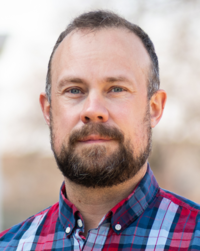
Computation is so central to physics knowledge production, it is difficult to imagine contemporary physics without computers for simulation, theory-building, experimental design, data collection, processing, machine learning and more. Despite its centrality, computation has historically only been weakly integrated into physic education. Moreover, where it has, computation has been constructed rather narrowly through the lens ofd numerical methods and simulation. A question arises: How do we create learning environments that incorporate computation in a way that corresponds to disciplinary practice?

Quantum technology (QT) is a rapidly emerging trend in society and industry. This reinforces the need for an educated workforce that can navigate these changes. As a result, we are seeing the emergence of dedicated specializations and study programmes in quantum science and technology (QS&QT) worldwide.
Join us to hear from Kaspara Gåsvær, a Technology Analyst and former Computer Science student, now working at BearingPoint.
David Jansen from ICFO:
In this talk, I will demonstrate how relaxations with semidefinite programs (SDPs) can be used to map out ground-state phase diagrams for quantum spin systems in one and two dimensions—a critical problem in condensed matter physics.
Research on the construction and development of teaching identity has recently sparked a growing interest in science education due to its influence on the development of teaching strategies and its direct impact on student learning. Particularly in Secondary Education, pre-service teachers (PSTs) face a duality between their identity as students and their identity as science teachers, which gives rise to difficulties during teacher education programs. These difficulties are mostly related to the change in professional identity, the teaching model they aspire to, and their previous professional experience.
Performance Modeling and Reordering Selection for Sparse Matrix-Vector Multiplication Using Machine Learning
Fiday this week, Tamás Havas & Olai Mostad, PhD students at Simula UiB, will tell us about quantum communication and error correction.
Thursday this week, Anna Birk Hellens from the Johannes Gutenberg Universität Mainz, will give a talk on altermagnets, a subject they have helped pioneer.
Circuit Modelling of Submerged Arc Furnaces and Their Power Supply Systems

Konstantin Holzhausen will defend his thesis "Learning Robust Representations in Neural Network Models" for the degree of Philosophiae Doctor at the University of Oslo, Faculty of Mathematics and Natural Sciences.