2024
Previous
In this workshop, attendees will learn how to apply this method to their own data. This includes a crash course on the method, and some work on interpretation of results. Everything will be run on Google Colab, and no previous skills are required. Bring a friend and coworker!

Welcome to our annual Christmas seminar!

Doctoral candidate Andreas Haraldsrud at the Department of Chemistry, Faculty of Mathematics and Natural Sciences, is defending the thesis "Thinking Through a Computer – Simulations, Models and Representations in Chemistry" for the degree of Philosophiae Doctor.

The ability to code is important for developing logical reasoning and literacy skills. To foster interest in coding among youth, considerable efforts have been invested in creating engaging tools and activities, with Scratch emerging as a prominent initiative.
This visual coding platform is designed to enhance creativity and motivate students to engage with computing. However, meaningfully integrating Scratch into educational contexts poses challenges. This presentation explores seven design principles for coding, drawing on Resnick's concept of tinkering, self-determination theory, and the documented need for guided instruction. A case study in mathematics reveals how students' interest in both coding and math waned due to the neglect of key design principles.
The focus then shifts to laboratory work in science education. By referring to these principles, it is proposed that virtual lab exercises can become more inquiry-based by allowing students to design their own virtual prototypes in Scratch, calibrating them through practical laboratory experiences. This combination holds the potential to create meaningful and engaging learning experiences in both coding and science education.
There is a large body of work from the learning sciences providing us with insights into how people learn; and from Discipline Based Education Research (DBER) we know what discipline-specific difficulties students face. However, it is quite surprising that relatively little of this understanding has made its way into the design of science and engineering curricula offered at most colleges and universities.
This presentation will focus on the need for evidence-based curriculum transformations, the research findings that can guide them, and how we might assess the results of these transformations.
An approach to systemic reform that focuses on helping students use their knowledge in scientifically meaningful ways, will be discussed. Examples of such curriculum reform efforts “Chemistry, Life, the Universe and Everything” (CLUE) and a subsequent organic chemistry version (OCLUE), will be presented, along with the evidence to support how these transformations impact student learning and course culture.
Implications for systemic reform will also be discussed.
Welcome to our Generative AI and NLP in Physics Education Research workshop. This workshop is only open for invited participants.

PhD candidate Vemund Sigmundson Schøyen at the Department of Biosciences, Faculty of Mathematics and Natural Sciences, is defending the thesis 'Grid cells and their role in virtual navigation' for the degree of PhD.

Welcome to our NeuroAI workshop, set against the beautiful backdrop of Norway's coastline, aboard the Hurtigruten cruise ship from Tromsø to Trondheim. This event combines the tranquil beauty of a Norwegian cruise with the exciting prospects of neuroscience and artificial intelligence.
This event is only open for invited participants.
Even Marius Nordhagen will defend his thesis "Molecular Dynamics Simulations of Dry Friction on the Nanoscale" " for the degree of Philosophiae Doctor at the University of Oslo, Faculty of Mathematics and Natural Sciences.
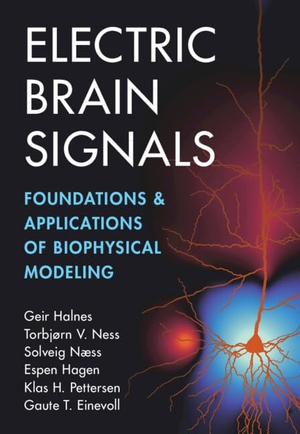
Welcome to a mini-symposium where Sacha van Albada (FZ Julich) and Michael Reimann (EPFL) will give seminars on modeling of cortical networks. In the mini-symposium there will also be a launch/presentation of our new book "Electrical Brain Signals" which is published these days.
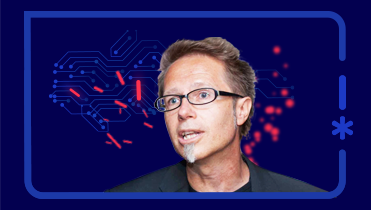
Michael Doser (CERN): Seminar on Quantum Detectors for high energy physics by Michael Doser (CERN) on the 5th of March at 14.00
Joakim Bergli (Physics, UiO): Synchronization in two-level quantum systems
Joakim Bergli (Physics, UiO): Introduction to quantum error correction

Morten Hjorth-Jensen (Physics, UiO): Parametric Matrix Models and Machine Learning

Håkon Kristiansen (Hyllerås, UiO):Time-dependent many-body theories
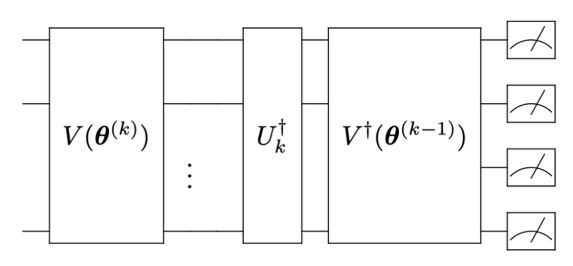
Stian Dysthe Bilek (Physics, UiO): Parameterized Optimization of Quantum Circuits
Justin Wells (SNM, UiO): Observing and understanding electron-boson interactions in solids
Simon Cooil (SNM, UiO): Atomically Sharp and High-Density Sb Doping in Si for use in Quantum Devices