2025
Previous
Since AI chatbots were first released, new ways of using large language models have been developed, like AI agents and integrated coding tools. AI chatbots themselves have also changed enormously, and new models are constantly being released to the public as private companies compete to offer the very best models.
Students use AI. This can be beneficial, but it also creates challenges in the classroom. Careless use of AI can make students expose their sensitive data, bypass their own learning and harm their teachers' trust. Teachers see these risks, but lack the time explore AI tools themselves and develop effective pedagogy.

In the modern day, we are surrounded by unimaginably vast amounts of literature. As the number of publications continues to increase, as does the demand for analyzing this data in a systematic and transparent way.

Generative AI is here to stay. For physics educators, the question isn’t whether to use it, but rather how. In this talk I will reflect on the opportunities and challenges of integrating AI into physics education.

In this Odd seminar, we will look at how thematic analysis was described in the much cited 2006 paper by Braun and Clarke, how these authors have later developed and described it, and critique against (uncritical) use of thematic analysis. Finally, we will discuss the use of thematic analysis and which alternatives exist.
Computation is so central to physics knowledge production, it is difficult to imagine contemporary physics without computers for simulation, theory-building, experimental design, data collection, processing, machine learning and more. Despite its centrality, computation has historically only been weakly integrated into physic education. Moreover, where it has, computation has been constructed rather narrowly through the lens ofd numerical methods and simulation. A question arises: How do we create learning environments that incorporate computation in a way that corresponds to disciplinary practice?
Quantum technology (QT) is a rapidly emerging trend in society and industry. This reinforces the need for an educated workforce that can navigate these changes. As a result, we are seeing the emergence of dedicated specializations and study programmes in quantum science and technology (QS&QT) worldwide.

Research on the construction and development of teaching identity has recently sparked a growing interest in science education due to its influence on the development of teaching strategies and its direct impact on student learning. Particularly in Secondary Education, pre-service teachers (PSTs) face a duality between their identity as students and their identity as science teachers, which gives rise to difficulties during teacher education programs. These difficulties are mostly related to the change in professional identity, the teaching model they aspire to, and their previous professional experience.
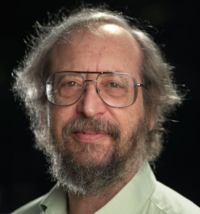
Mathematics and physics are two disciplines separated by a common language. Since the 1990s, we have been developing curricular materials that attempt to bridge this gap, as part of the Paradigms in Physics and Vector Calculus Bridge projects, leading also to the development of an online textbook.
Most of our work focuses on the transition from multivariable calculus to upper-division physics courses such as electromagnetism.
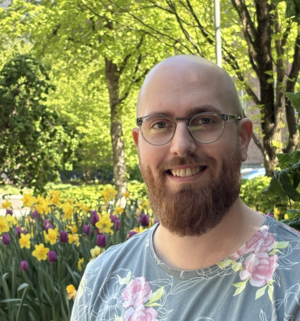
In this ODD seminar, Henning Myhrehagen will present findings from his interview study to open a wider discussion on the integration of programming in science education.

Conjecturing and generalizing are two central practices in mathematics, and mathematical thinking and activity often involve examining patterns across cases to articulate conjectures or generalizations.
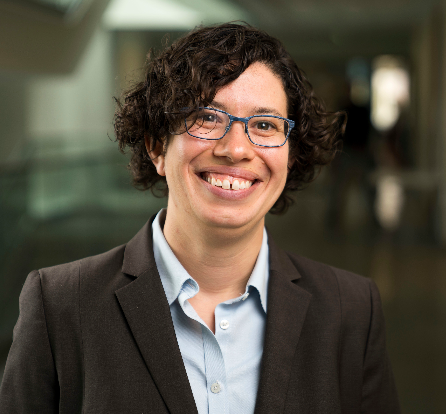
Lauren Barth-Cohen will hold a seminar about students sense making about conceptual and procedural inconsistencies in an introduction physics lab.