At Tufts, we have developed an approach, Computational Making, designed to foster scientific inquiry, creativity, and student agency. In a typical making project, students collaboratively build physical artifacts that exhibit interesting physical phenomena. These artifacts serve as springboards for scientific investigation: students pose their own questions, gather data, develop computational models of the underlying phenomena, and refine their understanding through iterative comparison between data and simulation.
We discuss design principles for such projects including agency, the affordances of the environment itself, and facilitation strategies that support productive work. We illustrate the framework through a representative project, Make an Oscillator, supported by student work and classroom observations. Prospects for implementing making projects in other contexts are also provided, together with reflections and advice for educators and researchers interested in developing similar approaches.
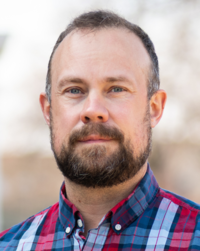
Tim Atherton is a Professor in Physics & Astronomy at Tufts university, Massachusetts.
We will serve refreshments, coffee and tea. Welcome!
The bi-weekly ODD seminar series at CCSE
The Open Discussions on Didactics (ODD) is a seminar series usually on Mondays at 13:00-14:00 every other week (odd week numbers) at CCSE.
The seminar will be maximum one hour, often closer to half an hour. It is an informal arena to present and discuss learning theory, educational research and teaching experiences within computational science. To cater to the highly heterogeneous backgrounds and interests of students, teachers and researchers in our environment, we aim for seminars that introduce listeners to new ideas within a broad spectrum of aspects, and that invites reflection and discussion.
Presentations need not be mature and polished - to the contrary we hope that as many as possible wants to share undigested observations and reflections in short presentations of varied form and topics. We hope to have enough contributions to frequently have the meetings as lightning talk sessions, where three different speakers will each give a 5-10-minute presentation followed by discussion.