In mathematics education, we distinguish between qualitatively different generalizations (such as Harel’s (2008) result pattern generalization versus processes pattern generalization). In determining what is best for students, there is a tension between having students focus on strictly numerical/empirical regularity (which may not be supported by conceptual understanding) versus regularity that connects to some deeper explanatory or conceptual meaning (typically a regularity in a process).
These tensions are increased when considering the role of a computer, as computing allows for the immediate generation of data across which to examine patterns; indeed, the computer is often used by mathematicians in their research to explore regularity in this way. I am curious about desirable ways in which students should engage with patterns, conjectures, and generalizations in the context of this computational space.
In this talk, I offer some cases of undergraduate students’ work in combinatorics to highlight differences between numerical and process-based generalizations, and I seek to discuss what kinds of thinking and activity we should emphasize with students as they use computers to generate examples and engage in conjecturing and generalizing.
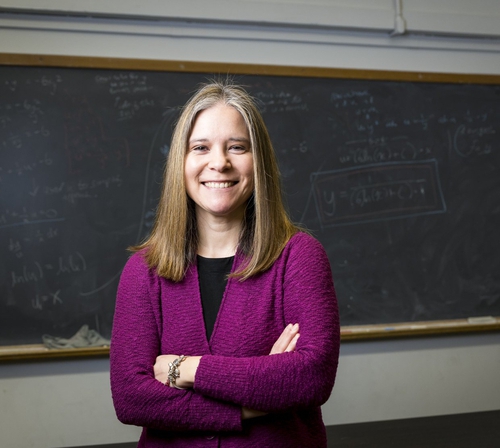
Elise Lockwood is a Professor in Department of Mathematics, Oregon State University and adjunct professor of math education research, 20%, at CCSE. She has received an NSF Career grant focusing on how computations affect student understanding of combinatorics and is a 2025 Presidential Early Career Award for Scientists and Engineers (PECASE) honoree.
We will serve refreshments, coffee and tea. Welcome!
The bi-weekly ODD seminar series at CCSE
The Open Discussions on Didactics (ODD) is a seminar series usually on Mondays at 13:00-14:00 every other week (odd week numbers) at CCSE.
The seminar will be maximum one hour, often closer to half an hour. It is an informal arena to present and discuss learning theory, educational research and teaching experiences within computational science. To cater to the highly heterogeneous backgrounds and interests of students, teachers and researchers in our environment, we aim for seminars that introduce listeners to new ideas within a broad spectrum of aspects, and that invites reflection and discussion.
Presentations need not be mature and polished - to the contrary we hope that as many as possible wants to share undigested observations and reflections in short presentations of varied form and topics. We hope to have enough contributions to frequently have the meetings as lightning talk sessions, where three different speakers will each give a 5-10-minute presentation followed by discussion.