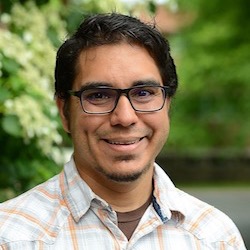
Danny Caballero is a professor of physics and computational science. He works in the Department of Physics and Astronomy and the Department of Computational Mathematics, Science and Engineering, Michigan State University. Caballero holds the Lappan-Phillips Chair of Physics Education, co-direct the Physics Education Research Lab, serve as a principal investigator for the Learning Machines Lab, conducts research as part of the newly-founded Computational Education Research Lab, and holds an appointment as research faculty at the University of Oslo’s Center for Computing in Science Education. He studies how tools and science practices affect student learning in physics and computational science, and the conditions and environments that support or inhibit that learning.
We will serve refreshments, coffee and tea. Welcome!
The bi-weekly ODD seminar series at CCSE
The Open Discussions on Didactics (ODD) is a seminar series on Mondays at 13:30-14:30 every other week (odd week numbers) at CCSE.
The seminar will be maximum one hour, often closer to half an hour. It is an informal arena to present and discuss learning theory, educational research and teaching experiences within computational science. To cater to the highly heterogeneous backgrounds and interests of students, teachers and researchers in our environment, we aim for seminars that introduce listeners to new ideas within a broad spectrum of aspects, and that invites reflection and discussion.
Presentations need not be mature and polished - to the contrary we hope that as many as possible wants to share undigested observations and reflections in short presentations of varied form and topics. We hope to have enough contributions to frequently have the meetings as lightning talk sessions, where three different speakers will each give a 5-10-minute presentation followed by discussion.