Previous events - Page 100

This seminar will consist of two separate presentations, each about 15-minute long.
1) Magnetic Quincke Rollers with tunable single particle dynamics and collective states
2) Electrically controllable ferrofluids
Molecular and Morphological Studies of Norwegian Eelgrass Populations
Long-read sequencing of soil eukaryote eDNA indicates vegetation as driver of soil community structure
Ciliopathy phenotypes in Zebrafish embryos treated with Tbc1d17 morpholinos

Doctoral candidate Sigrid Jørgensen Bakke at the Department of Geosciences, Faculty of Mathematics and Natural Sciences, is defending the thesis Recent European warm-season droughts: drivers, extremeness and impacts – With a special focus on the 2018 drought in northern Europe for the degree of Philosophiae Doctor.
Doctoral candidate Bastian Zapf at the Department of Mathematics will be defending the thesis Inverse mathematical modeling of solute transport in the human brain for the degree of Philosophiae Doctor.
Optimisation of custom CRISPR-Cas9 platform for clinical application
Identification of chromatin regulators involved in the maintenance of transcriptional homeostasis by centromeres and mitotic chromatin in Saccharomyces cerevisiae
Towards Understanding Robustness of Neural Networks using Local Learning Rules
Long Term Effects of COVID-19 in Adolescents
Disparities in growth, condition, and contaminant exposure: A study of Atlantic cod, Norway pout, and whiting in the inner and outer Oslofjord
Unfortunately, the seminar by Olli Hyvärinen, AQUA, IBV, is cancelled.
Using target capture and next generation sequencing to resolve the phylogeny of the genus Crinum L. with emphasis on tropical African species
Forest management effects on aerial fungal biodiversity
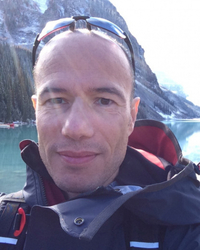
Title: Learning from data through the lens of (ocean) models, surrogates, and their derivatives
Speaker: Patrick Heimbach, The University of Texas at Austin

It is well known that if the singular values of a matrix are distinct, then its best rank-n approximation in the Frobenius norm is uniquely determined and given by the truncated singular value decomposition. On the other hand, this uniqueness is in general not true for best rank-n approximations in the spectral norm. In this talk we relate the problem of finding best rank-n approximations in the spectral norm to Kolmogorov n-widths and corresponding optimal spaces. By providing new criteria for optimality of subspaces with respect to the n-width, we describe a large family of best rank-n approximations to a given matrix. This results in a variety of solutions to the best low-rank approximation problem and provides alternatives to the truncated singular value decomposition. This variety can be exploited to obtain best low-rank approximations with problem-oriented properties.
We further discuss the generalization of these results to compact operators in L2, and explain how they can be used to both describe the out-performance of smooth spline approximations of solutions to differential equations when compared to classical finite element methods, and to solve the outlier-problem in isogeometric analysis.
This talk is based on work done in collaboration with Michael Floater, Carla Manni and Hendrik Speleers.
How will oil pollution and climate change affect an Arctic key zooplankton?
Biodiversity and distribution of Arctic phytoplankton and ice algae
This Stochastic Analysis and Applications Workshop aims to provide a professional platform for young researchers in stochastics from China and Norway to convene, exchange ideas, and potentially establish new collaborations.
Combined effect of predation risk and copper exposure in five species of coastal copepods
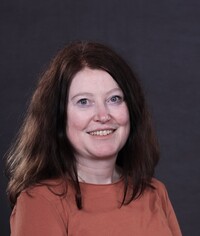
Title: Understanding Sensitivity of Climate with Perturbed Parameter Ensembles
Speaker: Trude Eidhammer, NCAR
The evolutionary dynamics of venom toxins made by insects and other animals.
by Andrew A. Walker
https://portlandpress.com/biochemsoctrans/article-abstract/48/4/1353/225986/The-evolutionary-dynamics-of-venom-toxins-made-by?redirectedFrom=fulltext
Last before the summer!
Time and place: Jun 22th, 2023 12 PM – 1 PM, Greenhouse, 3215
Analytic description for synchronization of two-level quantum systems
Cytokines influence gut duodenal epithelial cells differentiation and celiac disease development