Previous events - Page 51

Doctoral candidate Anirudha Vijay Mahagaonkar at the Department of Geosciences, Faculty of Mathematics and Natural Sciences, is defending the thesis Comprehensive Mapping and Climatic Assessment of Supraglacial Lakes in Dronning Maud Land, Antarctica for the degree of Philosophiae Doctor.

Nibir Mandal is currently a senior professor in the Department of Geological Sciences at Jadavpur University in India.
This week, Franz Georg Fuchs, senior research scientist at Sintef and leader of the Gemini Center on Quantum Technology will tell us about his recent research.

Hylleraas seminar, hosted in Tromsø

Doctoral candidate Nicholas Sebastian Stevens at the Department of Informatics, Faculty of Mathematics and Natural Sciences, is defending the thesis Exploring and Extending the Regenerative Capabilities of Design - Towards More Sustainable Endeavours for the degree of Philosophiae Doctor.
Welcome to our GeoHyd Lunch Seminar on Friday 28th of March @ 12:15 in Aud. 2 in the Geology Building. The seminar is held by Stephen Warren (University of Washington, Seattle, USA)

In recent years there have been numerous studies on floating films of non-Newtonian fluids due to their application to model the stability of floating ice shelves. Sayag & Worster (2019) showed theoretically that expanding cylinders of shear-thinning fluids can become non-axisymmetrical at the advancing fluid edge, driven by their non-Newtonian rheology. This instability carries over to radially spreading, thinning films of the same material when that fluid floats on a deeper bath of less viscous, but denser, Newtonian fluid.
Experimentally validating these theoretical results has, however, been challenging. Initial experimental exploration using Xanthan gum floating on a dense bath of salt solution shows dramatic non-axisymmetrical patterns. These patterns have their origin in interfacial effects, rather than Sayag & Worster's instability, with the expanding film appearing to fracture under extensional stresses at the fluid edge (Ball et al., 2022).
In this talk, I will present a new set of experiments exploring the instability, in which spreading films of aqueous suspensions of Carbopol and Xanthan gum are floated on a bath of more dense perfluorinated oil. The immiscibility between the bath and floating film prevents the failure of the material under tension and allows comparison against theoretical predictions from a shallow film model (Ball & Balmforth, 2021; Ball & Balmforth 2025).

The Oil and Society research network welcomes all staff and students to a presentation with professor Gavin Bridge (Durham University). Professor Bridge will present ongoing work (with James Marriott) under the heading "What now for the UK oil complex?"
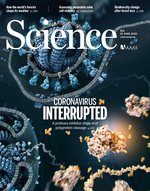
https://www.science.org/doi/10.1126/science.aba1289

Discover the Tsetlin Machine, an AI method that learns logical, human-understandable rules while matching neural networks in performance. Led by Prof. Ole-Christoffer Granmo, this seminar covers its fundamentals, applications, and recent advancements.
Open to students and researchers. Free event sponsored by Norwegian AI Cloud (NAIC). Register now!

Welcome to the Hammer Talks lunch seminar Thursday 27th of March at Dept. of Geosciences, UiO. Speaker: Lars Eivind Augland.
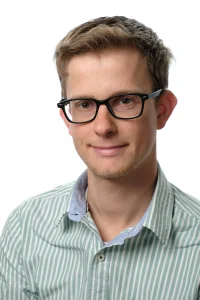
Title: Small-scale processes in tropical cirrus: A key to their climate feedback?
Speaker: Blaž Gasparini, University of Vienna

Join us in this Open Science Lunch session to learn about the benefits of using Electronic Lab Notebooks, and get insights from implementation and use at different institutions in Norway!
We invite you to the March RoCS Solar/Stellar Lunch. You are invited to discuss your work with colleagues.
We invite you to the March RoCS Solar/Stellar Lunch. You are invited to discuss your work with colleagues.

How can we make sense of messy, limited data in the search for better cancer treatments? In this week’s dScience Lunch Seminar, Professor Manuela Zucknick presents a powerful probabilistic modeling approach that tackles the challenges of small, noisy datasets in high-throughput drug combination screens—paving the way for more precise and reliable predictions in oncology.
Investigating the evolution of mitochondrial gene order in Gastrotricha

The Tien Mai is currently a postdoc at FHI. He has held postdoc positions in statistics at NTNU (Trondheim) and in biostatistics at UiO (OCBE). His research spans statistics and machine learning, with a particular interest in PAC-Bayesian analysis. He holds a PhD in Statistics from CREST-ENSAE-ParisTech/Paris Saclay and University College Dublin.

Doctoral candidate Abu Sadat Mohammad Sayem at the Department of Informatics, Faculty of Mathematics and Natural Sciences, is defending the thesis The Digitalization of Health Information Systems and Its Impact on the Health Manager’s Empowerment in Bangladesh for the degree of Philosophiae Doctor.

Doctoral candidate Boxue Zheng at the Department of Mathematics will be defending the thesis Soft wetting phenomena:
exploring the effects of substrate geometry and poro-viscoelasticity for the degree of Philosophiae Doctor.
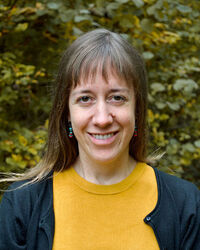
Title: New insight into the (in)stability of the West Antarctic Ice Sheet during the last interglacial
Speaker: Marina Dütsch, University of Vienna
Fast & furious: Accelerating the knowledge on nutrient-depletion induced root responses