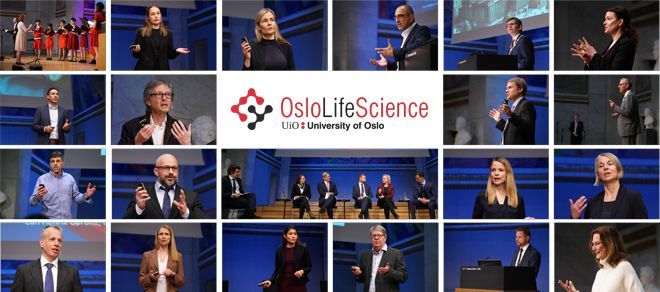
Thanks to all who attended Oslo Life Science 11–14 February 2019. See pictures and watch videos from the events. We hope to see all of you again at Oslo Life Science 2020.

News - Page 12
Six new teams have been admitted to UiO´s innovation programme SPARK Norway. They will develop their ideas within health-related life sciences for the benefit of patients and society.
Researchers at the University of Oslo (UiO) could be close to a breakthrough in the treatment of Alzheimer’s Disease.
Women's fat has a more active metabolism, but this effect disappears later in life.
New paper in Gastroenterology: Authors found that both aspirin, and in particular oral anticoagulants, lowers the positive predictive value of fecal testing for occult blood.
Early in December, it became known that four INTPART-projects at the Faculty of Mathematics and Natural Sciences, UiO, receive funding from NFR. One of the lucky ones is Adriano Mazzini, a researcher at CEED / Department of Geosciences.
European Geophysical Union: EGU has recently announced who gets awards and medals for 2019. One of the lucky ones is Professor of geomatics Andreas Max Kääb, Department of Geosciences, University of Oslo who is awarded the Louis Agassiz Medal for 2019.
SPARK Norway is UiO:Life Science’s innovation programme for health-related life sciences. Meet three of the SPARKees and get inspired to apply.
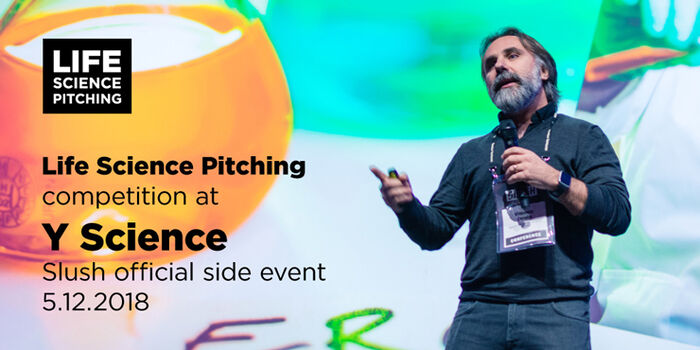
UiO:Life Science hopes to see Norwegian finalists in the pitch competition at the tech conference SLUSH in Helsinki on 5 December. The winner is granted 30 000 euros. Life science students and researchers in startups or pre-startups are welcome to apply before 1 October at 12:00.
The Department of Geosciences has several externally financed projects, in 2017 external research support contributed 50% of the department's economy. On Monday the 27th of August there was a start-up meeting for one of the newest projects - Volcanic Eruptions and their Impacts on Climate, Environment, and Viking Society in 500-1250 CE (VIKINGS). The project is supported by FRIPRO/Toppforsk/FRINATEK.
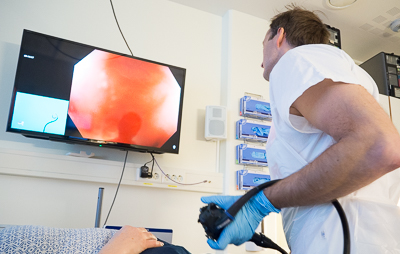
Standardized computer-aided diagnosis (CAD) can help reduce unnecessary removal of colonic polyps with no malignant potential.
Overdiagnosis is recognized as a major harm of mammography and prostate cancer screening – what about colorectal cancer screening?
At present UiO:Life Science funds seven convergence environments that address major challenges within life sciences related to health and environment/sustainable growth. A new application round starts now. Researchers from all units at UiO are welcome to participate.
A freshly graduated PhD in geomatics from the University of Oslo, Bas Altena, have been granted a postdoc grant from the European Space Agency's (ESA) Living Planet Fellowship program. With this fellowship he will explore new ways to exploit satellite data from the Copernicus program in combination with other satellites to help understand fast changes in the cryosphere.
Researchers have now found out what happens when normal cells develop into breast cancer. This finding can lead to more individualized treatment: the right treatment in the right dosage for the right patient.
Like our unique fingerprints, we all have a unique combination of connections in the brain. These networks of connections stabilises during childhood and adolescence. Delayed development may be an early sign of mental health disorders.
Researchers have discovered that plasma cells in the human intestine live longer than previously assumed. This finding may change treatment for gastrointestinal illnesses and boost the development of vaccines in pill form.
The severity of a heart attack is the most important factor affecting the patient’s subsequent outcome. New research shows that the severity can be reduced through the use of anti-inflammatory medication.
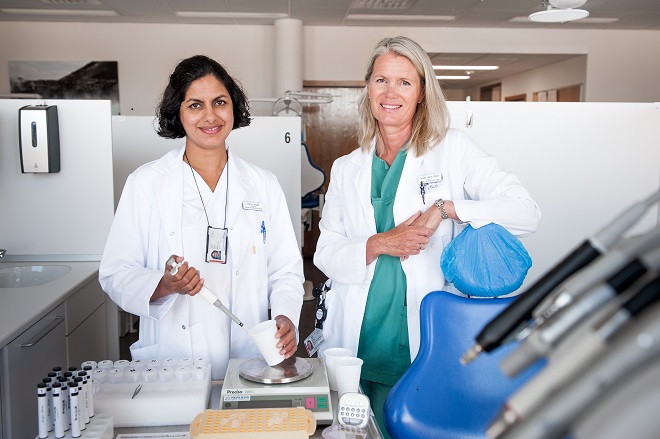
Research smell and taste is a relatively new field in Norway, but Postdoctoral Fellow Preet Bano Singh at the Faculty of Dentistry is breaking new ground in this area.
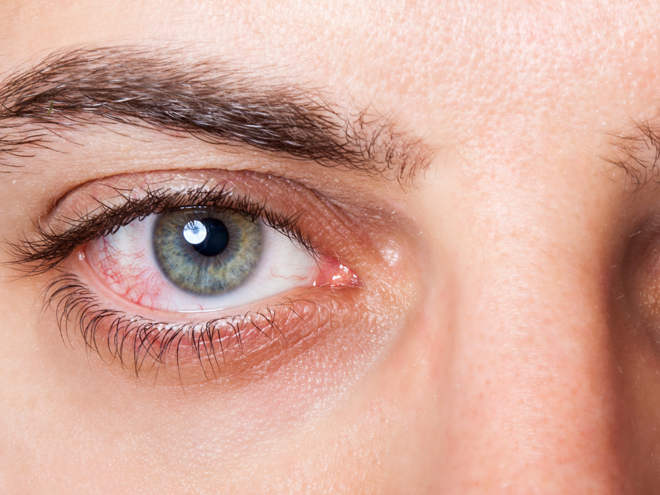
If you suffer from a dry mouth, the chances are that you also have dry eyes. The problem may be due to the sebaceous glands in the eyelids.
During the next six months, 67 students will work on research projects with summer scholarships from UiO:Life Science. At the Natural History Museum, bachelor’s degree student Marius F. Maurstad is already in full swing with his project. He is studying beetles at the molecular level to understand how climate change affects prevalence and evolution, and in a worst-case scenario, extinction of species – a dream job, in his opinion.
UiO:Life Science shall recruit, educate and develop talents. Before Christmas the initiative announced that students could apply for summer research projects. The board has decided that as many as 66 students will be offered a project in 2018.
Thanks to all who attended Oslo Life Science – Investing in health and environment – 12–15 February 2018. See pictures and watch videos from the events. We hope to see all of you again at Oslo Life Science 2019.
A frequent problem in orthodontic practice is that the teeth do not remain in their new positions. Can a protein prevent teeth from moving in the mouth?
Six new teams have been admitted to UiO´s innovation programme SPARK Norway. They will develop their ideas within health-related life sciences for the benefit of patients and society.