This summer 50 UiO students have gained work experience from a research project with a scholarship from UiO:Life Science. The closure of this year's summer projects was celebrated with presentations, a poster exhibition, and a prize ceremony in the new Life Science Building.
News
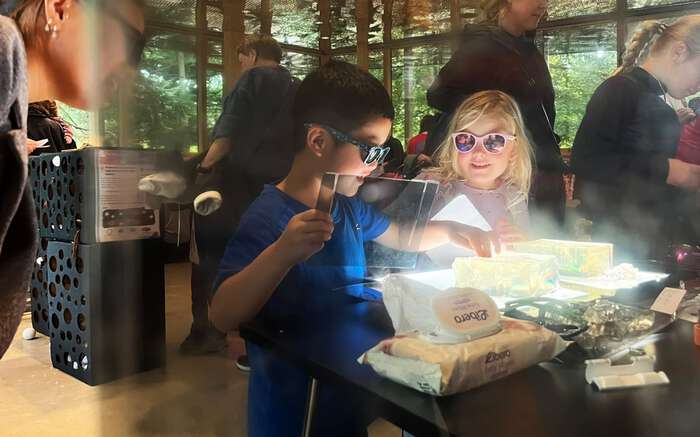
Through experiments and play, researchers from the University of Oslo brought geoscience closer to visitors of all ages. The event took place at the Climate House, with several stations offering interactive activities and workshops. Many happy 3–6-year-olds enjoyed Trust the Rocks! that day!
The programme Technology Systems: Science & Engineering will educate graduates capable of developing and understanding technology systems. UiO’s first English-taught bachelor’s degree will be offered from autumn 2027.
The IT Department is committed to good, safe, and responsible use of AI at UiO. Courses and two sets of guidelines for usage are now being launched. The IT Director recommends that all employees take the course and familiarize themselves with the guidelines.
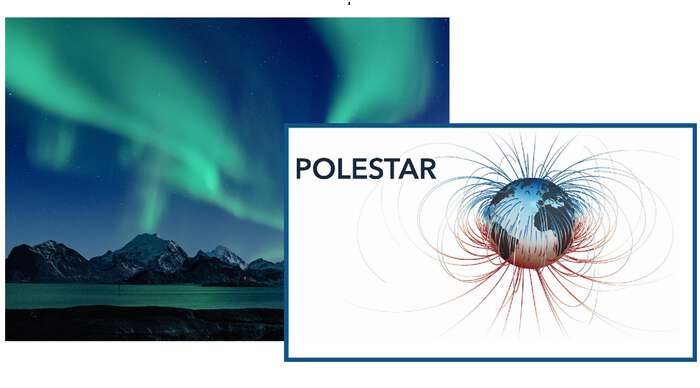
Researcher Leandro Gallo at the Centre for Planetary Habitability (PHAB), Department of Geosciences, University of Oslo, has received funding from the Research Council of Norway for an early-career project. The Polestar project will explore Earth’s magnetic field and how it has evolved over geological time.
FieldEx is a student exchange program and a collaboration between research communities and higher education institutions in Norway, Canada, the United States, and Japan. Its aim is to increase knowledge of fieldwork conducted in extremely cold environments in the Arctic.
Academic staff, postdoctors and PhD-students within the life sciences at the University of Oslo can apply for funding to strengthen collaboration with international research environments. The next application deadline is 1 December 2026.
Academic staff, postdoctors, PhD-students and student associations at the University of Oslo can apply for funding to partially finance open events targeted at a general audience.
Many newly recruited young researchers are now joining us. Some will have the new Life Science building as their workplace, while others will be based elsewhere at UiO. All of them will work in interdisciplinary life sciences.
Do you have an idea that could help solve health challenges in humans or animals? Apply for admission to UiO:Life Science’s innovation programme SPARK Norway, and learn how to develop your idea into a new technology, treatment or solution.
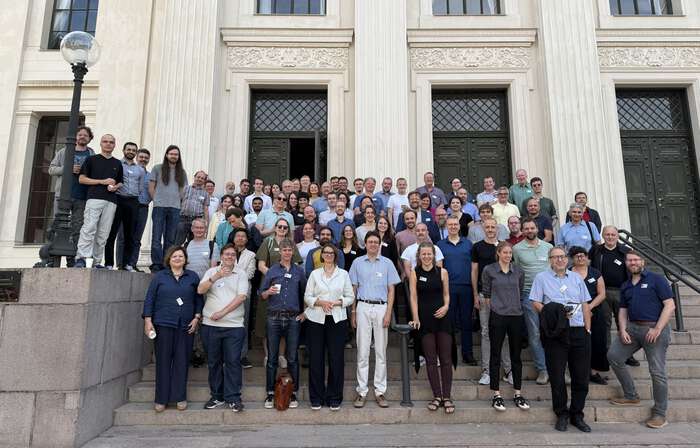
In 2027, ESA will launch the space telescope PLATO, with Norway contributing both technology and research efforts. At the end of July, the PHAB research centre at the University of Oslo hosted the PLATO consortium during PLATO Week #18.
Professor of remote sensing and geocryology, Sebastian Westermann at the Department of Geosciences, University of Oslo, has been appointed honorary doctor at the Mongolian Academy of Sciences in Ulaanbaatar, Mongolia.
Psychology student Skage Christensen Ekelund is well underway with his summer project. He is one of 50 students who receive a scholarship from UiO:Life Science to take part in a research project for six weeks this summer. We have been invited into the Socio-Cognitive laboratory in the Henrik Wergeland building at Blindern to gain insight into the tasks he will be doing.
The Royal Astronomical Society in the United Kingdom awards the 2025 Keith Runcorn Thesis Prize for the Best Thesis in Geophysics and Planetary Science to Dr. Hannah Sanderson, now a postdoctoral fellow at Centre for Planetary Habitability (PHAB) at University of Oslo.
This summer, PharmaSafe is excited to introduce our two new UiO:Life Science summer students who will be joining us to contribute to projects in pharmacoepidemiology. Read below to hear about them!
Professor Jérôme Lacour from the Université de Genève visited the Department of Chemistry this week as the Hassel Lecturer, a lecture series held in honour of Nobel laureate Odd Hassel. In two talks, Lacour presented both fundamental and cutting‑edge research in stereochemistry, reactive carbenes, and asymmetric synthesis.
The research team behind the SFF proposal “Element Transport in Earth’s Crust” – ELEMENTS at the Department of Geosciences and Njord has good reason to be pleased. They have been invited to the final round in the competition for Centres of Excellence (SFF) – but the competition will be tough.
28 projects have been granted funding from UiO to develop solutions to meet societal needs. We congratulate all the research groups!
A new short movie from the outreach project FJELLVITEN takes viewers into the high mountains of Jotunheimen, home to Norway’s highest peaks and an unique arena for interdisciplinary research on permafrost and climate. Reaching out to the younger public is one of the project’s goals.
Professor Andreas Kääb and the Department of Geosciences are partners in the new international project MountAInWater. The aim is to establish a global “water accounting” system and to map how climate change threatens mountain waters and future water security in the Himalayas, the Pamirs, the Canadian Rockies and the Andes.
Academic staff, postdoctors, PhD-students and student associations at the University of Oslo can apply for funding to partially finance open events targeted at a general audience.
Academic staff, postdoctors and PhD-students within the life sciences at the University of Oslo can apply for funding to strengthen collaboration with international research environments. The next application deadline is 1 June 2026.
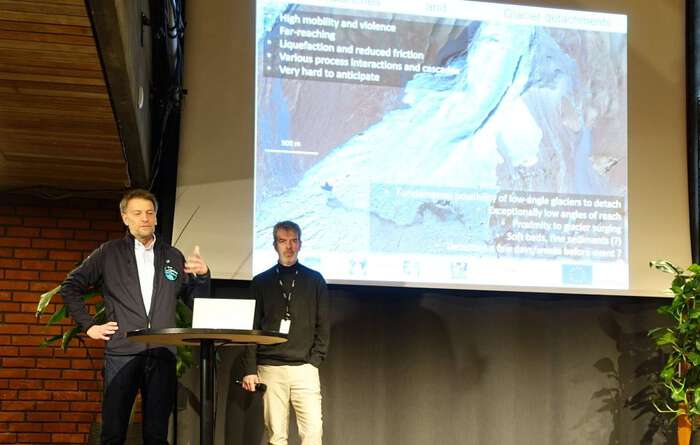
The talk “Rock-ice avalanches: 100 million cubic metres at the speed of a fast train” was held on 11 March 2026 by Professor Andreas Kääb, Department of Geosciences. Using remote sensing, he and other researchers monitor hazardous rock-ice avalanches in cold mountain regions.