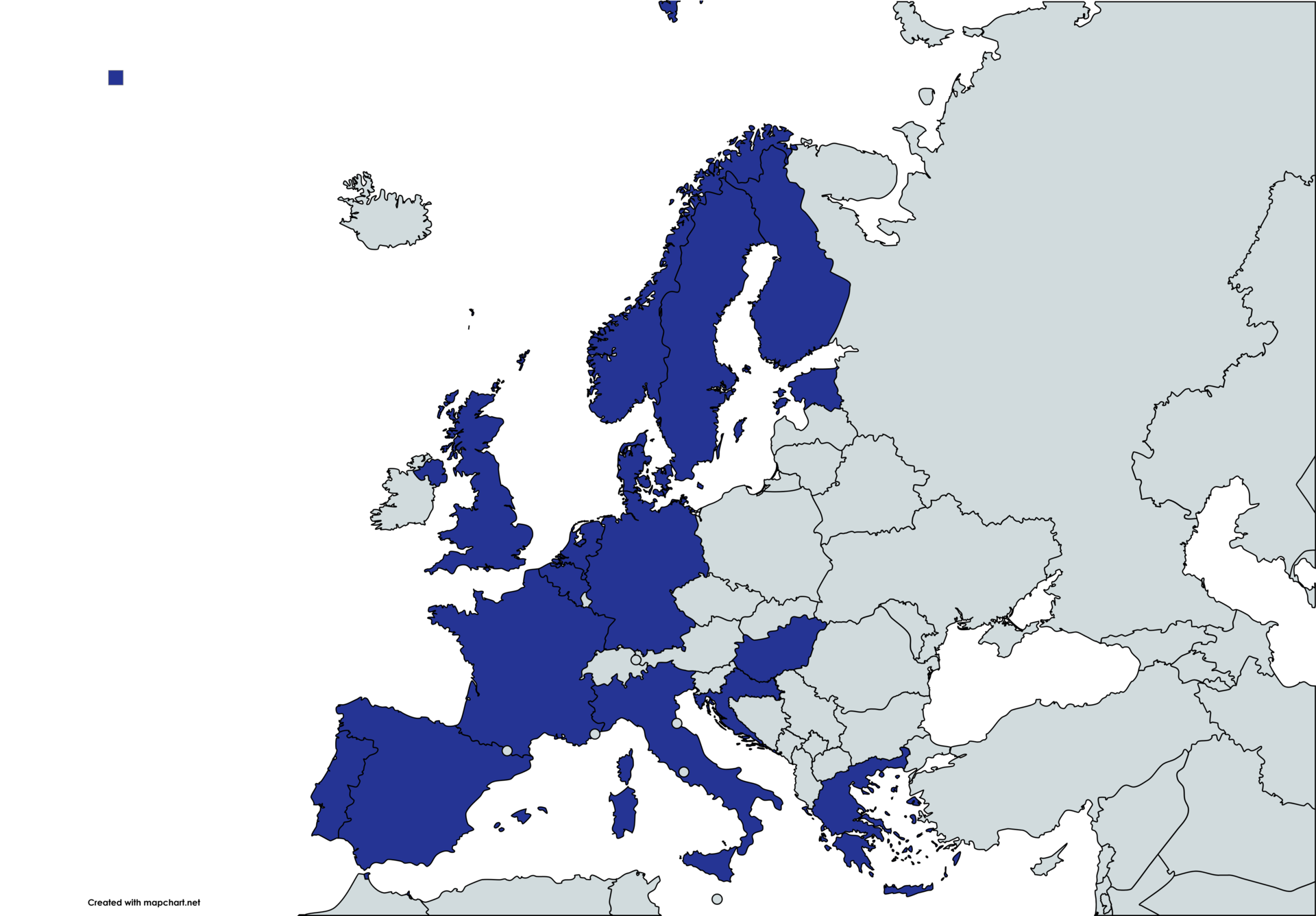
We contribute with two data sets:
Norwegian linked health registries: NLHR@UiO. 5,5 M individuals
NLHR has full coverage of both primary and secondary care for an entire nation with the high-quality birth registry.
Norwegian linked health registries: NLHR@UiO: Perinatal: 1,94 M pregnancies (mother, father, child)
What is DARWIN EU® ?
The European Medicines Agency (EMA) and the European Medicines Regulatory Network have created a network for evidence generation regarding the use, safety, and efficacy of medicines and vaccines for human use, utilizing real-world healthcare databases in Europe. This initiative is known as the Data Analysis and Real World Interrogation Network (DARWIN EU®).
What do we contribute with?
| Region | Norway (nationwide) |
| Number of patients | 5.7 Mill |
| Coverage | 100% |
| Period covered | Core: 2018-2023
Primary care/ pregnancies: 2008-2023 |
| Setting of care | Primary and Secondary care |
| Which data is covered | National registries |
| Darwin EU DP since | 2024 |
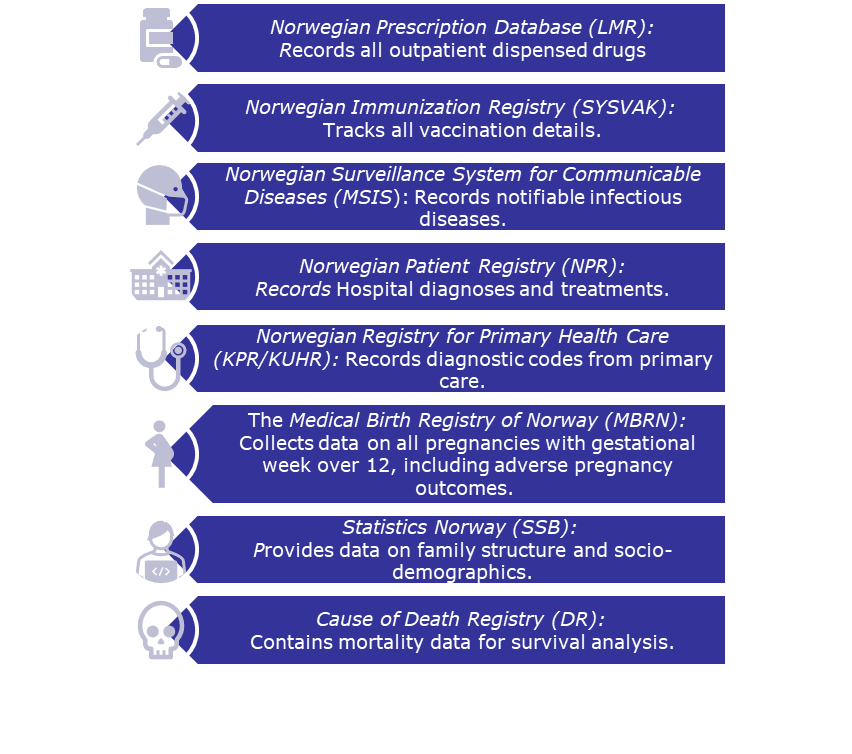
The following nation-wide registries are linked at an individual patient level in NLHR:
We have mapped our data onto the OMOP Common Data Model, and describe the process here:
Harmonizing Norwegian registries onto OMOP common data model: Mapping challenges and opportunities for pregnancy and COVID-19 research. Trinh NT, Houghtaling J, Bernal FL, Hayati S, Maglanoc LA, Lupattelli A, Halvorsen L, Nordeng HM. Int J Med Inform. 2024 Nov;191:105602.
OMOP Mapping Journey
Current status: OMOP CDM is generated over PostgreSQL DBMS. NHLR CDM has been initially released in 2024. A new CDM released with data up to 2024-06-01 and revised and validated versions in two other versions. Revisions made to enhance drug mappings and observation periods.
Challenges:
- Launching database in an isolated secure space in UiO.
- Mapping local codes to standard OMOP concepts, including procedures and drugs.
- Drug mapping needs continuous updates to include new product codes.
- Any change to each CDM table should be followed by re-validation of the whole CDM.