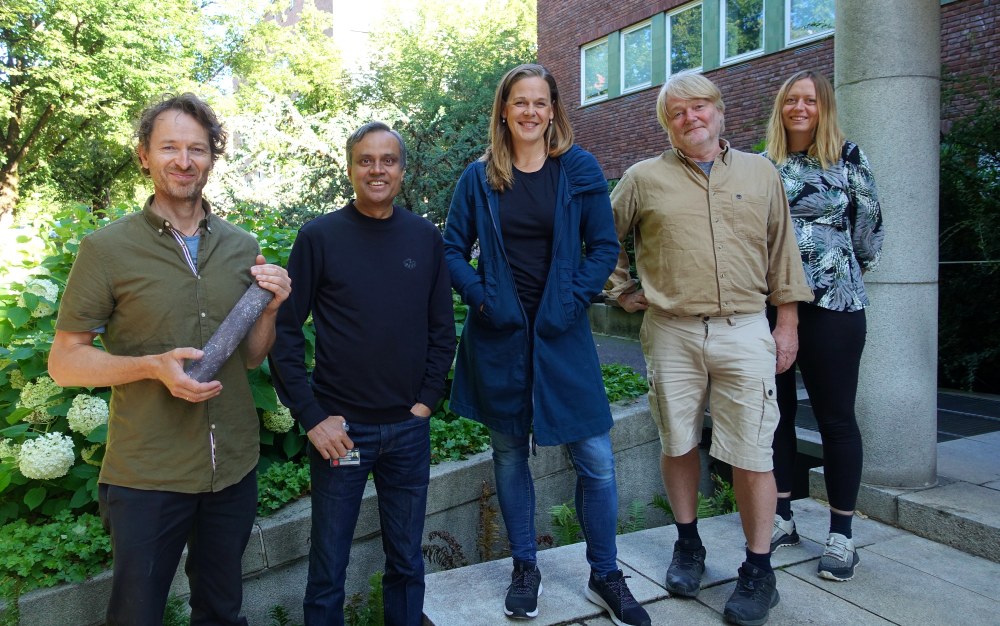
Recently, it became clear that VISTA and the Norwegian Academy of Science and Letters (DNVA) are awarding support to two new research centres under the VISTA funding scheme, one at NTNU and one at UiO. Each of the two centres will receive a total of 25 MNOK over a five-year period.
The new centre at the University of Oslo is for CO2 storage and is called the VISTA Centre for CO2 Storage in Volcanic-Sedimentary Systems (VICCO). It is part of the Department of Geosciences and represents a collaboration between researchers from geology/geophysics and physics within the Faculty of Mathematics and Natural Sciences. The centre has a total of four work packages outlined in its progress plan, which are to be implemented over the five-year period.
Large-scale CO2 storage in geological reservoirs
The overarching goal of VICCO is to explore the potential for large-scale permanent CO2 storage in volcanic-sedimentary systems on the Norwegian continental shelf, specifically by investigating carbonate-forming reactions in the submarine magmatic rocks.
Such carbonatization may enhance seal integrity in the storage medium and reduce reservoir leakage risks in mixed volcanic-sedimentary systems.
Carbonation processes can ensure permanent storage of CO2 by reducing the risk of reservoir leakage in the volcanic-sedimentary systems beneath the seabed. Professor of Geology, Henrik H. Svensen at the Department of Geosciences, will lead and coordinate the center, and he explains further why this research is important.
– Future approaches for managing CO2 storage in geological formations, both with Carbon Capture and Storage (CCS) and/or Carbon Dioxide Removal (CDR) technologies, are critically dependent on safe, long-term storage in suitable geological reservoirs.
– Our goal is to turn CO2 into stone. This can happen through reactions with volcanic rocks. We have plenty of these both in the North Sea and along the Atlantic margin on the continental shelf, says Svensen.
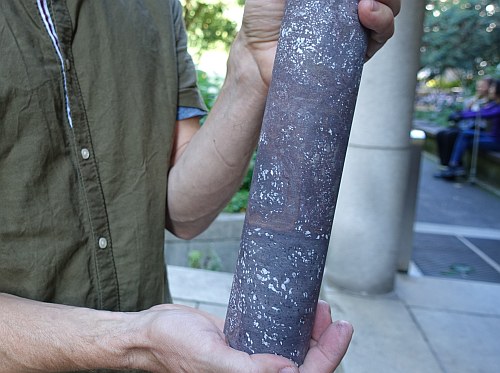
With an interdisciplinary approach, they will investigate complex volcanic-sedimentary systems with highly reactive mafic and ultramafic rocks, widespread offshore Norway. Magmatic rocks have significant potential for permanent carbon mineralization and the storage of large amounts of the greenhouse gas CO2.
Such permanent storage of CO2 can play a crucial role in Norway's energy transition in the future, and also in the global effort to mitigate climate change.
Multidisciplinary approach
The new center is a coordinated initiative between the Department of Geosciences, the sections for Crustal Processes and the Study of Sedimentary Basins, as well as the NJORD research centre.
The researchers behind VICCO are already a leading interdisciplinary and international scientific team, with several decades of experience in volcanic-sedimentary systems and CCS. They will also engage with other internationally leading researchers in VICCO.
The interdisciplinary team will explore carbonation processes from both porous structures and reaction mechanisms at the nanoscale to large-scale storage potential and CO2 capture in various types of geological reservoirs offshore Norway.
– One of our goals with VICCO is to provide new insights into the potential for secure CO2 storage at both the pore and basin levels beneath the seabed. Defining the permanent storage capacity of a potential reservoir is crucial for CCS plans, concludes Svensen.
Chairman of VISTA, Kenneth Ruud, explains that the quality of the 15 applications they received in this call was high, and states that: "It is particularly gratifying that many of our university communities have the interest and competence in the broad range of issues that need to be addressed in the energy transition that society is facing," in an article (in Norwegian) on the DNVA website about the allocation.
About the VISTA Funding Programme
VISTA is a program for funding basic research, financed by Equinor, and the program is carried out in close collaboration with the Norwegian Academy of Science and Letters (DNVA). VISTA allocates funds for research on issues related to the energy transition, and grants can be awarded to both scientific and social science research.
VISTA aims to develop strong and mutually beneficial collaborations between Equinor and Norwegian basic research communities.
Read more about VISTA and the funding here: Two new VISTA centres | Vista.no