Published
Dec. 19, 2024 3:23 PM
Permafrost temperatures in Europe's mountain regions are rising steadily, in some cases by more than 1°C over the last decade. A new study show large and fast changes.
Permafrost temperatures in Europe's mountain regions are rising steadily, in some cases by more than 1°C over the last decade. A new study show large and fast changes.
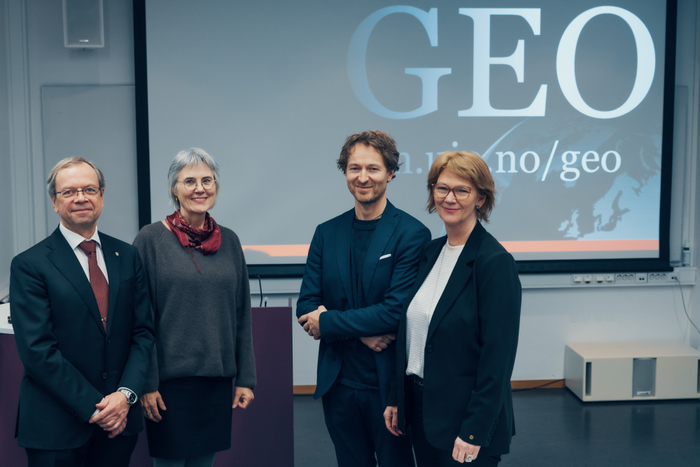
The new VISTA Centre – VICCO, was opened at the Department of Geosciences, early in December 2024. The centre will explore the potential for large-scale permanent CO2 storage in rocks.
Many people associate climate change and global warming with melting glaciers in the Arctic and Antarctic. But rock glaciers in the mountains are also affected by increased temperatures.
An interdisciplinary research team from the MN-faculty, UiO has been granted support to establish a research centre to explore the potential for safe and permanent large-scale CO2 storage in rocks. The centre is led by Henrik H. Svensen from Dept. of Geosciences.
However, permafrost is thawing in step with global warming, and this is happening regionally.
In a new study a research team suggests, based on new Earth System Model simulations, that the temperatures in the Northern Hemisphere in the past 8000 years were highly variable on interannual to centennial timescales. The study reveals that this period was not a unique period of climate stability as it is currently often portrayed, and it pinpoints clusters of large volcanic eruptions as a key driver for past climate variations.
A multidisciplinary team of researchers, including PHAB’s Justin Tonti-Filippini and CEED’s Boris Robert, conducted a large paleomagnetic and geochronologic study of 800-million-year-old red beds from South China. In contrast to previous studies in the region, their results suggest that Earth’s geomagnetic field and rotation axis were stable at that time. Their paper was just selected as an Editors’ Highlight in JGR Solid Earth.
Scientists need to understand how microscopic water droplets and ice crystals form in clouds in order to predict what the climate will be like in the future.
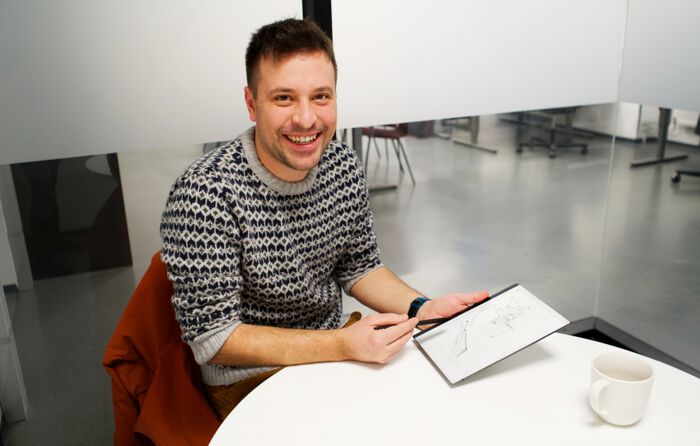
Fabian Barras is a researcher at the interdisciplinary Njord Center at the University of Oslo, where physicists, mathematicians, and geologists collaborate to understand the Earth's physics, conducted this research. He was recently interviewed in Titan the University of Oslo news publication for natural sciences and technology at the University of Oslo.
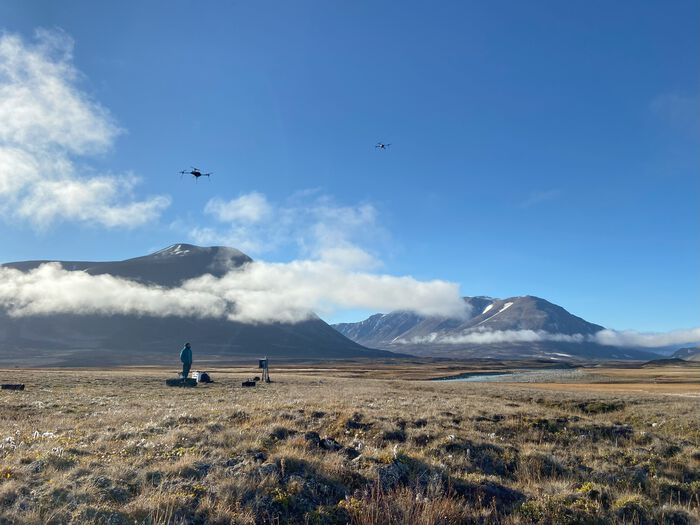
How do you map something that is both invisible and odorless? Researchers at the University of Oslo have trained drones to find the best places to measure greenhouse gases on their own.