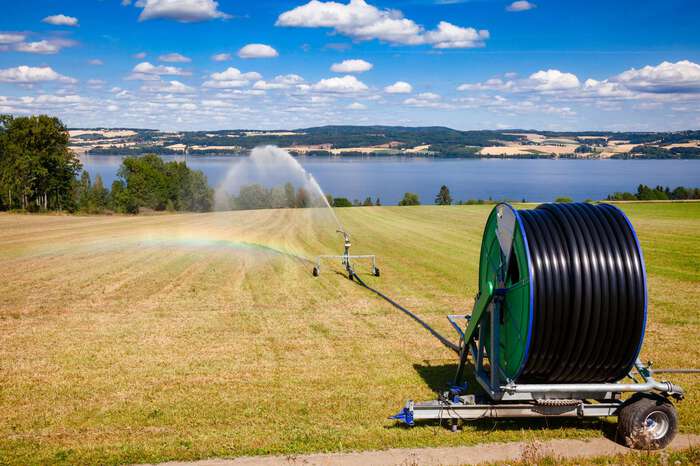
Large parts of Northern Europe experienced extreme drought in 2018. Hydrologists at University of Oslo have searched the Norwegian media for drought impact reports from 2000 to 2018 in order to better understand its consequences.
Research news
A new study explains how kilometre-scale mud flows form at some of the world’s largest mud volcanoes. Evidence from the Lokbatan mud volcano in Azerbaijan shows that massive mud flows do not necessarily originate from single catastrophic eruptions, but instead grow gradually through repeated slow creep triggered by smaller eruptive events.
The consequences of volcanic eruptions can be severe. Now researchers at the University of Oslo have made a surprising discovery: magma pressure can fold solid rock in less than a single day. They found the evidence on a mountainside.
Professor Andreas Kääb and the Department of Geosciences are partners in the new international project MountAInWater. The aim is to establish a global “water accounting” system and to map how climate change threatens mountain waters and future water security in the Himalayas, the Pamirs, the Canadian Rockies and the Andes.
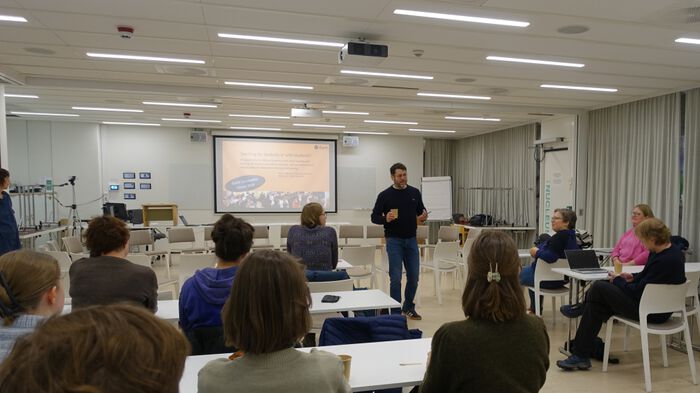
Two workshops brought together geoscience students, staff and experts on 30 January. The event, part of the iEarth Co‑Creation Forum, explored how teaching can be developed through collaboration between instructors and students. It was organised by the Section for Geodidactics at the Department of Geosciences.
A new study presents projections for Jostedalsbreen in a future warmer climate. Scientists used an advanced computer model to simulate the glacier's melting and dynamics across various scenarios.
The fourth expedition to the Arctic Ocean in the GoNorth initiative takes place in November–December. UiO researchers Carmen Gaina and Alexander Minakov are participating with research on the processes that shaped the Arctic Basin from 55 million years ago and their impact on the climate.
No, the ocean current that brings warm water along the Norwegian coast will not stop, producing a cold shock or a new ice age. Here you will learn why.
One of the world’s largest natural manifestations of endogenous fluids, known as Lusi in Indonesia, is releasing vast quantities of oil and gaseous hydrocarbons into the environment—comparable to some of the most significant industrial spills in history.
The research is a pioneering effort to employ drones for methane (CH4) emission quantification from ruminants in sub-Saharan Africa. It is one of the first field studies to measure methane emissions from camels, a largely understudied source.