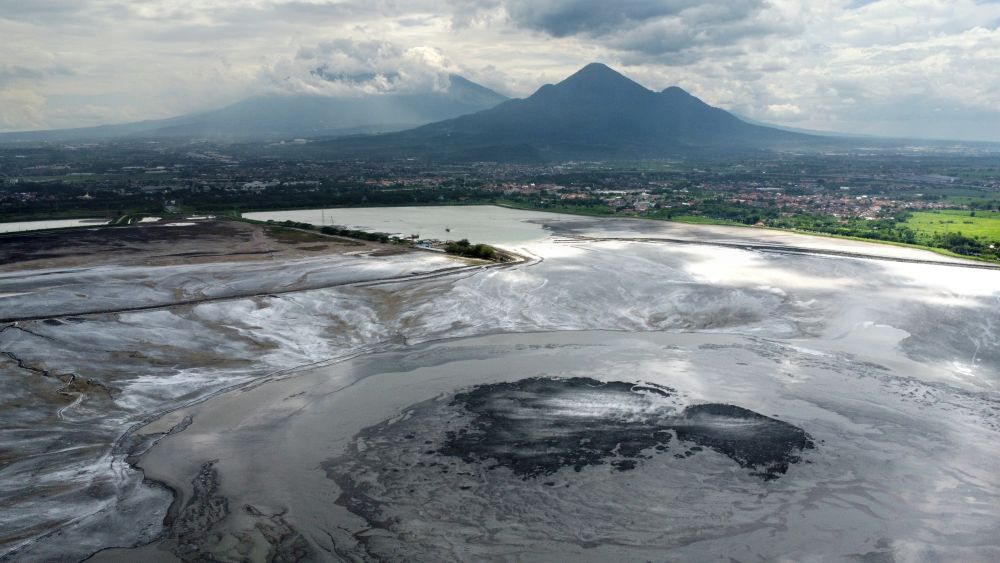
Lusi is a natural fluid-mud manifestation that geologists classify as “sediment-hosted geothermal system”, since it includes both hot geothermal (CO2 and water vapour) and cold sedimentary (hydrocarbons) fluids.
"Lusi is not only the world's largest active clastic eruption, but is also a significant natural source of emissions of oil, potent greenhouse gases and photochemical gases, including methane, ethane and propane", says researcher Dr. Adriano Mazzini, at the Department of Geosciences, University of Oslo.
Mazzini led the international research team from Norway, Germany, Italy, England, Romania and research colleagues in Indonesia, who have carried out the comprehensive quantification of liquid and gaseous hydrocarbon emissions from the Lusi system. Their findings have now been published in Nature Communications.
They show that during the first 13 years of continuous activity, Lusi has released an estimated 0.22–0.28 million tonnes of oil, a volume comparable to the Deepwater Horizon oil spill, in the Gulf of Mexico, one of the largest environmental disasters in recent history.
One of the planet’s largest natural gas emitters
Previous studies based on satellite monitoring indicated that Lusi emits about 0.1 mega tonnes of methane per year. The new study reveals that Lusi also emits approximately 8,000–10,000 tonnes of ethane and 6,000–8,000 tonnes of propane annually into the atmosphere making it one of the planet’s largest natural gas emitters.
The level of ethane and propane emissions is staggering— over 18 years, Lusi has already injected into the atmosphere more than 20 times the amount of ethane released by the 2015 Aliso Canyon gas storage accident (California), considered as one of largest gas leak in U.S. history.
While methane is a well-known greenhouse gas, ethane and propane are key precursors to tropospheric ozone, a harmful air pollutant and short-lived climate forcer. The study highlights that Lusi’s emissions of these gases are orders of magnitude higher than those from major anthropogenic sources such as the Barnett Shale in Texas or the La Brea Tar Pits in California.
Our findings show that Lusi is not only a spectacular geological phenomenon, but also a major natural source of hydrocarbons to the atmosphere and aquatic environment,” says Dr. Adriano Mazzini, lead author of the study.
"This research confirms that natural seepage is not a minor contributor to atmospheric hydrocarbon budgets. Lusi exemplifies how sediment-hosted geothermal systems can act as powerful, persistent sources of climate-active gases."
A natural laboratory of global significance
The Lusi mega seepage system in East Java, Indonesia, has been active for nearly 20 years. Formed through the interaction between an active hydrothermal and petroleum systems, it continuously spews mud, rock clasts, water, gas, and oil to the surface.

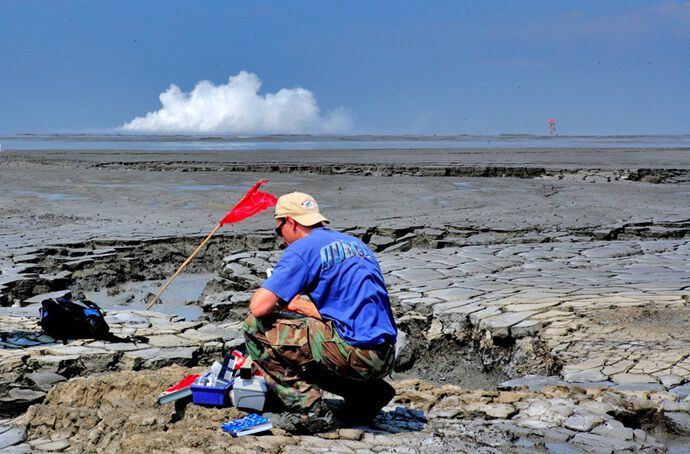
This ongoing eruption has become a unique natural laboratory, allowing scientists to study in real time how geological, geochemical, and geothermal processes interact. Dr. Adriano Mazzini conducted dozens of multidisciplinary studies also with a dedicated ERC project to investigate the Lusi plumbing system and the dynamics of fluid migration, sediment transport, and gas emissions.
“Lusi represents and unprecedented opportunity to observe a complex geological system in action,” explains Mazzini, who has been monitoring the eruption since its onset in 2006 and conducting annual field expeditions leading geochemical. geophysical and onsite monitoring surveys.
Each year, we gain new insights into how magmatic heat and organic-rich sediments interact to produce such large-scale hydrocarbon emissions".
Environmental and global implications
The oil- and gas-charged mud from Lusi drains into the Porong River and the Madura Strait, posing ongoing environmental challenges for aquatic ecosystems in northeast Java. The authors highlight the urgent need for monitoring oil contamination in riverine and coastal sediments, as well as assessing long-term ecological impacts.
The findings also contribute to a broader understanding of natural contributions to greenhouse gas and hydrocarbon emissions, helping distinguish them from human-induced sources.
"Understanding the full spectrum of hydrocarbon emissions—both anthropogenic and natural—is essential for an accurate evaluation of the atmospheric greenhouse gas budget and the effectiveness of mitigation strategies to reduce man-made sources, considering that the natural ones cannot be controlled", added Giuseppe Etiope, from the Istituto Nazionale di Geofisica a Vulcanologia in Italy, co-author of the work.
"Lusi provides a unique natural laboratory to investigate these processes in real time", states the researchers behind the study.
An international collaboration
The research effort behind the new groundbreaking study combines over a decade of field measurements, geochemical analyses and satellite data to provide unprecedented and new insight into the extent and impact of natural hydrocarbon seepage. If you want to see what the eruption looks like, you can watch this film from 2017. The short film was made by AGU in connection with the research at Lusi, and has been viewed by over 70,000 people to date.
The new study, titled “Extensive oil, ethane and propane discharge at the mega seepage system of Lusi, Indonesia”, is available in Communications Earth & Environment, a journal from the Nature Portfolio. The study was conducted by a international team of researchers from these research institutions:
- University of Oslo and Institute for Energy Technology (Norway),
- Istituto Nazionale di Geofisica e Vulcanologia (Italy),
- Federal Institute for Geosciences and Natural Resources (Germany),
- Integrated Geochemical Interpretation Ltd (UK),
- Pusat Pengendalian Lumpur Sidoarjo (PPLS) (Indonesia), and
- Babeș-Bolyai University (Romania).
The researchers team work sheds new light on how geological and magmatic processes shape the Earth’s natural emissions and highlights Lusi as one of the most remarkable and scientifically valuable seepage systems on the planet.
The scientific article:
Mazzini, A., Zaputlyaeva, A., Blumenberg, M. et al. 2025. Extensive oil, ethane and propane discharge at the mega seepage system of Lusi, Indonesia. Commun Earth Environ 6, 854. https://doi.org/10.1038/s43247-025-02871-4
Read more about the research on the Lusi seepage:
The research project LUSI LAB (ERC Start up grant 'LUSI LAB'), Department of Geosciences, University of Oslo.
The Indonesian Lusi eruption – a significant source of greenhouse gases, titan.uio.no (2017)
See the Lusi eruption on YouTube: Scientists determine source of world’s largest mud eruption. Credits: American Geological Union/AGU: (2017)