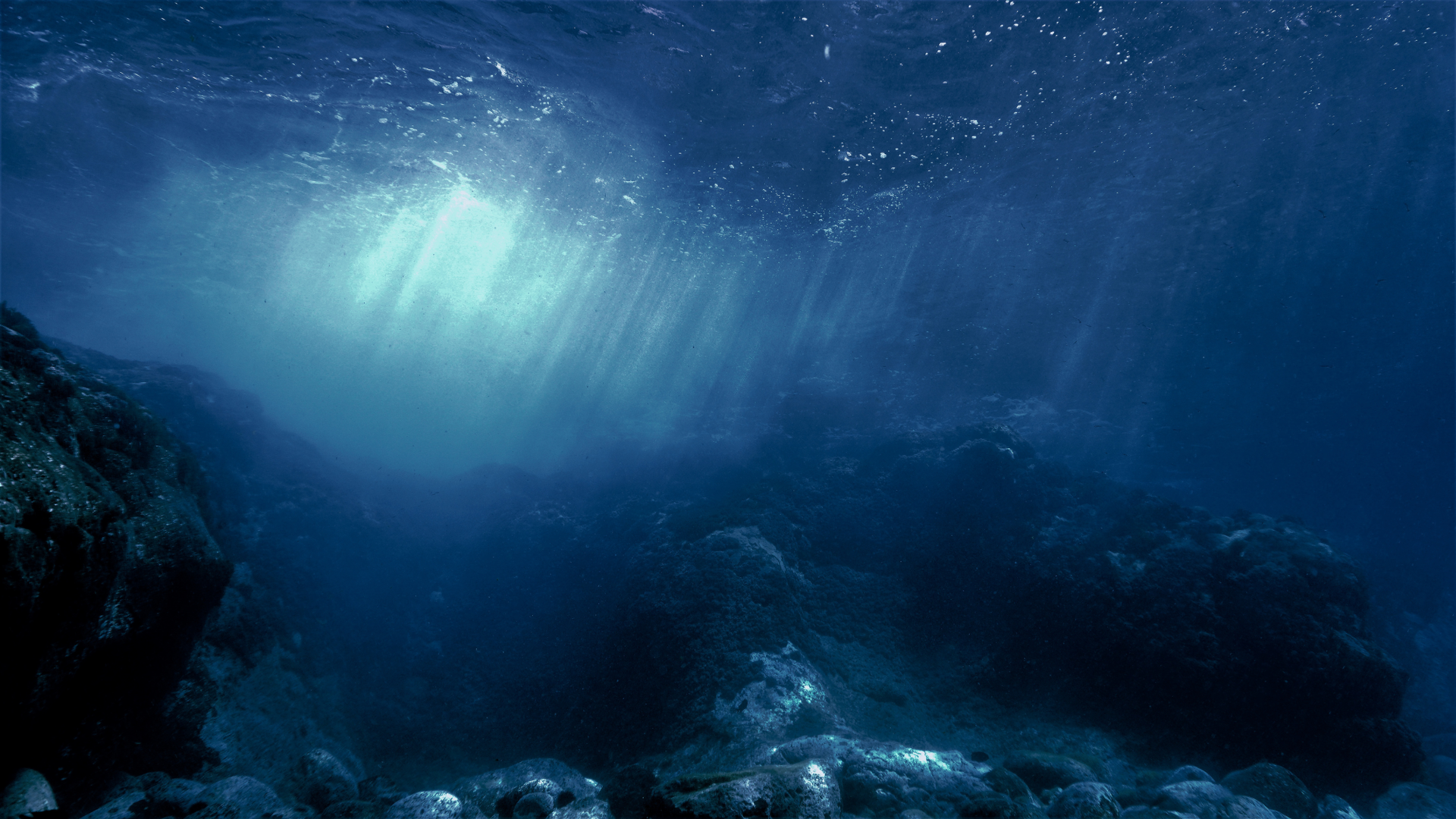
The ocean covers around 70 percent of the Earth’s surface, but large parts of the seafloor remain largely unexplored.
“The deep oceans and the life they host are still something we know surprisingly little about”, says Clint Conrad, a professor at the Department of Geosciences at the University of Oslo.
Among the unexplored regions hidden in the depths are seamounts, often ancient extinct volcanoes. They can form long mountain ranges on the seafloor and can rise as much as 4,000 metres above it.
“Seamounts, are mountains beneath the sea. They come in all sizes, and many are completely invisible from the surface. Researchers can locate them by using satellites to detect small variations in gravity,” explains Mathew Domeier, Associate Professor at the Department of Geosciences and the PHAB Centre at the University of Oslo.

The two researchers from the University of Oslo (UiO) recently published their findings in an article in Nature Geoscience. They uncovered new insight into how Earth’s interior provides the conditions for and “creates” these important seamounts.
Seamounts in Norwegian waters
We tend to think of mountains as something that rises above sea level, but the seafloor is just as rugged as the landscape on land.
“Many of the mountains beneath the ocean are completely hidden because they never reach the surface. Some do, however, come close to sea level, and can sometimes rise above to create islands,” says Conrad.
What the researchers have focused on in particular are the large seamounts that lie out in the deep ocean, far from land, and that can have enormous dimensions.
Facts about seamounts
Seamounts are usually extinct volcanoes that rise steeply up to 4,000 meters above the seafloor.
Some are so large that they rise above the ocean surface. Some of these can then have their tops eroded down, so that the seamount ends up with a flat summit below sea level. These are called guyots or tablemounts.
Earth’s oceans contain more than 43,000 identified seamounts, more than half of which are higher than 1,000 meters.
“In Norwegian waters, there are a number of such seamounts near Svalbard, and several in areas around other Norwegian islands such as Jan Mayen and Bouvet Island,” says Conrad.
These undersea mountain structures are also of interest for recent Norwegian expeditions and exploration of the Arctic, including the GoNorth expedition and the new initiative from The Norwegian government Arctic Ocean 2050.
Connection to structures in the deep mantle
Beneath the seafloor lies Earth’s mantle, a thick layer of solid but viscoelastic, hot rock where large structures and heat flows can influence where volcanic activity occurs on the seafloor.
The researchers examined two enormous structures at the very bottom of the mantle, near the boundary with Earth’s core. They are called LLSVPs, short for Large Low Seismic Velocity Provinces.
“We see that volcanic activity on seamounts is more extensive on seafloor that has previously passed over such LLSVPs - large regions where seismic S‑waves travel more slowly,” says Mathew Domeier.
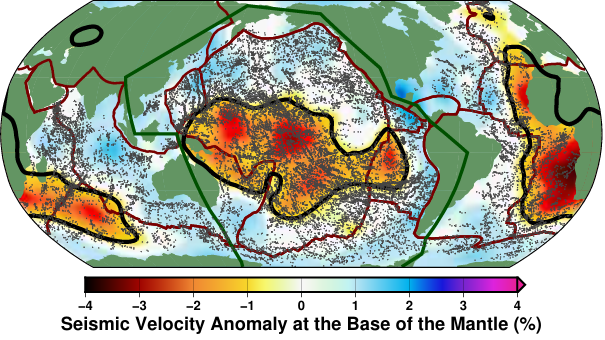
“There are two LLSVPs located in the lowermost part of the mantle beneath Africa and the Pacific. They are like two ‘island‑like’ hot zones near Earth’s core - enigmatic but important structures that may have existed for billions of years,” explains Clint Conrad.
But how could these deep structures have triggered volcanism at Earth’s surface – or rather, on the seafloor?
“The two enormous structures in the deep mantle are hotter than their surroundings and therefore less rigid. In our study, we propose that weak plumes rising from both LLSVPs interact with the seafloor and promote volcanic activity on seamounts,” adds Domeier.
According to the researchers, this process may be particularly strong in the Pacific region because the mantle rocks there can be hotter and wetter, and therefore more dynamic.
Important for life in the deep sea
“Just like mountains on land, it is important for us to understand seamounts. They can pose hazards to humans - submarines have crashed into unknown seamounts. Seamounts also create special habitats in the ocean – they provide hard substrate, shelter, sometimes favorable currents, and often rich nutrients. They can also be important stopovers for migratory species,” says Clint Conrad.
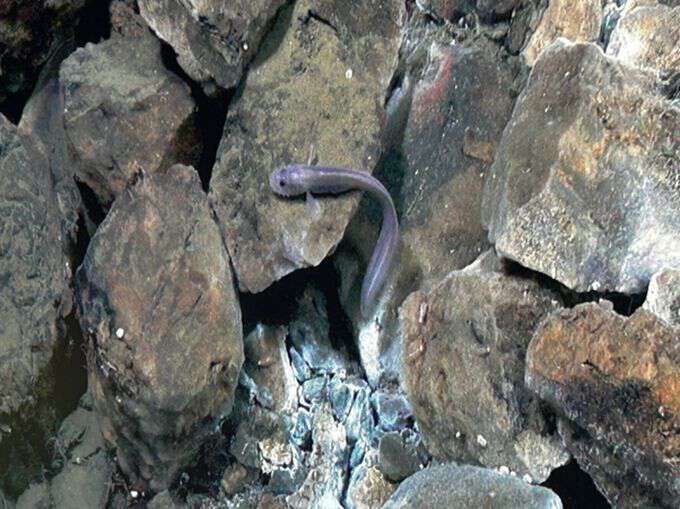
Seamounts also affect ocean currents. When water flows over and around these structures, both circulation and the mixing of nutrients in the ocean are altered.
Currents that are forced upward along the seamounts bring nutrients toward the surface and create rich feeding grounds for fish, marine mammals, and seabirds.
Six reasons why seamounts are important
- They are vital for many deep‑sea species and habitats.
- They tell stories about the planet’s past and future.
- They are important arenas for scientific discovery.
- They serve as areas for feeding, reproduction, and growth (spawning and nursery grounds).
- They play a crucial role in ocean circulation and nutrient cycles.
- The taller seamounts can pose hazards for submarines.
Source: “Five reasons why seamounts are important” (NOAA) and the researchers
Seamounts also provide scientists with key data on how Earth has developed as a planet – both in the past and in the future. In the study mentioned above, Conrad and Domeier show that plumes transporting heat from the LLSVPs are likely responsible for most of the volcanic activity within oceanic plates, including scattered seamounts.
This connection to the deep mantle means that volcanism on seamounts is sensitive to and can help us understand how the dynamics of Earth’s deepest mantle have changed over geological time.
The Pacific’s famous volcanic island chain
Mathew Domeier has previously researched the volcanic island chain off Hawaii known as the Hawaiian–Emperor chain.
“The Hawaiian–Emperor seamounts chain is a undersea mountain range in the Pacific Ocean. It lies below sea level, but the Hawaiian ridge rises above sea level and forms the Hawaiian Islands. Altogether, this chain contains more than 80 identified submarine volcanoes,” says Domeier.
This mountain chain has moved over one of the LLSVP structures in the deep mantle. This has produced long‑lasting volcanic activity on the seafloor and built up a series of mountains as the oceanic plates have passed over this mantle zone.
“The Hawaiian–Emperor seamounts chain is a good example of how the deep mantle can control where and when seamounts form. In our study, we show that similar processes may have been important in many places on the seafloor,” says Domeier.
Watch the video on YouTube below to learn more about the Hawaiian–Emperor seamounts chain and how such mountain chains form.
The scientific article:
Conrad, C.P., Domeier, M. 2026. Seamount volcanism associated with Earth’s basal mantle structures. Nat. Geosci. 19, 822–827. https://doi.org/10.1038/s41561-026-02007-z
See the film about the Hawaiian–Emperor seamounts chain (YouTube):
YouTube: How the Pacific got its bend. Interview with Mathiew Domeier, CEED & Dept of Geosciences, University of Oslo. Explaining from the article: Intraoceanic subduction spanned the Pacific in the Late Cretaceous-Paleocene (Science Advanced, 2017).