Webpages tagged with «Machine Learning»
This paper by Sigurd Holmsen et al. has been accepted at NeurIPS 2026. We introduce a non-parametric mutual information estimator that uses vine copulas to offer fast, interpretable, and accurate estimates.
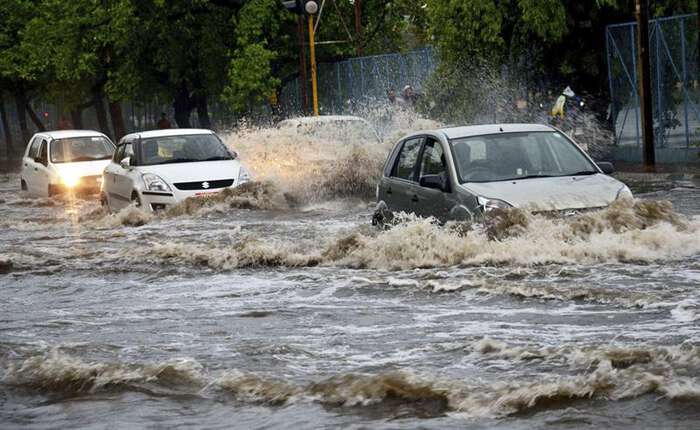
Urban flooding caused by intense rainfall has been an increasing challenge for cities and communities in the world. More frequent and intense extreme weather events can lead to rapid urban surface flooding, combined with flooding from the sewer systems and from the rivers, which can cause significant damage to infrastructure and property, also threatening human safety.

The use of deep learning to detect and characterise histopathological images is anticipated to substantially enhance current clinical practice through more efficient and objective evaluation of diseases and more personalised treatment for the individual patient. Interested students are encourage to reach out to discuss current possibilities in the longstanding collaboration between the DSB group and the Institute for Cancer Genetics and Informatics at Oslo University Hospital.
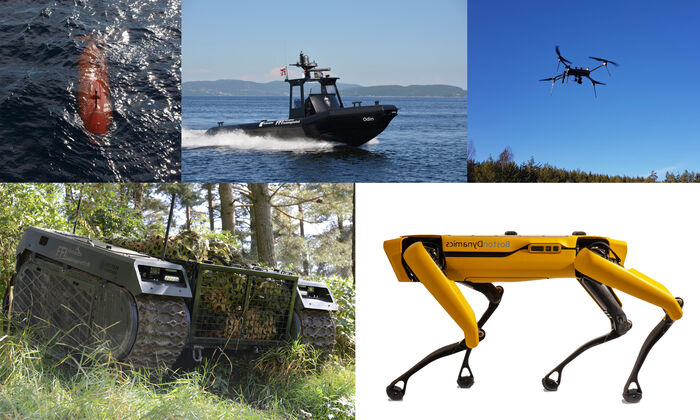
Oppgaven utføres i samarbeid med Forsvarets forskningsinstitutt (FFI) på Kjeller.

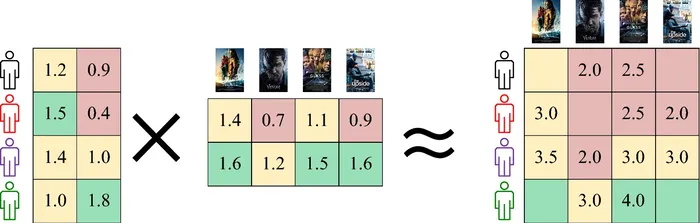
Matrix completion (see [1,3]) is one of the classical problems studied in machine learning. The purpose of this master project is to use strategic work partitioning and optimised communication to speed up matrix completion calculations on parallel computers.
Secure the drive, beyond quantum.


.jpg?alt=listing)
.jpg?alt=listing)




Climate changes pose "the biggest health threat facing humanity." Let us help empower decision-makers to address it through AI.

The Rokoko SmartSuit II is capable of full-body motion tracking, which makes it possible to control an avatar in a virtual world or a robot in a remote location just by moving your body.
The trouble is that we must transmit this motion data over the network, which costs time. This thesis is about hiding this delay by predicting your body motion.

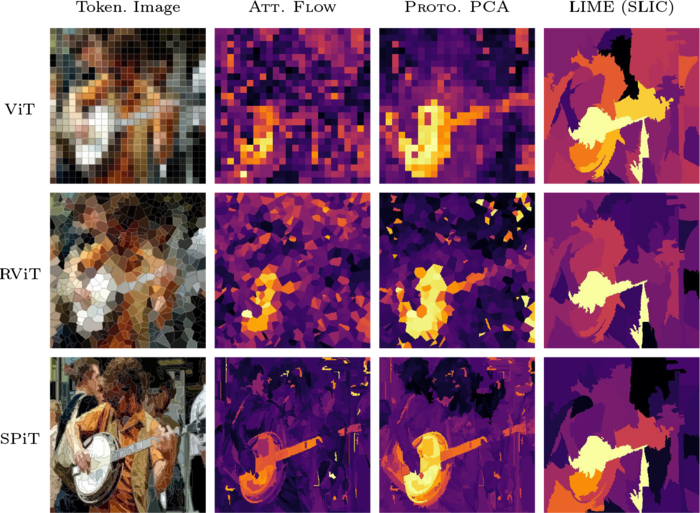
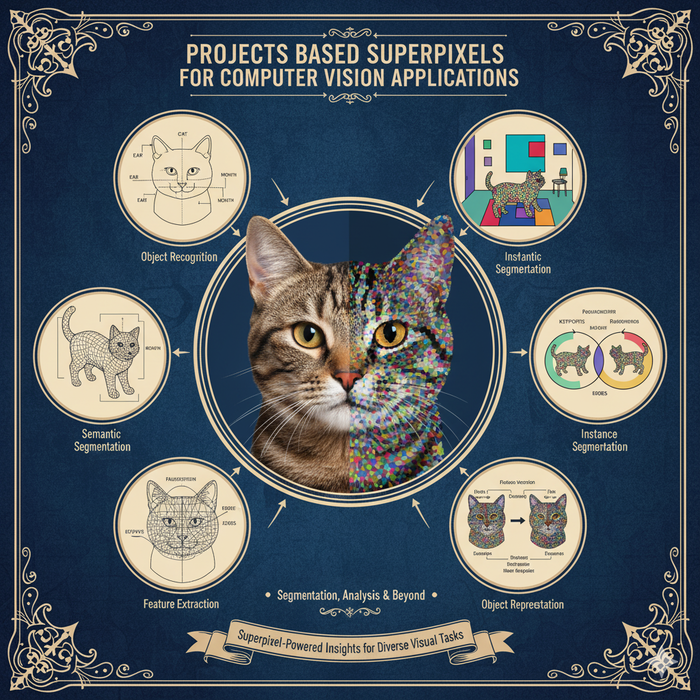
The Vision Transformer (ViT) signifies a new direction in modelling spatial data, representing a shift in focus from local spatial interactions to global contextual relationships. Traditionally, ViTs partition images into square patches to extract tokenized features. But is this necessarily an optimal way of partitioning images for transformers?
