This project aims to develop a proposal for a Nordic Model for integrating social and assistive robots as welfare technologies and actors in elderly care, addressing challenges posed by the aging population and the shortage of nursing staff across Nordic countries. Previous research in the Nordic region's welfare tradition illustrates the use of welfare technologies like fall alarms, cameras, tablets, and computers. However, more complex welfare technologies such as AI-driven technologies, including social and assistive robots might challenge the current practical, ethical, and legal existing infrastructures, or models around the integration of welfare technologies in the care systems for elderly people. The project is planned to take place within Norway (project leader, University of Oslo), Denmark (University of Southern-Denmark), and Sweden (Royal Institute of Technology), together with relevant stakeholders.
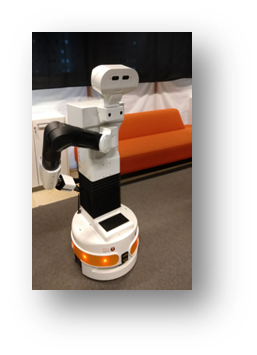
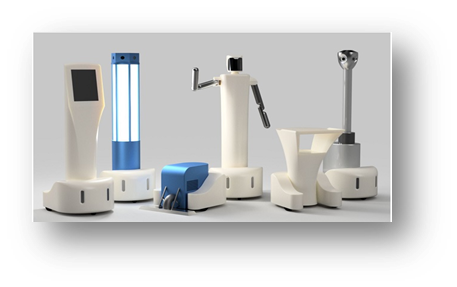
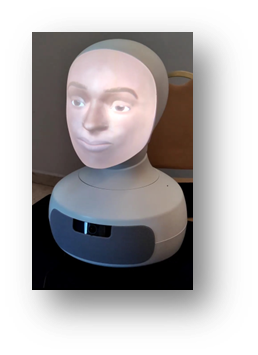
Photos (left to right): TIAGo from Pal Robotics at UiO (Photo Credit: Diana Saplacan Lindblom, own archive); HospiBot from SDU Denmark (Photo Credit: SDU; and Furhat from Furhat Robotics (Photo credit: Diana Saplacan Lindblom, own archive)
Objective 1: Conduct Cross-country User Studies on the Integration of Welfare Robots within the Elderly Care Systems (User studies)
Objective 2: Mapping Benefits and Tensions Across Technical, Ethical and Regulatory Aspects (Technical, Ethical and Regulatory Aspects)
Objective 3: Assess the Impact of Robots on Elderly Care Workflows (Work tasks and workflow)
Objective 4: Develop a proposal for a Nordic Model for Sustainable Robot Integration in Elderly Care (Proposal of a Nordic Model)
Research questions:
RQ1: What are the key enablers and barriers to the sustainable integration of welfare robots into elderly care across different care settings in the participating Nordic countries, and how do elderly individuals and their caregivers perceive these technologies?
RQ2: Which technical, ethical and/or regulatory challenges must be addressed to ensure that welfare robots align with fundamental rights such as privacy, autonomy, dignity, and informed consent in elderly care?
RQ3: To what extent does the integration of welfare robots impact elderly care workflows, including caregivers' tasks, workload, and professional roles, and in what ways can these technologies be introduced to enhance efficiency without interrupting care practices?
RQ4: How can a Nordic Model for integrating welfare robots in elderly care be designed to align with the practical, legal, and ethical needs of each (participating) country while ensuring their implementation in the care systems ensures a sustainable and ethically responsible future for elderly care systems?
Other information about the project:
Information about the project on NordForsk's webpage can be found here.
Link to NordForsk's call on Susainable Health and Social Care Systems for Elderly.
The seven (7) projects funded by the call can be found here.
Would you like to be added to our emailing-list to find out the latest news about the project?
Send an email to dianasa@ifi.uio.no to be added to the robowell-extended emailing list.