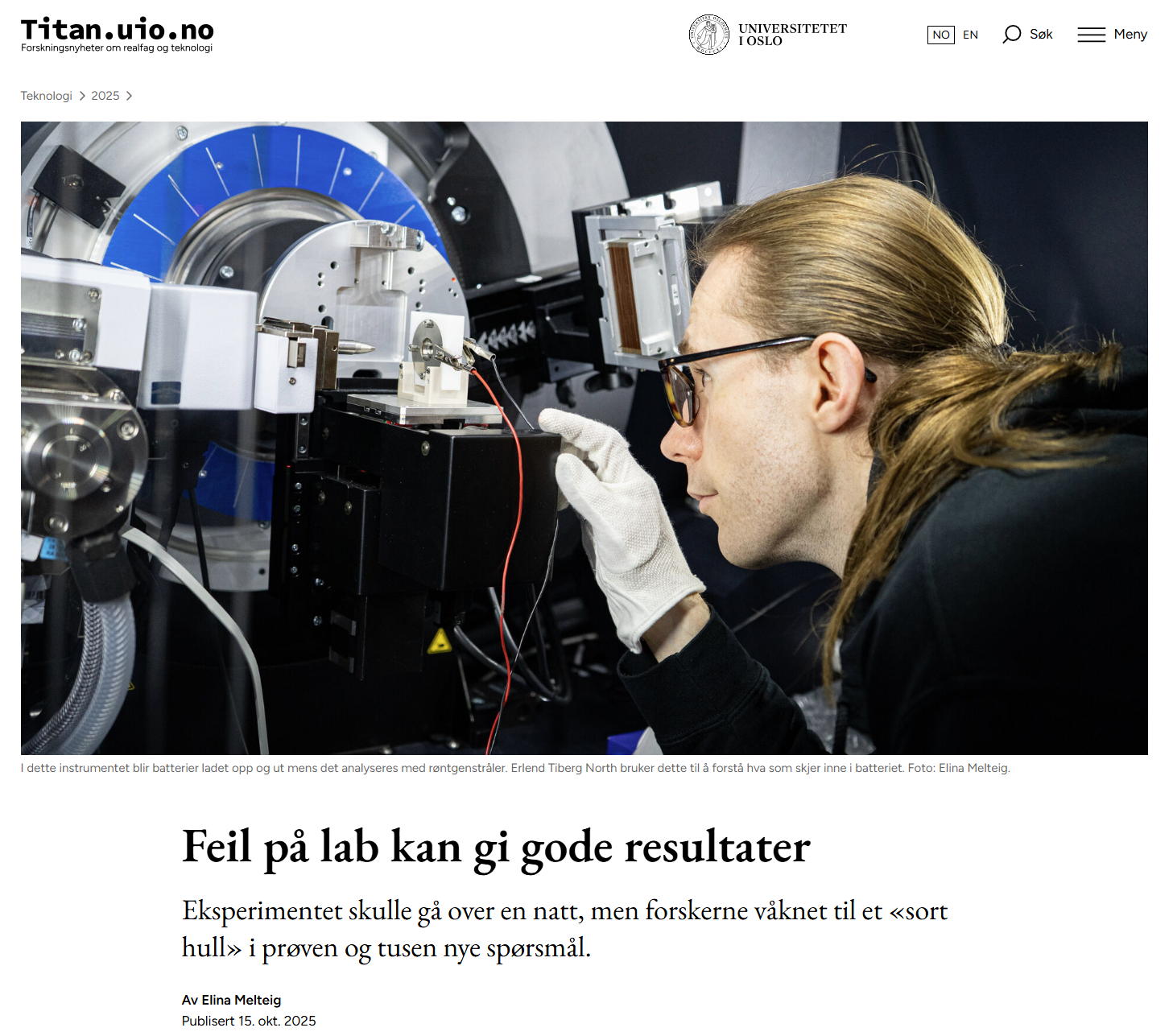
The article discusses an unexpected outcome during an experimental procedure conducted by Erlend Tiberg North and his colleagues at a laboratory in Grenoble, France. The team experienced a "happy accident" involving a battery they were studying. After a night of experiments, they discovered a puzzling "black hole" in the battery's material where X-ray radiation had been concentrated due to a coding error. Surprisingly, despite damage to about one-thirtieth of the battery's structure, it retained 90% of its optimal capacity.
The research indicated that damage from the X-ray exposure had repercussions extending significantly beyond the immediate area of exposure. This raised questions about the relationship between material damage and the functionality of batteries. The team also identified unwanted chemical reactions, including the formation of lithium fluoride, which negatively impacted battery capacity.
North emphasizes that while X-ray radiation is critical for material analysis, it can also lead to unwanted damage. He suggests minimizing exposure time and tailoring the energy of the X-rays to the material being studied to reduce damage. Ultimately, he stresses the importance of acknowledging that materials can be compromised in the research process to innovate and develop better batteries.
See full article in Titan UiO.