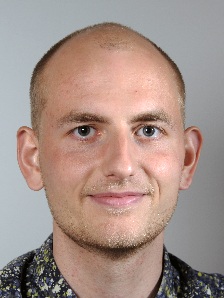
The Disputation will be live streamed for everyone else.
The livestream will be activated 15 minutes before the Defense starts.
Trial lecture
May 9th, 10:15 AM, Auditorium 3, Chemistry building
Trial lecture title: "Self-assembled antimicrobial nanoparticles"
Kreeringssammendrag/Conferral summary
I bekjempelsen av økende antimikrobiell resistens viser antimikrobielle peptider lovende egenskaper som effektive og potente antibiotika, men deres terapeutiske bruk begrenses av lav stabilitet og cytotoksisitet. For å redusere disse bivirkningene, undersøker vi i denne avhandlingen hvordan antimikrobielle peptider kan sammensettes med PEO-b-PMAA-polymerer for å danne stabile kompleks-koaservatmiseller og vesikler egnet for legemiddellevering. Disse nanopartiklene karakteriseres systematisk med røntgen- og nøytronspredning for å utvikle nye antibiotikaforformuleringer.
Main research findings
In the search for new antibiotics to combat multidrug-resistant bacteria, antimicrobial peptides (AMPs) are promising candidates. These peptides are naturally present in the (innate) defense systems of a wide range of organisms, including bacteria, animals, and humans. Although AMPs demonstrate broad-spectrum activity against many bacterial pathogens, their therapeutic use is challenging due to potential toxicity and low stability issues.
To address these side effects, we investigated the complexation of AMPs with PEO-b-PMAA polymer molecules to form antibiotic nanoparticles, exploring their potential for drug delivery. Using small-angle X-ray and neutron scattering techniques, we show that the AMP colistin could be efficiently incorporated into stable micelle and vesicle particles. The complexed colistin showed better protection against enzymes than its noncomplexed form, while it kept its antibiotic activity.
To improve our fundamental understanding of polymer complex coacervation for drug delivery, we investigated the formation of colistin micelles in more detail. Our findings revealed that micelles form in three stages: nucleation, micelle fusion, and single-chain insertion. Additionally, we showed that we could control the micellar size, which is important for drug delivery optimization. By providing new insights into (AMP-)polymer coacervation, this work aims to inspire further research in AMP delivery for the antibiotics of the future
Candidate contact information
LinkedIn: https://www.linkedin.com/in/thomas-vogelaar-8b6927179/
E-post: t.d.vogelaar@kjemi.uio.no
Adjudication committee
Professor Ilja Voets
Technical University of Eindhoven, Netherlands
Professor Stefan Salantinig
University of Fribourg, Switzerland
Associate Professor Hanne Røberg-Larsen
Department of Chemistry, University of Oslo, Norway
Supervisors
Professor Reidar Lund
Department of Chemistry, University of Oslo, Norway
Professor Michele Cascella
Department of Chemistry, University of Oslo, Norway
Chair of defence
Professor Ute Krengel
Department of Chemistry, University of Oslo, Norway