Gjesteforelesninger og seminarer - Side 3
Karen Mulleners is an associate professor in the institute of mechanical engineering in the school of engineering at EPFL. She is the head of the unsteady flow diagnostics laboratory (UNFoLD). She is an experimental fluid dynamicist who focuses on unfolding the origin and development of unsteady flow separation and vortex formation. Karen studied physics in Belgium (Hasselt University, previously Limburgs Universitair Centrum) and the Netherlands (TU Eindhoven). She received her PhD in mechanical engineering from the Leibniz Universität Hannover in Germany in 2010 for her work on dynamic stall on pitching airfoils that she conducted as a member of the German aerospace centre (DLR) in Göttingen. Before joining EPFL in 2016, Karen was a (non-tenure track) assistant professor at the Leibniz Universität Hannover in Germany.
Please visit her webpage for more details.
C*-algebra seminar by Alina Vdovina (Graduate Center and City College, the City University of New York)
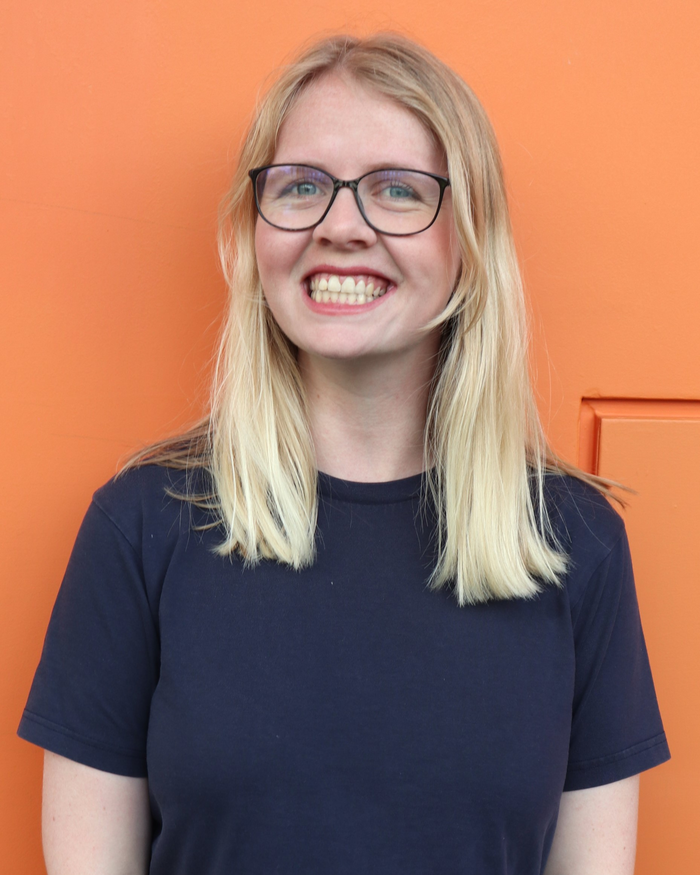
Cassandra Durr is a PhD candidate at the STOR-i Centre for Doctoral Training at Lancaster University, UK. Her research focuses on non-linear system identification through equation discovery of physical systems, with an emphasis on epidemic modelling. Cassandra holds a bachelor’s degree in Actuarial Sciences and postgraduate degrees in Mathematical Statistics, and Machine Learning & Artificial Intelligence.
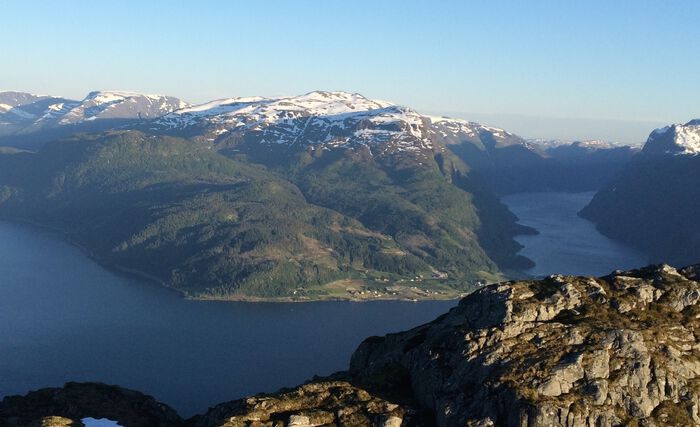
Nordfjordeid Summer School 2026
Professor Anke Lindner is internationally recognized for her pioneering work on the physics of complex fluids, suspensions, active matter, and fluid–structure interactions. Her research combines innovative microfluidic experiments, microfabrication techniques, and particle-tracking methods to uncover how microscopic dynamics govern the macroscopic behavior of flowing materials. Her work has advanced our understanding of phenomena ranging from non-Newtonian fluids and rheology to bacterial suspensions, flexible fibers in flow, and active fluids.
After studying physics in Germany, she earned her PhD from the École Normale Supérieure in 2000, focusing on interfacial instabilities in complex fluids. She subsequently held positions at ESPCI Paris and Université Pierre et Marie Curie, before becoming Professor at Université Paris Cité.
Her achievements have been recognized with numerous distinctions, including an ERC Consolidator Grant, the Maurice Couette Prize of the French Society of Rheology, election as a Fellow of the American Physical Society, and the prestigious CNRS Silver Medal. More recently, she was elected a Fellow of the Society of Rheology and serves as President of the European Society of Rheology.
To get more flavor of her research please check out her webpage.
C*-seminar by Ebrahim Samei (University of Saskatchewan).
Professor Christopher MacMinn is a Professor of Engineering Science at the University of Oxford and leads the Poromechanics Lab, an interdisciplinary research group that brings together engineers, physicists, mathematicians, and earth scientists. His work focuses on the mechanics of fluids and soft materials, particularly how fluids flow through and deform porous materials such as soils, biological tissues, gels, and subsurface rock formations.
Professor MacMinn earned his SB, SM, and PhD in Mechanical Engineering from the Massachusetts Institute of Technology (MIT), where he worked with Ruben Juanes on the fluid mechanics of geological carbon dioxide sequestration. He later held a postdoctoral position at Yale University where he worked with John Wettlaufer and Eric Dufresne, researching the deformation of porous and granular materials.
His research combines mathematical modeling with laboratory experiments to address challenges in energy, environmental science, soft materials, and biomedical engineering. Recent work from his group has advanced understanding of fluid-driven deformation, gas migration in soft materials, carbon storage, and multiphase flow in porous media.
To read more about him please check out his webpage.
The Bernstein–Khovanskii–Kushnirenko (BKK) theorem gives a way to count the non-zero solutions of a system of polynomial equations using geometric objects called Newton polytopes. It can be seen as a refinement of Bézout’s theorem. One particularly nice proof of this result uses ideas from tropical geometry, where complicated algebraic problems can be translated into simpler, combinatorial ones. In this talk, I will explain the BKK theorem and sketch its proof using tropical geometry. I will also describe joint work with Andrés Jaramillo Puentes, where we extend this result to more general base fields, not just algebraically closed ones. This leads to a meaningful way to count solutions in a broader setting, again using tropical methods.
Professor Jacques Magnaudet is a Senior Research Scientist at the French National Centre for Scientific Research (CNRS) and a leading member of the Institut de Mécanique des Fluides de Toulouse (IMFT), France. His research lies at the forefront of fluid mechanics, with internationally recognized contributions to hydrodynamics, turbulence, multiphase flows, and interfacial phenomena.
Over the course of his career, Prof. Magnaudet has made seminal contributions to the understanding of the dynamics of bubbles, drops, and particles in complex flows, including their interactions with turbulence, vortices, walls, stratification, and rotating environments. His work combines theoretical analysis, high-fidelity numerical simulations, and close collaborations with experimental researchers.
He is widely known for developing predictive models and computational tools for two-phase and turbulent flows, including the in-house JADIM simulation code used for direct numerical simulations of complex fluid systems.
Prof. Magnaudet’s work has had broad scientific and engineering impact, with applications ranging from nuclear safety, chemical engineering, and aerospace systems to ocean-atmosphere interactions, drag reduction, volcanology, and environmental flows. His recent studies on bubble path instabilities, stratified turbulence, and interfacial dynamics continue to shape modern research in multiphase fluid mechanics.

Professor Martin van Hecke is a group leader at AMOLF, Amsterdam, and a professor of physics at Leiden University. He got his PhD in theoretical physics in 1996 at the University of Leiden. Since then he has worked on a broad range of topics in flexible and frustrated matter combining experiments, simulations and theory. The common thread in all this works is the fascination for the emergence of complex behavior in seemingly simple systems.
After been awarded the Vici grant in 2011, he focused his research on mechanical metamaterials, from patterned elastic media to origami. In particular he has developed new design techniques to make complex metamaterials that straddle the boundary between material and machine, and that form complex patterns or can self-fold when compressed. Based on these ideas and supported by an ERC-advanced grant (2021), he is now exploring if and how complex materials – from metamaterials to crumpled sheets – can store and process information. He works part-time at AMOLF, running a single group at two locations and spearheading the AMOLF ‘Modern Mechanics’ expertise center.
C*-seminar by Ali Miller (KU Leuven).
Kari Dalnoki-Veress is a Faculty of Science Research Chair in Experimental Soft Condensed Matter Physics in the Department of Physics and Astronomy at McMaster University and an adjunct professor at the ESPCI in Paris, France. He is an experimental physicist with a passion for soft condensed matter and teaching. Dalnoki-Veress has received the Canadian Association of Physicists Brockhouse Medal, the Rutherford Memorial Medal in Physics from the Royal Society of Canada, the American Physical Society Division of Polymer Physics Dillon Medal and was elected as a Fellow of the American Physical Society in 2011. Dalnoki-Veress has served as Chair of Physics and Astronomy for NSERCs Discovery Grants, an Editor of the European Physical Journal E, Editorial Advisory Board of Macromolecules and ACS Macro Letters, and currently as a Divisional Associate Editor for Physical Review Letters. His research group at McMaster focuses on fundamental experiments in soft and living matter at surfaces and interfaces. Dalnoki-Veress is also CTO of MesoMat Inc. which exploits the world between molecular and macroscopic – the mesoscale – to enable material innovation.
Erland Ørbekk is a Norwegian technology and engineering leader with a strong background in advanced engineering, product development, and future technologies. He has held senior technical and leadership roles within the Nammo group, including positions related to engineering, development, and future technology initiatives. His expertise spans innovation-driven industrial environments, computational engineering, and high-technology product development.
In addition to his industrial leadership experience, Ørbekk has contributed to technical and research-oriented work within computational fluid dynamics and engineering analysis. He is also involved in board and advisory activities connected to advanced manufacturing and technology companies in Norway.
A numerical semigroup is said to be Weierstrass if it is the semigroup of pole orders of rational functions that are regular at all but one point of some compact Riemann surface or smooth algebraic curve. Hurwitz asked in 1892 whether all numerical semigroups can occur. Buchweitz in 1980 gave the first examples of Non-Weierstrass semigroups. In this paper we give a new method, using syzygies, to show that certain semigroups are not Weierstrass, including the first one of multiplicity 6 (the lowest possible) and genus 13 (the lowest known). We give many other examples to which the method applies.
Herman Martens Meyer is a PhD candidate in the Department of Mathematics at the University of Oslo. Prior to starting his PhD, he completed an integrated Master’s degree in Applied Physics and Mathematics at the Norwegian University of Science and Technology (NTNU). For his Master’s thesis, he worked on identifying subsurface turbulence using light reflected from a free surface. His research interests include wave turbulence, breaking waves, and free-surface turbulence.
Around 1970, Gruson and Raynaud proved that one may render a morphism of finite presentation flat by blowing up an ideal in the target, with rather mild restrictions on the involved schemes. New proofs, entirely different from the one of Gruson and Raynaud, have been found by Fujiwara and Kato and by Guignard. The two proofs are basically the same, both using Temkin's relative Zariski–Riemann spaces, the limits of all interesting blow-ups. These spaces are quasi compact locally ringed spaces whose local rings are close to being valuation rings, so that almost anything is flat, and due to their quasi compactness, one may descend flatness to a genuine blow-up.
Notes for the talk here.
References
Quentin Guignard: A New Proof of Raynaud–Gruson’s Flattening Theorem (arXiv:1801.01188v3)
Kazuhiro Fujiwara and Fumiharu Kato: Rigid Geometry and Applications, in Advanced Studies in Pure Mathematics 45 (2006), Moduli Spaces and Arithmetic Geometry (Kyoto, 2004), pp. 327–386.