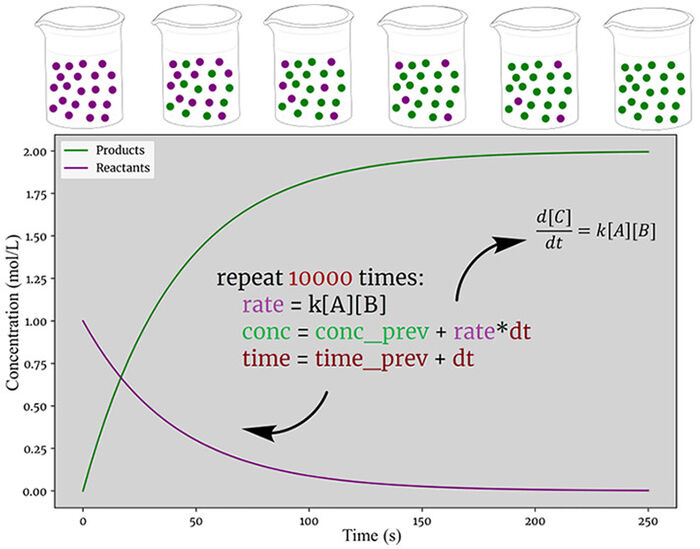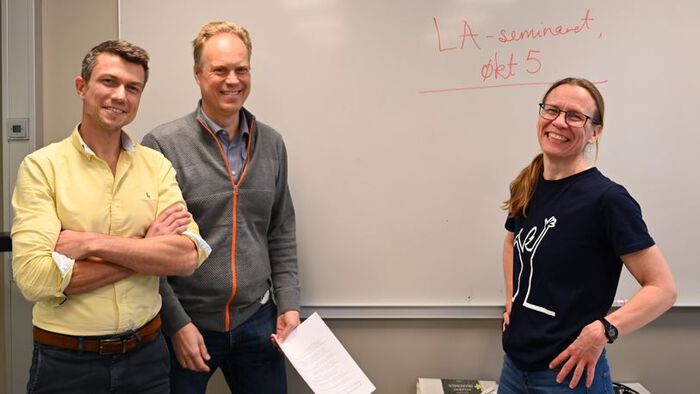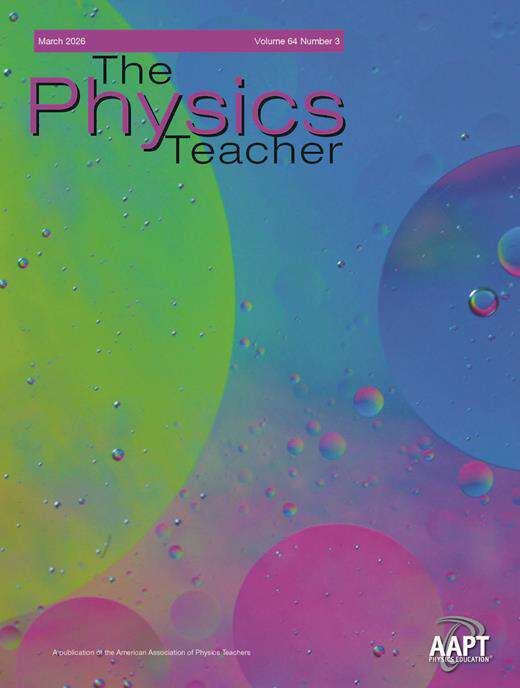
Our former colleague Hannah Sabo and Associate Professor Tor Ole Odden and Adjunct Professor Danny Caballero, have recently published a new article in The Physics Teacher. In their paper, titled “How Do We Assess Computation in Physics?”, they explore how educators can meaningfully evaluate students’ use of computation and programming in physics courses. The work contributes to the ongoing development of physics education at a time when computational tools and coding are becoming increasingly central to both teaching and learning outcomes.
News
Anders Malthe-Sørenssen was called to head the national expert committee on AI in higher educa-tion. The committee consists of nine experts and will provide an analysis of the impact of AI on higher education, including how learning outcomes must be adjusted to adapt to AI, how learning approaches will change with AI and how methods for assessment must be adapted in an age of AI. The committee has delivered a preliminary report with recommendations in December 2025.
In his recently published paper in Physical Review Physics Education Research, which was featured as an Editors’ Suggestion, "Physics computational literacy: Programming, modeling, and collabora-tion at the journeyman level," Fredly interviewed 13 Master’s students to map this development. Using the Physics Computational Literacy (PCL) framework, the study describes computational liter-acy at the "journeyman" level, a stage where students are no longer just following rigid rules but are beginning to develop the situational intuition and wide toolkit of an expert.
In 2025, Danny Caballero published the book Integrating Computing into the Undergraduate Physics Curriculum. The book, published by IOP Physics Publishing, contains 14 chapters, of which five are authored by CCSE faculty. In his contributions to the volume, Caballero provides both an opening and a concluding chapter that frame the collection as a whole.
Juan M. Scarpetta and co-author John H. Reina were guests at the Center for Computing in Science Education and the Department of Physics at the University of Oslo in the fall of 2025, where they completed this study in close collaboration with Professor Morten Hjorth-Jensen. The article presents a new machine-learning approach to characterizing noise in quantum two-level systems (qubits), with a particular focus on environments that have memory (“non-Markovian” baths).
Tor Ole B. Odden has been recognized for his work in physics education, through the Learning Assistant Program and the development of active learning methods. Since joining in 2018, Odden has enhanced teaching quality by implementing practical and collaborative strategies, emphasizing safe and engaging learning environments.
How do science students become computationally literate within their disciplines? In a new study, Tor Ole Odden and Benjamin Zwickl followed physics students as they wrote computational essays—narrative documents that blend live code, analysis, and explanation.
Ben Zwickl is an important resource to the centre, who works closely with many of our researchers.
Elise Lockwood, who has a close collaboration with CCSE, har been rewarded a Presidential Early Award for Scientists and Engineers (PECASE)
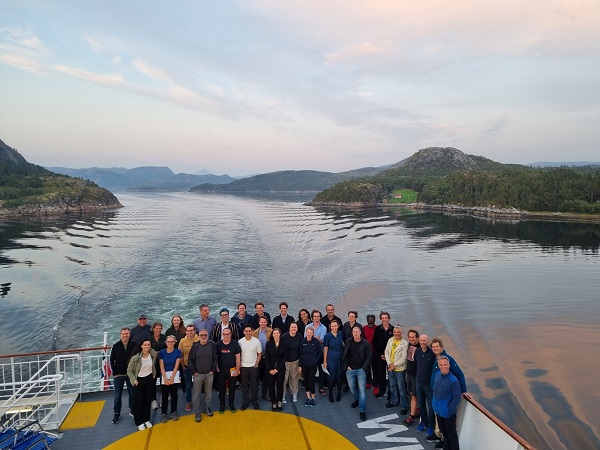
The NeuroAI workshop, held from September 5-8, 2024, aboard the Hurtigruten cruise ship traveling from Tromsø to Trondheim, brought together leading researchers in neuroscience and artificial intelligence (AI). The picturesque Norwegian coastline provided an inspiring backdrop for an event focused on a pressing question in this emerging field: how can we validate AI models that seek to replicate or be inspired by neural processes?
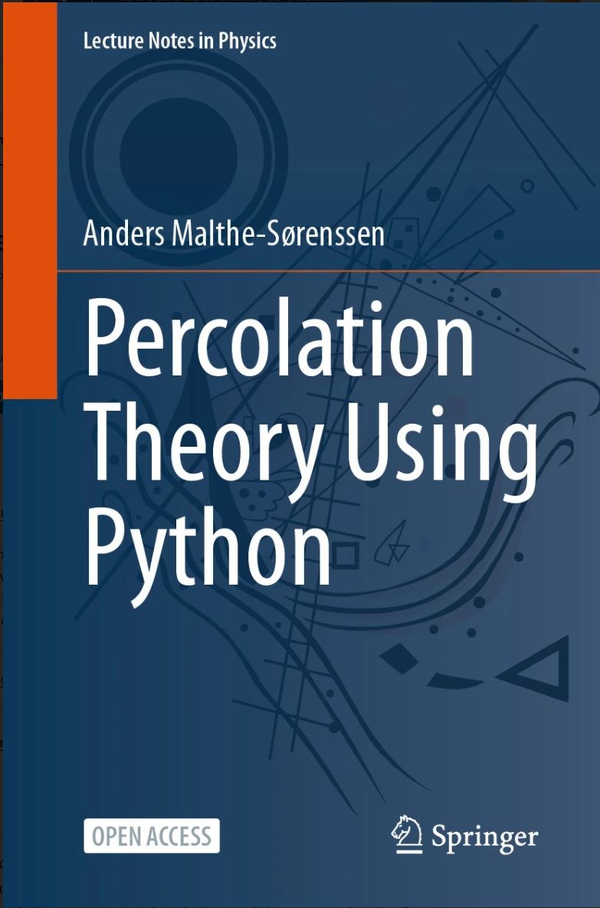
This course-based open access textbook delves into percolation theory, examining the physical properties of random media—materials characterized by varying sizes of holes and pores. The focus is on both the mathematical foundations and the computational and statistical methods used in this field. Designed as a practical introduction, the book places particular emphasis on providing a comprehensive set of computational tools necessary for studying percolation theory.
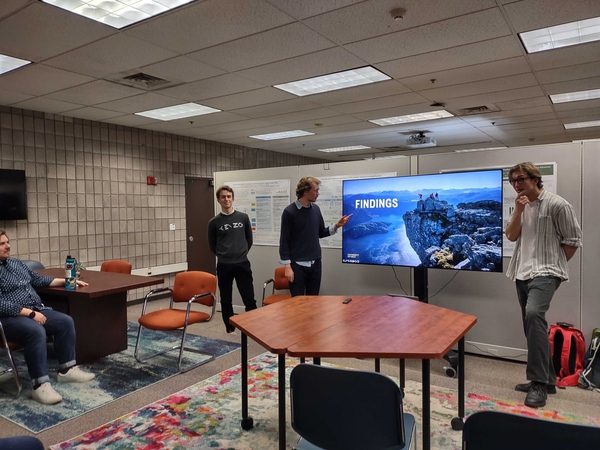
In March, a delegation from CCSE spent a week at our partner institution, the Rochester Institute of Technology. In the city known for "Kodak moments" and "Garbage Plates," they presented their work on text embeddings. This work has already led to a publication, strengthened international bonds, and will become a focal area for CCSE in the coming years.
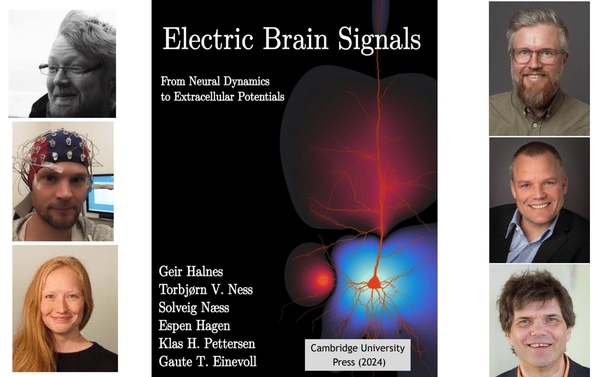
A new resource for the computational neuroscience community, the book Electric Brain Signals, was launched at a seminar in June at CCSE.
DigiWind is a collaboration between universities and companies from five leading wind nations – Denmark, Poland, Norway, Ireland, and the Netherlands. DigiWind eductions will bring lots of digital competencies to wind and energy systems engineering.
Andreas Haraldsrud and Tor Ole Odden: When learning chemistry, students must learn to extract chemical information from mathematical expressions. However, chemistry students’ exposure to mathematics often comes primarily from pure mathematics courses, which can lead to knowledge fragmentation and potentially hinder their ability to use mathematics in chemistry.
Daring students to pose rich questions, engage in active learning, think computationally, and more - we reach for the best possible standards for our teaching.
In 2018, Sebastian G. Winther-Larsen posted a YouTube video called “A Day In The Life: Computational Physics” which reached people from all around the world, who are interested in this field of study. One of them was João Inácio, who contacted Sebastian to learn more about how it is to study at the University of Oslo.
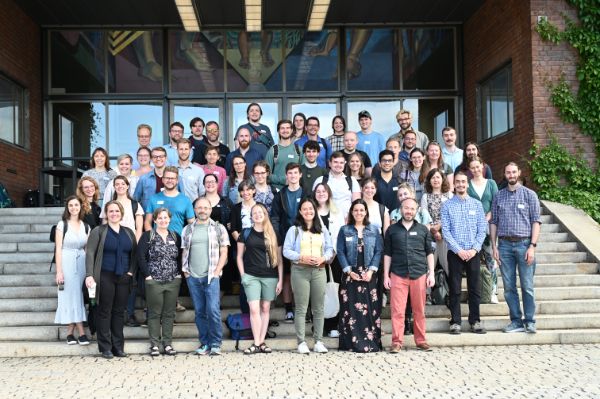
This summer we hosted the Oslo PER Summer Institute (OPSI) conference to connect with Physics and STEM education researchers from the University of Oslo, Michigan State University, Oregon State University, University of Colorado - Boulder, and other Norwegian and Scandinavian Universities.
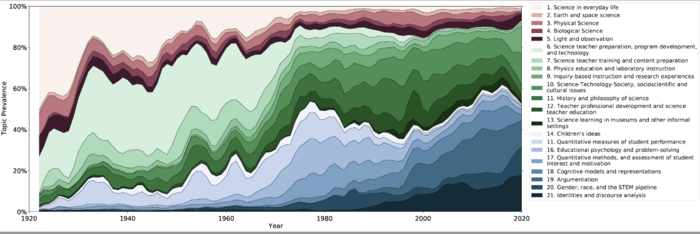
Tor Ole Odden, Alessandro Marin and John L. Rudolph has used a machine‐learning algorithm from the field of natural language processing, to perform an automated literature review and classification of the corpus of work in Science Education. Read the article in the journal Science Education.
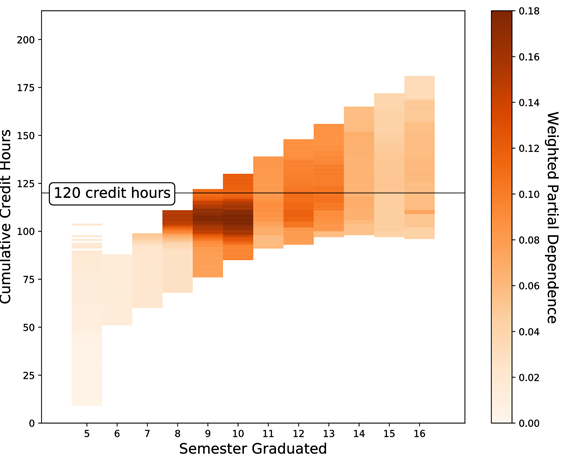
American student's often face different conditions that might increase or decrease the time it takes for them to get an undergraduate degree. These conditions include their background, the academic performance at university, and their integration into the social communities of the university they attend.
The Faculty of Mathematical and Natural Sciences at the University of Oslo (UiO) was recently granted a € 2.6 million MSCA COFUND project – TraCS, training in computational science – to fund 32 PhD-students in a program that provides young, talented researchers with the computational and data science skills needed to transform research and innovation across Europe.
Summer research positions to undergraduate and Master’s students who are interested in STEM Education and data analytics.