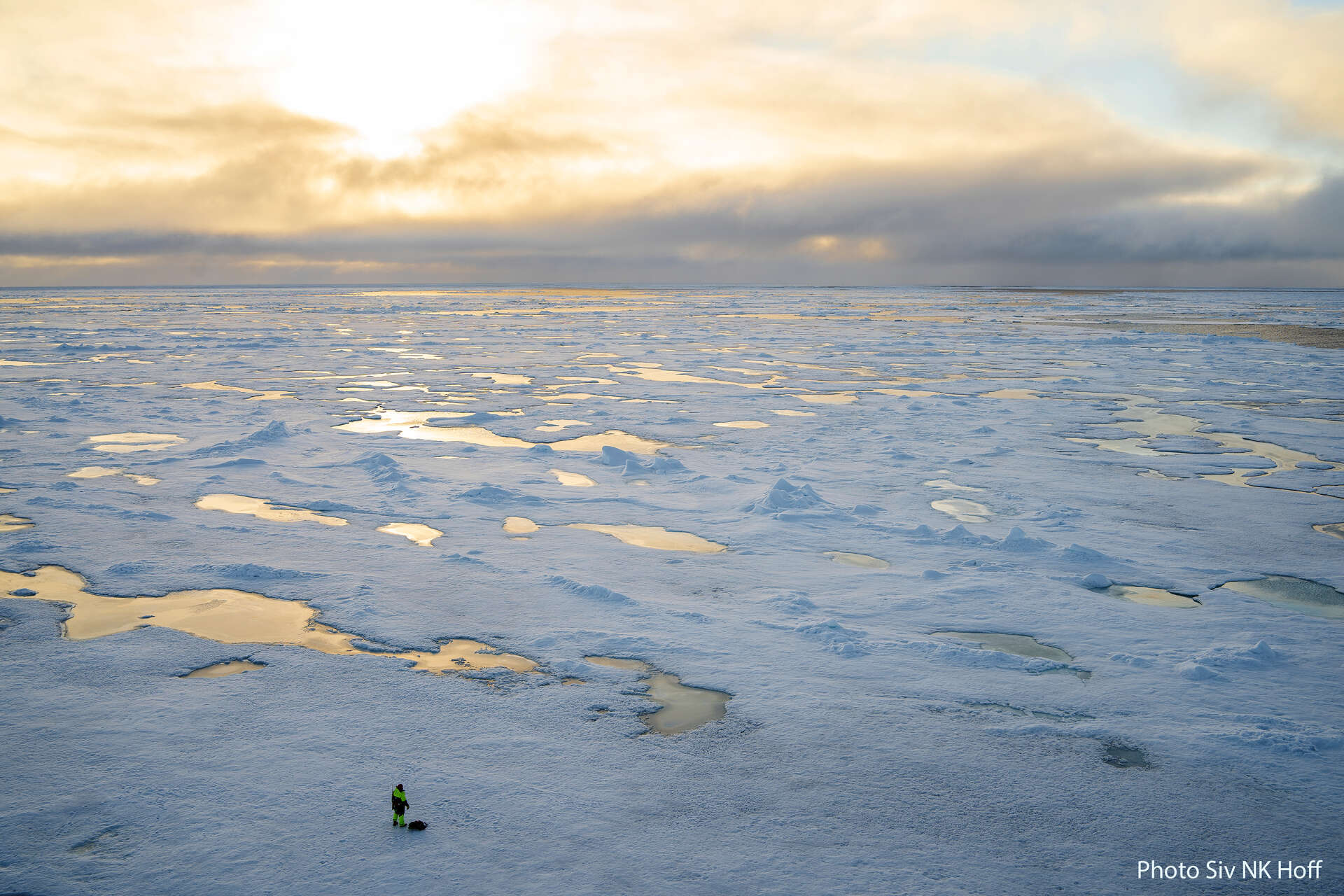
All are welcome
Open for all. The event is held in English. Pre-registration is not necessary. The event will not be streamed or recorded.
Programme
09:00-9:30 Coffee and buns
09:30-9:40 Opening remarks
Bjørn Jamtveit, Pro-Rector, University of Oslo
Nils Chr. Stenseth, Professor, Section for Ecology, Biodiversity and Evolution (EBE), Department of Biosciences (IBV), UiO
09:40-10:05 The northern seas and climate change
Tor Eldevik - Professor and Head of Department, Geophysical Institute, University of Bergen, Norway
10:10-10:35 Ocean governance in contentious times
Elana Wilson Rowe - Professor, Department of International Environment and Development Studies, Norwegian University of Life Sciences & Norwegian Institute of International Affairs, Norway
10:40-11:05 Rapid evolution in marine fishes over the last century
Malin Pinsky - Professor, Department of Ecology & Evolutionary Biology, University of California Santa Cruz, USA
11:10-11:40 Conversation and Q&A with Tor Eldevik, Elana Wilson Rowe and Malin Pinsky
Chaired by Nils Chr. Stenseth, Professor, EBE, University of Oslo
11:40-11:45 Closing remarks
Sanne Boessenkool, Professor, Section for Ecology, Biodiversity and Evolution (EBE), Department of Biosciences (IBV), UiO
Kristine Bonnevie lectures
The northern seas and climate change
Tor Eldevik – Geophysical Institute, University of Bergen (UiB)
Abstract
The northern seas – from the Norwegian Sea and into the Arctic – are a hot-spot for understanding the links between ocean and climate. This includes the rise of modern oceanography through the last century; the harvesting of resources from the ocean (a driver for the development of modern oceanography – and meteorology); future climate change and the marine resources affected; and now (again) with much media attention, the future state of the Gulf Stream system/AMOC. In my presentation, I will sample a little into all these aspects – with a bias towards what has been going on at the Geophysical Institute, UiB, and also my involvement in the national research project The Nansen Legacy (2017–2024).
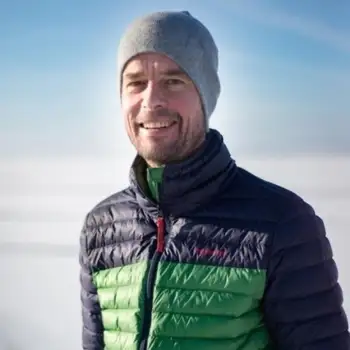
Biography
Tor Eldevik is the Head of Department at the Geophysical Institute, University of Bergen, and a professor focusing on the ocean’s role in climate. Specific research includes the structure and sensitivity-to-change of the Gulf Stream’s northern limb; the (possible) interannual to decadal predictability of climate; the Arctic sea ice cover, how and why it changes; and the Barents Sea ice cover, climate, and ecosystem.
Eldevik is an active voice in public debates on climate and also science/university policies, and a frequent contributor in national newspapers. He has extensive experience in research leadership from a diverse national and international research project portfolio, serving as deputy director of the Bjerknes Centre for Climate Research for five years, and now Head of Department at the Geophysical Institute for the past seven years. Eldevik is an elected member of The Norwegian Academy of Science and Letters.
Ocean governance in contentious times
Elana Wilson Rowe – Department of International Environment and Development Studies, Norwegian University of Life Sciences (NMBU) & Norwegian Institute of International Affairs (NUPI)
Abstract
Ocean governance is unfolding in a period marked by shifting global power relations, declining confidence in multilateral institutions, and mounting environmental pressures on marine ecosystems. At the same time, oceans are increasingly viewed as sources of food, resources, security, and economic opportunity, creating new governance challenges. Drawing on examples from Arctic governance, efforts to prevent fisheries crime, and key ocean-related tracks in global multilateral negotiations, this presentation examines how marine governance persists and adapts under conditions of disruption and contention. Illustrations from Arctic waters highlight the resilience of informal professional networks. Research on illegal, unreported, and unregulated fishing illustrates the importance of transnational cooperation and reliable real-time information in addressing marine crime. The presentation also considers the mixed record of multilateral initiatives, where slow progress/failure and institutional renewal/breakthroughs often coexist. It concludes by identifying pragmatic strategies that support knowledge-based policymaking in an interconnected world.
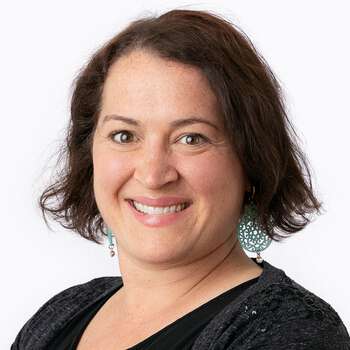
Biography
Elana Wilson Rowe holds a PhD in geography and polar studies from the University of Cambridge and is Professor of Global Governance at the Norwegian University of the Life Sciences (NMBU) and adjunct research professor and head of NUPI’s Center for Ocean Governance at the Norwegian Institute of International Affairs (NUPI). She is deputy co-lead for governance, security and international law for Polhavet 2050 – Arctic Ocean 2050 - Norway’s 10-year research program bringing together 18 research institutions in an effort to address Arctic Ocean change. She has recently concluded a multi-year project funding by the European Research Council exploring the broader security political effects of governing transboundary ecosystems. Wilson Rowe is the author of 'Russian Climate Politics: When Science Meets Policy' (Palgrave, 2013), 'Arctic Governance: Power in Cross-border Relations' (University of Manchester, 2018) and 'Earth in Pieces: Ecosystems and World Order' (forthcoming with Oxford University Press). She was a member of Norway’s committee establishing research priorities for the UN Ocean Decade and the ICARP IV process.
Darwin Lecture
Rapid evolution in marine fishes over the last century
Malin Pinsky - Department of Ecology & Evolutionary Biology, University of California Santa Cruz
Abstract
Darwin cited cod's massive fecundity to illustrate the struggle for existence, yet assumed we see "nothing of these slow changes in progress." Modern genomics is now revealing a far faster reality: evolution can occur rapidly, even in long-lived fishes. This talk will present genomic evidence that industrial fishing altered the rules of survival for Atlantic cod across two continents in fewer than a dozen generations. The signals of adaptive evolution are subtle and spread across many genes. I will then present a century of genomic change across Philippine coastal fishes, revealing both adaptive evolution and dramatic loss of genetic diversity during rapid human development. These examples highlight the rapid evolution occurring all around us, the power of historical samples as baselines, and the potential for novel conservation strategies focused on evolutionary rescue.
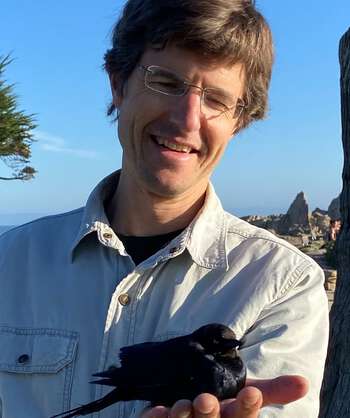
Biography
Malin Pinsky, Professor at the University of California Santa Cruz, is a biologist with expertise in the adaptation of ocean life to climate change and applications to ocean conservation and fisheries. His more than 120 publications have appeared in Science, Nature, and other journals, and his research has been covered by the New York Times, Wall Street Journal, and BBC, among others. He is a Fellow of the American Association for the Advancement of Science, an Earth Leadership Fellow, and an Early Career Fellow of the Ecological Society of America. He was named one of Science News’ ten scientists to watch in 2019 and was awarded the first Peter Larkin Award in Fisheries Science in 2024. Pinsky serves on advisory boards for the Beijer Institute of the Royal Swedish Academy of Sciences, the non-profit Oceana, and the Chewonki Foundation. He has a Ph.D. in Biology from Stanford University and an A.B. in Biology and Environmental Studies from Williams College. He grew up exploring tidepools and mountains in Maine.
This event is supported by UiO:Life Science.