
Harish Jain is a PhD Candidate at the Njord (Centre for Studies of the Physics of the Earth), Department of Physics, UiO. He is also part of the CompSci doctoral program. He will be defending his thesis for the degree of PhD, which was submitted for evaluation on the 5th of December of 2024.
From the CompSci team we wish you good luck and all the best in your future endeavors!
→ Read more about the disputation in the website of the Department of Physics
Programme
10:15 – Trial lecture: "Viscoelasticity" – Lille Fysiske auditorium (V232), Fysikkbygningen
13:15 – Disputation: "Collective emergent behaviour of active cellular systems" – Lille Fysiske auditorium (V232), Fysikkbygningen
This event is open for everyone. No registration needed.
The Disputation will be live streamed for everyone else.
The livestream will be activated 15 minutes before the Defense starts.

PhD candidate
Research group | Njord
Main supervisor | Luiza Angelutha
Co-supervisors | Anders Malthe-Sørenssen
Affiliation | Department of Physics, UiO
Contact | harishpj@fys.uio.no
Adjudication committee
Prof. Sriram Ramaswamy, Indian Institute of Science
Assoc. Prof. Anton Souslov, University of Cambridge
Dr. Paula Reis, University of Oslo
Chair of defense
Head of Department, Susanne Friederike Viefers, Department of Physics, University of Oslo
Short summary
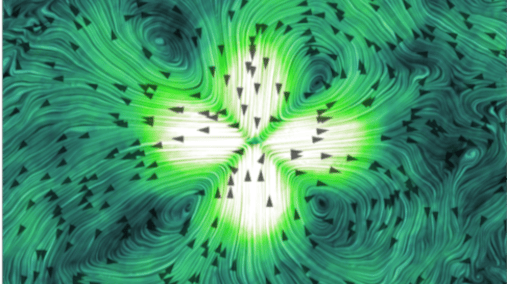
Collective emergent behaviour of active cellular systems
Using a mathematical model called the multi-phase field model, we study the collective emergent behavior of two-dimensional active, deformable cells. These cells move actively, i.e., they generate their motion by using energy themselves, in contrast to passive motion, which occurs due to the application of external forces. Here, emergence refers to atypical behavior that occurs only when cells interact collectively and is absent when cells are observed individually or in small quantities. This collective behavior of the cells is essential for understanding several key biological phenomena, including morphogenesis (the emergence of form and shape of organisms), cancer invasion, and wound healing. We find that cell deformation and neighbor exchange events between cells are relevant for stress release, cell mixing in tissues, and emergent cell shape symmetries.
