
PhD candidate
Research group | Section for Physiology and Cell Biology
Main supervisor | Gaute Einevoll
Co-supervisor | Marianne Fyhn
Affiliation | Department of Biosciences, UiO
Contact | constb@ibv.uio.no
Short bio
After graduating with a Bachelor degree in psychology from the University of Sofia, Bulgaria, I decided to take a more quantitative turn and did a Masters in Cognitive Neuroscience at Radboud University, the Netherlands. There I wrote a thesis on the topic “Topological Properties of Neural Manifolds”, in which I studied the topology generated by the activity of feature selective neurons in neural networks. Now I am hoping to understand how the brain (at least the mouse one) performs visual computation by combining theory, biophysical modeling and machine learning.
Research interests and hobbies
My main research interests are in neural manifolds, neural coding, machine learning and topological data analysis. As for hobbies, I like to play music, read books and hike.
CompSci project
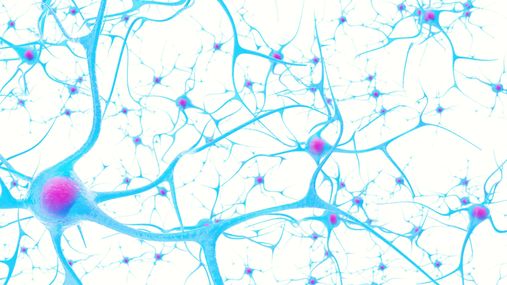
Large-scale network simulations of mouse visual cortex
My project at UiO involves simulating both biophysical (Billeh et al., Neuron, 2020) and artificial (Perich et al., bioRxiv, 2021) neural network models of mouse visual cortex in order to gain a deeper understanding of the visual system. Besides modelling I will also develop machine learning algorithms with which to improve the aforementioned models by making them reproduce population based measurements like the local field potential (LFP). Finally I will use the improved models as an in-silico study case with which to answer questions about neural representation, manifolds and coding.
Doctoral thesis
Neural representations and the Topology of Cognition
Given the leaps in computational and experimental recording technology over the last two decades, we are now at a stage where we can extract data from hundreds to millions of neurons. This explosion in data availability has increased the demand for complementary data analysis and theory tools that can rise to the task of interpreting such immense amounts of information. In this work, we propose that one should look at the activity of large populations of neurons as one single object, with, at the very least, the mathematical structure of a topology. This reduces the complexity of studying the properties of thousands of cells to studying the properties of a single object called the neural representation map which generates neural spaces (often called neural manifolds).
In the first two papers we approach this question by applying persistent homology with an approximation of the geodesic metric to discover circular manifolds in response to rotating images. Following this, we develop a rank decomposition of ReLU neural networks that allows us to pinpoint regions in the input space that are glued together by a neural network, thereby changing the topology of the initial input space in a predictable manner. Finally, we use objects from differential geometry, such as the metric tensor, to describe the local properties of the manifold generated during navigation in a simplified grid cell model.
Publications
CompSci publications
- Kosio Beshkov, Marianne Fyhn, Torkel Hafting, and Gaute Einevoll (2024) “Topological structure of population activity in mouse visual cortex encodes densely sampled stimulus rotations” iScience 27 (4) 109370
This paper studies the topology of neural activity in response to rotating images in primary mouse visual cortex. We modified the persistent homology algorithm to use approximations of geodesic distances. This made it possible to discover circle-like manifolds in neural activity in response to rotating visual stimuli. Furthermore we discuss in detail, what type of experiments are needed in order to discover the topology of neural manifolds in new tasks.
https://doi.org/10.1016/j.isci.2024.109370 | Full text in Research Archive - Jonas Verhellen, Kosio Beshkov , Sebastian Amundsen, Torbjørn Vefferstad Ness, and Gaute Tomas Einevoll (2024) “Multitask learning of a biophysically-detailed neuron model” PLoS Computational Biology 20 (7) e1011728
Traditional modelling of the voltage dynamics in biophysically realistic neuron models is computationally costly. Previous work has managed to make use of artificial neural networks to learn such dynamics and therefore speed up such simulations, but only in the soma or a small number of compartments. In this work we make use of approaches from multi-task learning to distil the dynamics of highly complex multi-compartment neural models into a much less costly artificial neural network. Our approach leads to a speed up of several orders of magnitude compared to classical simulation methods.
https://doi.org/10.1371/journal.pcbi.1011728 | Full text in Research Archive - Kosio Beshkov, Jonas Verhellen, and Mikkel Elle Lepperød (2025) “Isometric Representations in Neural Networks Improve Robustness” Scientific Reports 15 36761.
This paper studies the benefits of using an isometric loss term in neural networks. We show that adding such a loss term in classification problems leads to representations which are isometric within class and highly separated between classes. We show that this approach is robust to adversarial attacks and describe some of its applications to hierarchical dimensionality reduction.
https://doi.org/10.1038/s41598-025-20619-0 | Full text in Research Archive - Vemund Schøyen, Kosio Beshkov, Markus Borud Pettersen, Erik Hermansen, Konstantin Holzhausen, Anders Malthe-Sørenssen, Marianne Fyhn, and Mikkel Elle Lepperød (2025) “Hexagons all the way down: Grid cells as a conformal isometric map of space” PLoS Computational Biology 21 (2) e1012804
Grid cells are hypothesized to play a role in path-integration and form a representation of space. In this work the phases of these cells are optimized to encode a representation of space which preserves the distances between different locations in space. It turns out that such representations of space arise when the phases of a grid cell module are themselves organized on a hexagonal grid.
https://doi.org/10.1371/journal.pcbi.1012804 | Full text in Research Archive - Kosio Beshkov and Gaute T. Einevoll (2024) “A rank decomposition for the topological classification of neural representations”; Preprint
This paper leverages the fact that ReLU neural networks are in one-to-one correspondence to piecewise linear maps to define a rank decomposition of the input space to such a network. Using this decomposition, topologically destructive regions are defined. Finally, the presence of such regions is evaluated in randomly initialized and trained neural networks. The results show that an increase in the number of topologically destructive regions is related to an improvement in generalization error in classification tasks.
https://arxiv.org/abs/2404.19710 | Full text in Research Archive
Previous publications
- Beshkov, K., & Tiesinga, P. (2021) "Geodesic-based distance reveals non-linear topological features in neural activity from mouse visual cortex" Biological Cybernetics 116, 53-68
https://link.springer.com/article/10.1007/s00422-021-00906-5
