Previous events - Page 82
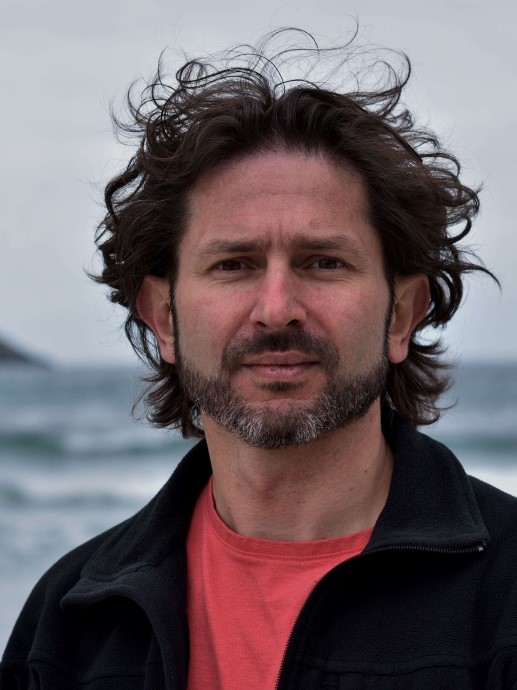
Title: Structure and the variability of the Lofoten Basin Eddy observed by Seagliders during the SWOT Cal/Val phase
Speaker: Ilker Fer, UiB
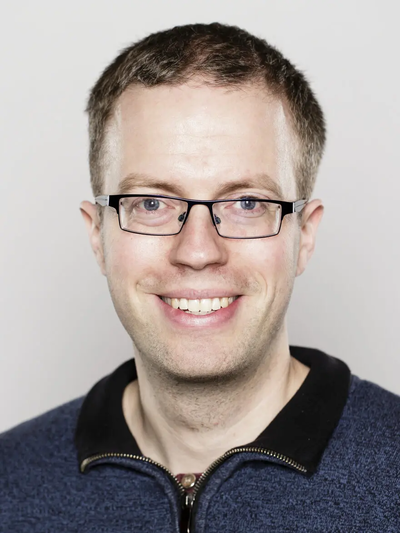
Genetic screens for antibiotic resistance determinants in Staphylococcus aureus using CRISPR interference libraries.
Morten Kjos is Associate Professor at NMBU
Staphylinid Beetle Diversity Patterns in Afrotropical Mountains, with Particular Reference to the genus Megarthrus (Coleoptera: Staphylinidae)
University of Oslo and University of Gothenburg invite to an informal workshop within machine learning with a focus on statistical aspects related to Machine Learning.

Jan Martin Nordbotten is a Professor in Department of Mathematics and part of porous media research group at the University of Bergen.
Hylleraas seminar, hosted in Oslo

Doctoral candidate Bjørnar Valbø at the Department of Informatics, Faculty of Mathematics and Natural Sciences, is defending the thesis Towards Re-Calibrating the IS-Notion of Affordances for the degree of Philosophiae Doctor.
Welcome to our GEOHYD Lunch Seminar Friday 15th of March @ 12:15 in Aud. 1, Geology building or via videolink using Zoom. The seminar is held by Pragay Shourya Moudgil (UiO).
Bone stress injuries affect athletic populations who undertake activities in which bones are repeatedly loaded. In order to understand and reduce the risk of bone stress injuries, we need to quantify the loading experienced by the bones during activities such as running. Bone loading is difficult to quantify as the magnitudes of stress are influenced to a large extent by the magnitude of muscular forces acting on the bone. Musculoskeletal modelling, ranging from very simple to very complex approaches, can be used to estimate the internal loading experienced by the bone during running. This has allowed us to explore factors such as speed, slope and step length and their influence on bone loading during running. However, in order to truly understand risk of stress injuries this needs to be taken out of the lab and in-field. This talk will consider what we know and the limitations to current understanding.
Gromov—Witten invariants are virtual counts of curves with prescribed conditions in a given algebraic variety. One of the main techniques to study Gromov—Witten invariants is degeneration. The degeneration formula expresses absolute Gromov—Witten invariants in terms of relative Gromov—Witten invariants of algebraic varieties with tangency conditions along boundary divisors.
Relative Gromov—Witten invariants with only one relative marking are relative invariants with maximal contacts along the unique relative marking. The local-relative correspondence proved by van Garrel—Graber—Ruddat states that genus zero relative invariants with maximal contacts are equal to local Gromov—Witten invariants of a line bundle. Local invariants are usually easier to compute. However, The degeneration formula usually involves relative invariants beyond maximal contacts (i.e. with several relative markings). I will explain a generalization of the local-relative correspondence beyond maximal contacts, hence determine all the genus zero relative invariants that appear in the degeneration formula.
This is based on joint work with Yu Wang.
Assoc. Prof. Tor Ole B. Odden, CCSE, UiO
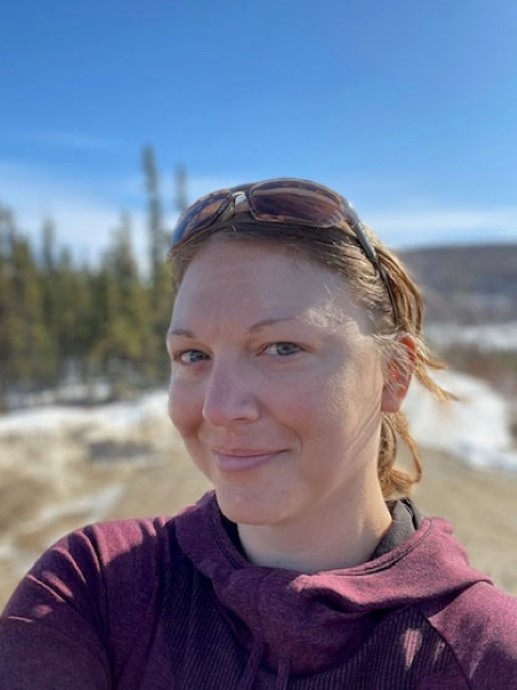
Title: Improving understanding of Arctic-boreal greenhouse gas budgets through integrated, community-driven, research.
Speaker: Jennifer Watts, Woodwell Climate Research Center

SPARK Norway Educational Forum are monthly open meetings organized by UiO:Life Science and SPARK Norway partners.
Carlo Tasillo, DESY Hamburg
Weekly Theory Seminar.

Qombine seminar by Joakim Bergli, Department of Physics (UiO)

The climatic ocean wave spectrum serves as a pivotal tool in comprehending the long-term characteristics and variations of wave patterns across different regions of the world's oceans. The presentation explores the methodologies employed to derive wave spectra from observational data. Basically, consists of a statistical approach that provides a quantitative understanding of the variability and extremes of wave conditions. In essence, an ocean wave spectrum is a representation of the distribution of energy among different wave frequencies and wavelengths. So, engineers rely on this valuable information to mitigate risks and design solutions that can withstand the dynamic forces of ocean waves. However, it is necessary to present such information in a robust and practical mode to better comprehend the variations. In this way, a robust and resistant approach will be presented to define such variabilities, thus reducing uncertainties and representing the climatic wave spectrum in a compact and informative way.

Doctoral candidate Sara Mohammadi at the Department of Informatics, Faculty of Mathematics and Natural Sciences, is defending the thesis Local Energy Trading Markets with Prosumers Considering Fairness and Security for the degree of Philosophiae Doctor.

Tor Ole Bigton Odden:
Over the last year and a half, generative AI tools like ChatGPT have gone from niche research projects in the field of Natural Language Processing to tools that have upended whole sectors like education, software development, social science, and more.
This rapid development is partially due to the fact that these tools have, through gradual updates, developed capabilities that could not have been predicted in November 2022, like the ability to reason spatially, mathematically, and visually. Many users reasonably wonder how, and more importantly why, they work.

Christopher (Chris) Spiers is Emeritus Professor at the High Pressure and Temperature Laboratory in the Department of Earth Sciences (Faculty of Geosciences) at Utrecht University

Lisa M. Buschmann will defend her thesis "Ionospheric plasma structuring at high latitudes. Studies with in-situ measurements by sounding rockets and satellites" for the degree of Philosophiae Doctor at the University of Oslo, Faculty of Mathematics and Natural Sciences.
Hylleraas seminar, hosted in Oslo
By Knut Wiik Vollset, leader of the Bergen Telemetry Group within the Laboratory for Freshwater Ecology and Inland Fisheries (LFI), NORCE Bergen

Mohammad Amin Razbani will defend his thesis “Numerical Modelling of Mineral-Microbe Interactions
Investigation on microbially induced calcium carbonate precipitation” for the degree of Philosophiae Doctor at the University of Oslo, Faculty of Mathematics and Natural Sciences.
Welcome to our GEOHYD Lunch Seminar Friday 8th of March @ 12:15 in Aud. 1, Geology building or via videolink using Zoom. The seminar is held by Inger Bij de Vaate (UiO).