Previous events - Page 83
Future robots need to be robust and adaptable, and new design approaches are needed for new production methods. I will talk about my research in using evolutionary algorithms and biologically inspired methods with the aim of having more intelligent, robust, and adaptive behavior in robots. I will give a short introduction to some of the algorithms and show how we apply them in our robotic platforms for exploring automatic design and adaptation.

Doctoral candidate Edvard Aksnes at the Department of Mathematics will be defending the thesis Tropical homology manifolds for the degree of Philosophiae Doctor.
Title: Influence of recent past, current and near-term future aerosol emission trends on global warming rates
Speaker: Annica Ekman, Stockholm University
The role of transposon activity in shaping cis-regulatory element evolution after whole genome duplication
Simen Rød Sandve is a Professor in genomics at the Faculty of Biosciences at the Norwegian University of Life Sciences.
He will talk about chromatin accessibility, cis-regulatory elements, transposable elements, and whole genome duplication
Welcome to our weekly lunch seminar held in the dScience lounge area!
Kartlegging av makroalger nord i Jomfruland nasjonalpark
Writing a short pitch is often the best start to any kind of science communication. To help you get on with this, we aim this workshop at defining your message, goal and target audience. But we will also cover some ways to formulate your message clearly and explain why this is so important. This workshop helps you to communicate with your peers, but also with subsidy organizations, policy makers or a wider audience. At the end of the workshop, you’ll have a short pitch about your research.
C*-algebra seminar by Gaute Schwartz (University of Oslo)
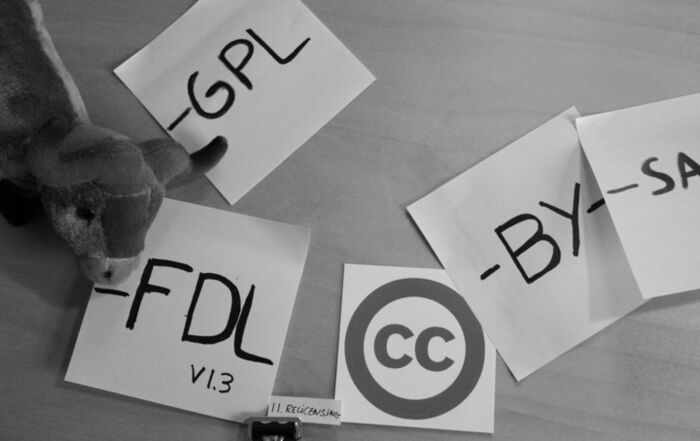
Join us for a webinar, focusing on licensing within bioinformatics. In this session, we will review licensing for both software and data in bioinformatics research. We will provide guidance on understanding different types of licenses, their implications, and best practices for selecting and applying them appropriately. Whether you're a researcher, bioinformatician, developer, or data steward, this webinar will equip you with the knowledge and tools necessary to navigate the complex landscape of licensing in bioinformatics effectively.
Michael Doser (CERN): Seminar on Quantum Detectors for high energy physics by Michael Doser (CERN) on the 5th of March at 14.00

Join us on a journey into the nuances of the fish immune system and their implication for health management in aquaculture.
Joakim Bergli (Physics, UiO): Synchronization in two-level quantum systems
Functional characterization of STAMP1 action and expression in prostate cancer cells
Joanna Dziadkowiec (Njord, UiO): "REACT project: in-situ mineral growth under confinement."
Fabian Barras (Njord, UiO): "Slip Slidin' Away: the theme of the UNLOC project."

Doctoral candidate Martin Myhre Jensen at the Department of Chemistry, Faculty of Mathematics and Natural Sciences, is defending the thesis "Synthesis, Characterization, and In situ / Operando Studies of Pt-Rh Model Catalysts for the NH3 Oxidation Reaction" for the degree of Philosophiae Doctor.
By Andrew Maccoll, the University of Nottingham, United Kingdom
Welcome to our GEOHYD Lunch Seminar Friday 1st of March @ 12:15 in Aud. 1, Geology building or via videolink using Zoom. The seminar is held by Dr. Minglong Dai (Bureau of Hydrology, Changjiang Water Resources Commission).
Engineering principles to develop advanced biomaterials and scaffolds. This study focuses on utilising engineering principles to facilitate new bone growth, specifically in designing and fabricating bone scaffolds. The core of our investigation lies in applying titanium dioxide (TiO2) scaffolds, which have emerged as promising candidates due to their osteoconductive properties and the potential for enhancing bone tissue engineering.
Our research aims to bridge the gap between engineering and biology by harnessing fluid mechanics and material science to create scaffolds that mimic the natural bone environment. By comparing TiO2 scaffolds with commercial porous calcium phosphate biomaterials under simulated perfusion culture conditions, we delve into the mechanical and fluidic stimuli that are crucial for bone regeneration. The study emphasises the role of fluid dynamics to make better “spare-parts” for the human body, highlighting the importance of permeability, mechanical load transfer and wall shear stress with a porous ceramic.
Furthermore, we validate our fluid mechanic simulations with the impact of dynamic seeding techniques. Our findings demonstrate the superiority of dynamic culture conditions in enhancing the expression of bone-related proteins and genes, thereby facilitating more effective bone regeneration. In addition, the study presents a clinical trial that shows that these porous bioceramic functions well in patients. The trial's outcomes confirm the potential of TiO2 scaffolds for in vivo bone formation and showcase the successful integration of engineering principles in the development of biomaterials for tissue engineering.
This research underscores the pivotal role of engineering in advancing tissue engineering and biomaterials science. By leveraging engineering principles to optimise scaffold design and functionality, we pave the way for innovative strategies in bone regeneration, offering new hope for patients requiring bone tissue reconstruction.

PhD candidate Melanie Lianne Engelfriet at the Department of Biosciences, Faculty of Mathematics and Natural Sciences, is defending the thesis 'Characterization of Caenorhabditis elegans METL-13 during health and disease' for the degree of PhD.
The paper we will discuss: “Can Population Genetics Adapt to Rapid Evolution?” by Messer et al. (2016)

Title: The Lagrangian Transport model FLEXPART and its application on an inversion of historical SO2 emissions constrained by ice cores
Speakers: Lucie Bakels and Andreas Plach, University of Vienna

Join us for this Open Science Lunch to hear about instantly available research data on humans and society in Norway
Welcome to our weekly lunch seminar held in the dScience lounge with Tejaswinee Kelkar.