Previous events - Page 87
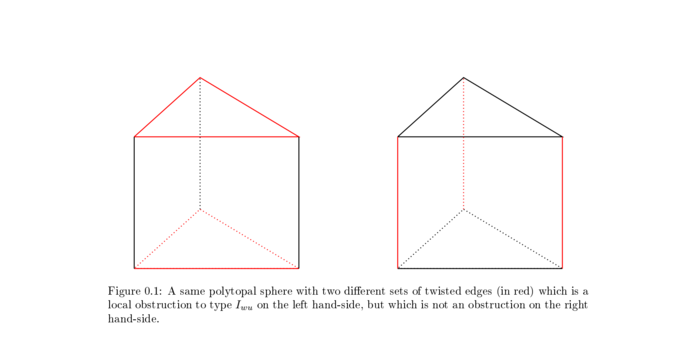
Phase tropical surfaces can appear as a limit of a 1-parameter family of smooth complex algebraic surfaces. A phase tropical surface admits a stratified fibration over a smooth tropical surface. We study the real structures compatible with this fibration and give a description in terms of tropical cohomology. As an application, we deduce combinatorial criteria for the type of a real structure of a phase tropical surface.
Phase tropical surfaces can appear as a limit of a 1-parameter family of smooth complex algebraic surfaces. A phase tropical surface admits a stratified fibration over a smooth tropical surface. We study the real structures compatible with this fibration and give a description in terms of tropical cohomology. As an application, we deduce combinatorial criteria for the type of a real structure of a phase tropical surface.
Functional characterization of FAM129A in breast cancer cells
Welcome to our GEOHYD Lunch Seminar Friday 26th of January @ 12:15 in Aud. 1, Geology building or via videolink using Zoom. The seminar is held by Sebastian Westermann (UiO).
Physics of internal microstructure fluid flows plays important role both due to their applications as well as their more general research field. In most occasions this type of fluid flow problems are treated with discrete models that are both computational costly as well as unable to shed light into the more general physics of the problem. In this sense a continuous model in the Eulerian frame is adopted here that consists a generalization of the incompressible Navier-Stokes equation. The present model introduces an extra tensor in the governing equations that accounts for the angular velocity of the internal microstructure, namely the micropolar model.
Genome sequencing and surveillance of viruses at FHI.
Jon Bråte from FHI (Folkehelseinstituttet; Norwegian Institute of Public Health) will talk about genome sequencing and surveillance of viral pathogens.
Molecular Alterations Associated with Cancer-Associated Fibroblast-Induced Epithelial-to-Mesenchymal Transition in Estrogen Receptor Positive Breast Cancer
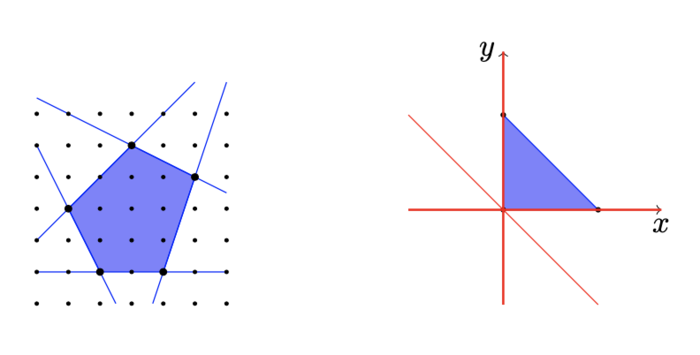
In 1962 Ehrhart proved that the number of lattice points in integer dilates of a lattice polytope is given by a polynomial — the Ehrhart polynomial of the polytope. Since then Ehrhart theory has developed into a very active area of research at the intersection of combinatorics, geometry and algebra.
The Ehrhart polynomial encodes important information about the polytope such as its volume and the dimension. An important tool to study Ehrhart polynomials is the h*-polynomial, a linear transform of the Ehrhart polynomial which is given by the numerator of the generating series. By a famous theorem of Stanley the coefficients of the h*-polynomial are always nonnegative integers. In this talk, we discuss generalizations of this result to weighted lattice point enumeration in rational polytopes where the weight function is given by a polynomial. In particular, we show that Stanley’s Nonnegativity Theorem continues to hold if the weight is a sum of products of linear forms that a nonnegative over the polytope. This is joint work with Esme Bajo, Robert Davis, Jesús De Loera, Alexey Garber, Sofía Garzón Mora and Josephine Yu.
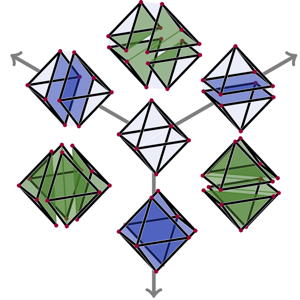
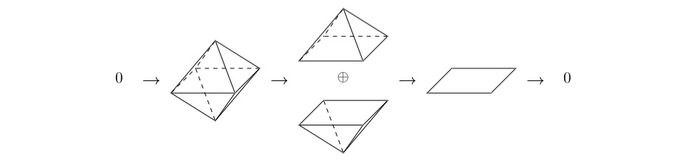
In this talk we define a new category of matroids, by working on matroid polytopes and rank preserving weak maps. This lets us introduce the concept of categorical valuativity for functors, which can be seen as a categorification of the ordinary valuativity for matroid invariants.
We also show that this new theory agrees with what we know about valuative polynomials: several known valuative polynomials can be seen as a Hilbert series of some graded vector space and we prove that these graded vector spaces let us define a valuative functor in the new sense.
Lastly, we sketch how to categorify a Theorem by Ardila and Sanchez, which states that the convolution of two valuative invariants (respectively, valuative functors) is again valuative.
This is based on a joint ongoing project with Ben Elias, Dane Miyata and Nicholas Proudfoot.

Doctoral candidate Ramtin Aryan at the Department of Informatics, Faculty of Mathematics and Natural Sciences, is defending the thesis Software Defined Networks
troubleshooting using formal approaches for monitoring, probing and self-correction (auto-correction) for the degree of Philosophiae Doctor.
Doctoral candidate Qindong Zhang at the Department of Pharmacy, Faculty of Mathematics and Natural Sciences, is defending the thesis "Development of Macrophage-Targeting Strategies for Cancer Immunotherapy" for the degree of Philosophiae Doctor.

Join us for this Open Science Lunch to hear from researchers and funders on the Registered Reports publishing format
Molecular Interaction of Heat-Labile Enterotoxin B-pentamer with Lipopolysaccharides
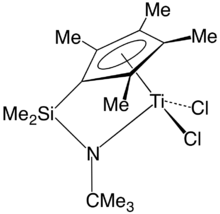
Theoretical models can provide fundamental insights on the substrate activation by metals as well as on the interactions between the different catalysts. This will allow the deciphering at the atomic level of the preferential pathways leading to different reaction products.
We welcome you join this symposium in Computational Catalysis
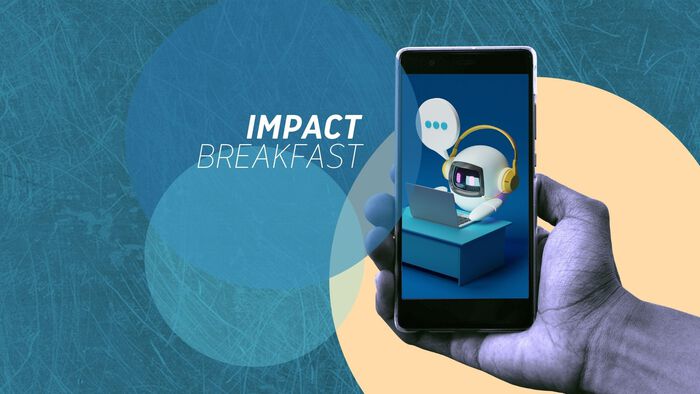
How can new technologies help us build social relations and improve mental health? Do young people prefer to talk to chatbots instead of healthcare personnel? What are the advantages and disadvantages of the new technologies? Meet researchers from SINTEF and UiO who are experts in chatbots and language models; and a startup from Oslo Science Park.
C*-algebra seminar by Ali Miller (Southern University of Denmark)

Doctoral candidate Alice Frantz Schneider at the Department of Informatics, Faculty of Mathematics and Natural Sciences, is defending the thesis Sustainability transitions in e-waste management: insights from field studies in Ghana, Brazil, and China for the degree of Philosophiae Doctor.
Simon Cooil (SNM, UiO): Atomically Sharp and High-Density Sb Doping in Si for use in Quantum Devices
Joachim Mossige (Njord and RITMO, UiO): "Going with the flows of life"
Ali Aslan Demir (Njord, UiO): "From Minerals to Bone: Exploring the Calcium Phosphate Pathway in Bone Regeneration"
Erina Prastyani (Njord, UiO): "Observation of crack orientation in two Westerly granite cores with pre-existing notches under triaxial compression and in situ 4D X-ray imaging"
Hylleraas seminar, hosted in Tromsø