From the archive - Page 2

Published Jan. 21, 2016 7:32 PM

A decrease in permafrost (cryotic soil) will follow climate change and a rise in temperature. This could have serious consequences. We might see an increase in greenhouse gasses, a greater possibility of landslides and live under the threat of monster waves.
Published Sep. 29, 2015 9:45 PM

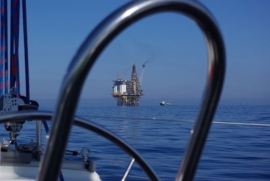
In August, Professor Emeritus Knut Bjørlykke at the Department of Geosciences finally got the result after a lot of work; A 2nd edition and expanded textbook in Petroleum Geoscience (2015). The book spans over a wide range of petroleum geology, from geophysics to sedimentary depositional environment to environmental geology. Several collegues contributed with articles in the book, which will be translated into Chinese.

Published June 23, 2015 2:51 PM

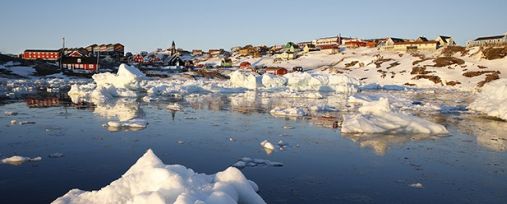
At the beginning of June, Ilulissat, Greenland, played host to the international Climate Days. The final conference of the Nordic Centre of Excellence SVALI was part of the programme.

Published May 13, 2015 12:44 PM

The Department of Geosciences has been ranked high for two subject areas in the QS World University Rankings (QS) for 2015. The research environment in geography, hydrology and geomatics (picture) advanced to 50th place, and the research environment for geology ranked between 51 and 100 based on criteria such as citations and academic reputation.

Published Oct. 29, 2014 10:00 AM

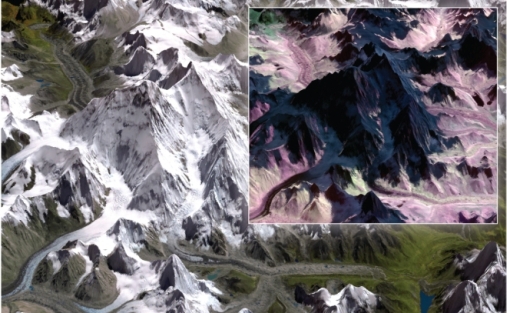
A large international study - Global Land Ice Measurements from Space (GLIMS) shows that Earth’s glaciers are shrinking with only a few exceptions. The scientists behind the study have applied satellite images to study the glaciers over the recent decades. The comprehensive report is now published as a book and an e-book.

Published Sep. 13, 2014 10:49 AM

Researchers from the project SEISMOGLAC, Department of Geosciences had good luck when they captured on film the calving of Kronebreen, one of Svalbard's fastest glaciers. They added the soundtrack of the seismic recordings. Seismic Sounds of Calving published on YouTube has now 1200 views.

Published July 22, 2014 7:54 PM

The story of the largest volcanic eruptions in the last 2000 years may be found in glaciers in Antarctica. A research team led by researchers from DRI, where researchers from the Department of Geosciences among others have contributed, have studied glacier cores from the Antarctic.

Published June 3, 2014 10:14 AM

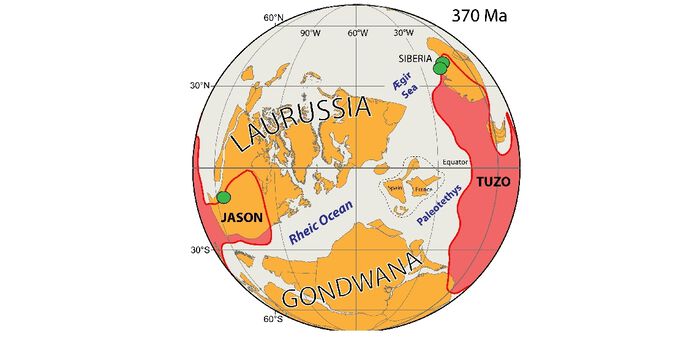
A model for absolute plate motion and true polar wander on Earth for the past 540 million years is developed by CEED researchers. The model reconstructs continents in longitudes in such a way that large igneous provinces and kimberlites are positioned above the plume generation zones in the Earth’s deep mantle. This provides a framework to understand how the mantle interacts with plate tectonics.

Publisert 20. mai 2014 13:00

On the Nordaustlandet of Svalbard we find the glacier Austfonna. Right now a part of this glacier - the Basin-3 Austfonna - surges for the first time in 140 years. Glaciolog Thorben Dunse from the Department of Geosciences, was interviewed on 16 May in Svalbardposten about the movement in the glacier.

Published Mar. 24, 2014 1:45 PM

Meteorites are constantly falling down onto the Earth. But we have little knowledge about where they come from or of their age. Now University of Oslo researchers at CEED (Centre for Earth Evolution and Dynamics), Department of Geosciences, have managed to find where on Mars many of the meteorites originated from - and determined that they are more than 4 billion years old.

Published Jan. 8, 2013 3:59 PM

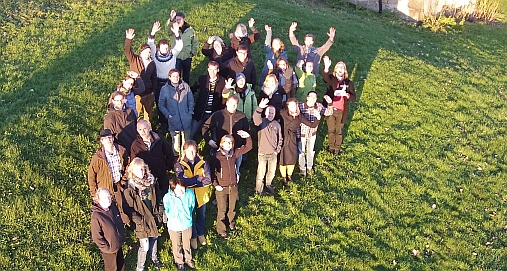
The first permafrost modelling course/work shop gathered 15 students in Oslo and Jotunheimen in southern Norway the summer of 2012. The group had an intensive program with lectures, exercises in the lab, projects work, field trip and presentation of their own work.

Published Mar. 30, 2012 8:04 AM

Sebastian Westermann, postdoc at Department of Geosciences, University of Oslo working with permafrost, has received the "Umweltpreis der Viktor und Sigrid Dulger-Stiftung" for the best PhD thesis from the University of Heidelberg in Germany.

Published Nov. 21, 2011 10:50 PM

The Norwegian Research Council has carried out a nationwide evaluation of earth sciences research. The evaluation gives top grades to research groups at the University of Oslo.