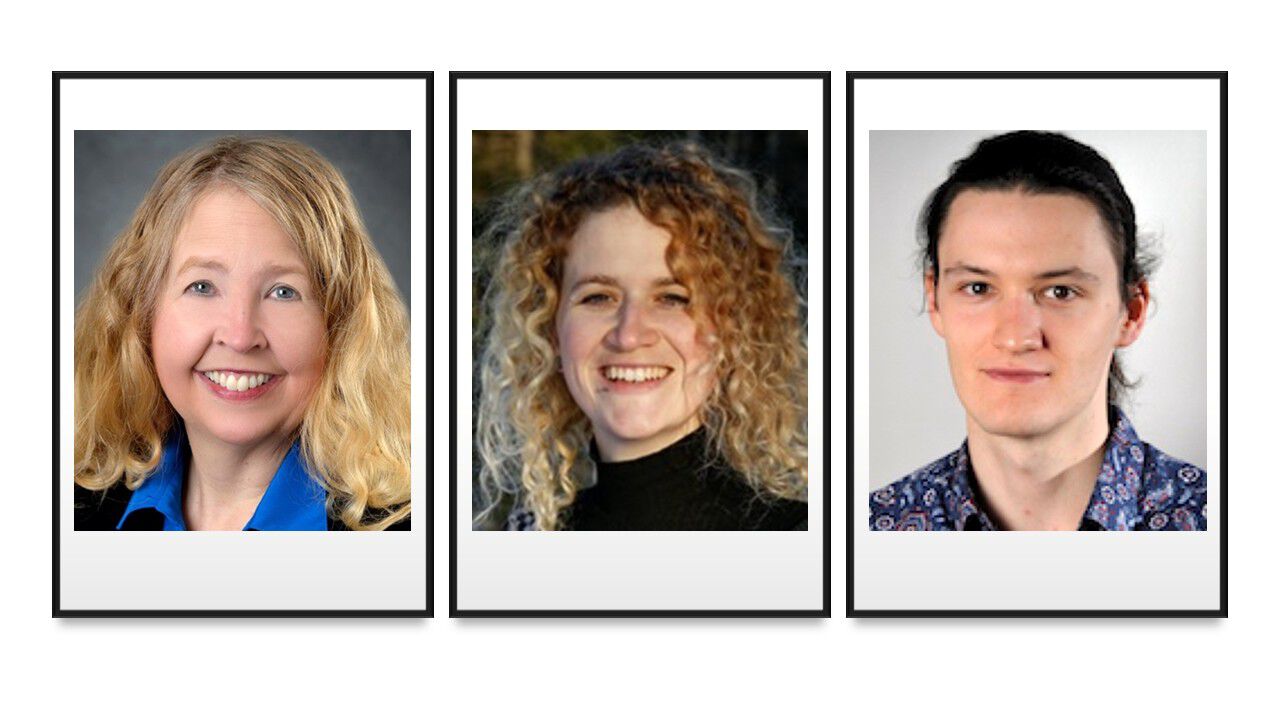
The Almlöf-Gropen Lecturer 2025 is Prof. Angela Wilson, Michigan State University, USA. She will be joined by two young speakers from the Hylleraas Centre, Inga Lena Schmidtke (UiT) and Simon Elias Schrader (UiO).
Program
Chair: Thomas Bondo Pedersen, Director of the Hylleraas Centre
- 13:15 Inga Lena Schmidtke. Computational insights into methane-benzene dehydrogenative coupling by a homogeneous iridium catalyst.
- 13:45 Simon Elias Schrader. Rothe’s method: Solving the time-dependent Schrödinger equation with adaptive Gaussians.
- 14:15 Angela Wilson. Unraveling the Periodic Table: From Thermochemistry and Excitation Pathways to Environmental Impact.
Almlöf—Gropen Lecturer 2025: Prof. Angela Wilson
- Department of Chemistry, Michigan State University, USA
- John A. Hannah Distinguished Professor of Chemistry
- Director, MSU Center for Quantum Computing, Science, and Engineering (MSU-Q)
- Co-founder, QuSTEAM
 Angela Wilson is John A. Hannah Distinguished Professor and a University Distinguished Professor at Michigan State University, with appointments in the Department of Chemistry, Department of Physics and Astronomy, and Department of Medicine. Angela received her B.S. from Eastern Washington University and a Ph.D. from the University of Minnesota, where she completed her Ph.D. under the mentorship of Professor Jan Almlöf. She was a postdoctoral fellow at Pacific Northwest National Laboratory, a U.S. Department of Energy facility, with Dr. Thom H. Dunning, Jr. In 2000, she joined the faculty at the University of North Texas (UNT), where she founded and directed the Center for Advanced Scientific Computing and Modeling (CASCaM). At UNT, she achieved the rank of Regents Professor and served as Vice Provost for Faculty before transitioning to Michigan State University and the U.S.
National Science Foundation (NSF) in 2016. At NSF, she led the Division of Chemistry, and was responsible for nearly $1 billion in national research investments. In this role, she introduced and set strategic research priorities – including the national focus on data-driven discovery, and had oversight of ten national research centers and components of two of the nation’s largest research facilities. At Michigan State University, she established the MSU Center for Quantum Computing, Science, and Engineering and co-founded the MSU Center for PFAS Research.
Angela’s research includes quantum mechanical and quantum dynamical method development, transition metal and heavy element chemistry, drug discovery, and environmental chemistry. She is a leader in the development of electronic structure methodology for the prediction of thermochemical and spectroscopic properties across the Periodic Table, modeling excited states and bond-breaking processes. In quantum electron dynamics, her approaches are opening new frontiers in the control of excitation and de-excitation pathways for transition metal species. Her work also addresses critical issues in environmental chemistry and health, including the impact of pollutants on ecosystems and organisms, as well as drug discovery efforts targeting diseases including tuberculosis to pediatric cancers.
Among her recognitions, Angela is a Fellow of the American Chemical Society, American Physical Society, and American Association for the Advancement of Science. She is recipient of the Francis P. Garvan-John M. Olin, IUPAC Distinguished Woman in Chemistry, Iota Sigma Pi National Honorary, and Zenith Awards. She is on the editorial advisory board of Cell Reports Physical Science and is the editor of Annual Reports in Computational Chemistry. In 2022, she was president of the American Chemical Society, the world’s largest scientific society, with over 200,000 members. Presently, she is treasurer and a member of the Board of Directors for the American Physical Society, and is on the board of EeroQ, a quantum computing hardware company.
Title: Unraveling the Periodic Table: From Thermochemistry and Excitation Pathways to Environmental Impact
Abstract
Throughout his career, Jan Almlöf strived to achieve two principles - accuracy and efficiency – in the development of theoretical methods, while also pursuing important application. In his career, Odd Gropen pursued an ongoing series of challenges, describing incredibly complex chemistry, with state-of-the-art predictions. It is in this spirit, that two themes are highlighted in this presentation, provided in honor of Jan Almlöf and Odd Gropen.
Theoretical and computational chemistry provide vital developments and approaches to unravel some of our most challenging chemical problems. In this talk, two very different themes will be discussed: (1) electronic structure approaches across the Periodic Table for thermochemical descriptions and control of excitation pathways; and (2) environmental chemistry
Transition metal and heavy element species are among the most complex molecular species, with many possible electronic configurations, partially filled higher-angular momentum states, often resulting in strong electron correlation effects and multi-reference wavefunction character. Strategies for addressing this complex chemistry, will be discussed, including our family of ab initio composite approaches, with examples of recent applications across the transition metal and heavy element spectrum, and comparisons to density functional approaches, which are commonly used for transition metal and heavy element chemistry. For transition metals, our work in time-independent quantum mechanical methodologies will be discussed, as well as our real-time quantum electron dynamics developments, including developments towards polaritonic chemistry.
In terms of environmental chemistry, an overview of our work on per- and polyfluoroalkyl substances (PFAS) will be provided. The use of PFAS in industrial and commercial applications for over six decades has resulted in their pervasive presence in the environment, as these species can move through soils and contaminate water sources, become airborne, and bioaccumulate in animals such as fish and cattle, as well as humans. PFAS have been linked to a multitude of health issues including thyroid disease and cancers. In this work, a multi-faceted computational chemistry strategy is being utilized to address several key molecular-level concerns about PFAS, considering their presence in soils, water, air, fish and other animals, plants, and humans. Highlights of some of our key findings will be provided.
Almlöf—Gropen Young Speaker: Inga Lena Schmidtke
Hylleraas Centre, UiT—The Arctic University of Norway, Tromsø
 Inga obtained her BSc. and MSc. in Chemistry at the University of Hamburg, Germany. Initially trained as an experimental organometallic chemist, she was introduced to the fascinating world of computational chemistry during an exchange to the University of Oslo as part of her Master’s degree. She fully shifted her research interests toward computational chemistry and entered the PhD program at UiO where her work focused on mechanistic studies of small molecule activation by homogeneous transition metal catalysts. After fulfilling her PhD degree, she moved to Tromsø to start a PostDoc at the Hylleraas Centre at UiT.
Title: Computational insights into methane-benzene dehydrogenative coupling by a homogeneous iridium catalyst
Abstract:
Methane is an underexploited compound for synthetic purposes, despite being vastly available within the Earth’s crust as the primary constituent of natural gas. Its low polarity and high C-H bond dissociation energy are challenges to overcome to provide an efficient use of this simple hydrocarbon as feedstock in chemical synthesis. Today, there are several direct transformations of methane to value-added products utilizing heterogeneous catalysts, with the drawbacks of requiring high temperatures and showing poor product selectivity. On the other hand, homogeneous transformations generally require less harsh conditions and allow for better reaction control but often fail to provide manifold derivatization past the initial activation step.
In this talk, I will present our recent experimental-computational study in which we achieved dehydrogenative coupling of methane and benzene induced by a soluble iridium catalyst. I will focus on the computational component of the work by first discussing the underlying complex reaction mechanism which was studied with density functional theory (DFT) methods, revealing the formation of a key intermediate for this transformation, an iridium-methylidene (Ir=CH2) species. Furthermore, I will introduce the concept of microkinetic modelling as an additional tool in computational catalysis and discuss how it was successfully employed in this study to explain experimental findings that could not be understood using solely DFT methods.
Almlöf—Gropen Young Speaker: Simon Elias Schrader
Hylleraas Centre, University of Oslo.
 Simon Elias Schrader is a PhD candidate at the Hylleraas Centre at the University of Oslo. He received his master’s degree in Computational Science from the same institution in 2022, where he worked on eigenvector continuation and quantum computing. His PhD research focuses on developing new numerical methods to solve the time dependent Schrödinger equation for strong-field dynamics using time dependent Gaussian functions.
Title: Rothe’s method: Solving the time-dependent Schrödinger equation with adaptive Gaussians.
Abstract:
When molecules and atoms are exposed to strong laser fields, electrons can acquire substantial kinetic energy and become strongly delocalized and oscillatory, moving hundreds of angstroms away from the nuclei. However, an accurate description of unbound electrons is essential to model processes such as high-harmonic generation and above-threshold ionization correctly. Standard atom-centered Gaussian basis sets, the workhorse of quantum chemistry, are in many cases insufficient to describe these processes, as the electrons, by design, are confined close to the nuclei. Grid-based representations are a possible solution, but they require very large spatial
domains and fine resolutions to be able to represent the electron dynamics reliably.
In this talk, I present an alternative to both fixed Gaussian bases and grid-based methods. A basis of complex, time-dependent Gaussians, with centers, widths, and basis size varying in time, is a compact and efficient way to represent the wave function. By reformulating the time dependent Schrödinger equation as an optimization problem, an optimal Gaussian basis at each time step is obtained, without the need to define a basis a priori. This approach is referred to as Rothe's method. I will derive Rothe’s method and demonstrate its accuracy for the hydrogen atom in a strong field, showing that about 100 Gaussians reproduce grid results. I then show
how this has been extended to higher-dimensional systems, illustrating how only a few dozen time-dependent explicitly correlated Gaussians (ECGs) can capture complex dynamics, and by demonstrating how Rothe's method can be applied to orbital-based methods such as time dependent Hartree-Fock and time-dependent density functional theory. Finally, I discuss possible directions for further development of Rothe’s method.