Jan Almlöf
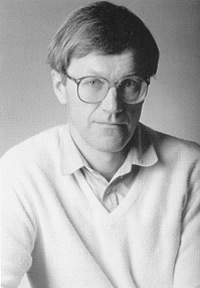 Jan Almlöf
Jan Erik Almlöf was born in Malung, Sweden on April 1, 1945. He received the degree of Fil. kand. at the University of Uppsala in Sweden in 1967 and graduated from the same university with the degree of Fil. lic. in 1971, with a thesis on the crystal structures of hydrates of perchloric acid. He received the degree of Fil. Dr. from the University of Uppsala in 1974 with a thesis on hydrogen bonding. By then his research interests had shifted to quantum chemistry and computational methods.
His research mentors were Professors Ivar Olovsson and Bjørn Roos.
Almlöf obtained a position as associate professor (dosent) in Theoretical Chemistry at the University of Oslo in Norway in 1976, where he began a career of teaching and research in computational physical chemistry, becoming Professor of Chemistry in 1982. In September 1985 he moved to the University of Minnesota in Minneapolis as Professor of Chemistry and Chemical Physics where he was appointed a Fellow of the Supercomputer Institute while continuing his activities in research and teaching. He taught both undergraduate and graduate courses, and had 28 doctoral and 16 postdoctoral research students.
Jan Almlöf was one of the initiators of the European Summer School in Quantum Chemistry and was a highly appreciated lecturer since the start of the school in 1989.
He also had a longstanding collaboration with the University of Tromsø, where he was a frequent visitor and adjunct professor after he moved to Minnesota.
Jan Almlöf was highly regarded in the international scientific community for his accomplishments in advancing the theory of molecular structure and for his work in the development of efficient algorithms for carrying out calculations of the structures of molecules. In the early 70's he wrote the SCF program MOLECULE which utilized binary symmetry operations to achieve higher efficiency in the calculation of electron-repulsion integrals.
His most widely known work is the development of so called "direct" quantum mechanical methods for calculating electronic wave functions and energies of molecules; these methods allow one to take advantage of the high speed of state-of-the-art computers even when the computer does not have enough memory to store all the intermediate quantities. He also made key contributions to the use of density fitting and linear-scaling methodology, as well as introduced the atomic natural orbital (ANO) basis sets.
Direct methods have been widely used by many chemical companies and national laboratories, as well as by the academic research community. In 1993, he was awarded the Schroedinger Medal by the World Association of Theoretical Organic Chemists, in honor of his development of direct methods.
Odd Gropen
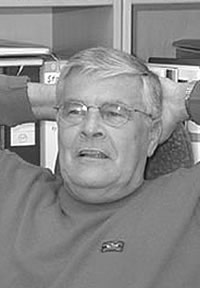 Odd Gropen
Odd Gropen was born in Elverum, Norway on May 11, 1941. He received the degree of Cand. Real. at the University of Oslo in 1969 with a thesis on semi-empirical calculations for conjugated systems, and the degree of Dr. Philos at the University of Tromsø in 1976 with a thesis on ab-initio calculations for B and Al compounds.
Odd Gropen's initial mentor was Per N. Skancke, and Odd followed him to the University of Tromsø where he was hired as an assistent professor in dddd, and later promoted to full professor in dddd. He worked at the University of Tromsø for the rest of his scientific career, but took advantage of a favorable sabbatical system for frequent stays abroad, collaborating with a broad range of international colleagues.
As a professor at a small upstart university, Gropen had to cover many functions and to teach a broad spectrum of courses at various levels, as well as establish a doctoral program. He also served in various administrative functions, on committees and evaluation boards, both locally and nationally. He was one of the main movers behind the establishment of high-performance computing in Norway, an activity that was central to his own field of research. Towards the end of his career, he was Dean of the Faculty of Mathematics and Natural Sciences at the University of Tromsø for 6 years.
Gropen's initial research efforts in semi-empirical quantum chemistry very early turned to ab-inito methods as these became more affordable and computing capacity became available. Through collaboration with Sigeru Huzinaga, he was introduced to effective core potentials (ECP) which became a mainstay of his research over the next decades. He used this in a variety of application, perhaps the most important was in early work on modeling of reactions on surfaces. This was important in order to understand the mechanisms driving catalytic processes, a field of modeling that has developed steadily since then and now is central for all research on catalysis.
The availability of ECPs and their application to many of the heavier metals involved in catalysis, lead Gropen into research on relativistic effects in quantum chemistry and how to model these. He here engaged himself both in the development of ab-initio 4-component methods, in approximate 2-component methods and in relativistic extensions of the ECPs. Together with colleagues he developed the AMFI mean-field spin-orbit splitting method for approximate treatment of spin-orbit splittings in correlated calculations on relativistic systems. Towards the end of his career, he extended this work on relativistic calculations to density functional theory.