
Program
Thursday 19th September 2024 (Teknologibygget: Auditorium 1.023, UiT) |
||
| Chair | Luca Frediani | |
| 12:00 | Tonje Reinholdt Haugen | Investigating cyclic peptides interactions with lipid bilayers using computational methods |
| 12:30 | Marinella de’Giovanetti | Grignard meets machine learning: cracking Grignard chemistry with neural network potentials |
| 13:00 | Fernanda Duarte | Exploring chemical reactivity in the age of automation and machine learning |
Almlöf—Gropen Lecturer 2024: Prof. Fernanda Duarte
Department of Chemistry, University of Oxford, UK
 Fernanda Duarte was born in Santiago, Chile. She completed undergraduate and graduate studies at Pontificia Universidad Católica de Chile (PUC). Her PhD research focused on the formulation of theoretical frameworks for characterising chemical processes employing Density Functional Theory (DFT) and hybrid Quantum Mechanics/Molecular Mechanics (QM/MM) approaches. After graduation, she joined the Department of Cell and Molecular Biology at Uppsala University, where she pursued training in biomolecular modelling. In 2015, she moved to the University of Oxford with a Royal Society Newton Fellowship, working in the area of computational organic chemistry. She then joined the School of Chemistry at Edinburgh with a Chancellor’s Fellowship before returning to Oxford in 2018 as an Associate Professor in Chemistry. Throughout her career, Fernanda has received various accolades, including the L'Oreal-UNESCO Women in Science award (2009), Pre-doctoral Fulbright scholarship (2010), Marie Curie Career Grant (2015, decline in lieu of the Newton Fellowship), MGMS Frank Blaney Award(2020), OpenEye Outstanding Junior Faculty Award (2021), Harrison-Meldola Memorial Prize (2021), Novartis Early Career Award in Chemistry (2022) and Finalist in Chemical Sciences for the 2024 Blavatnik Awards for Young Scientists in the UK. Her team develops computational methods to understand (bio)chemical reactivity and guide molecular design.
Title: Exploring chemical reactivity in the age of automation and machine learning
Abstract: Efficient and accurate modelling of chemical reactions in the condensed phase represents one of the ‘grand challenges’ in computational chemistry. While characterising reaction energy pathways has become routine, exploring these processes while accounting for solvent and dynamics effects remains a time-consuming and non-systematic endeavour, even for experienced computational chemists. Solvent effects, in particular, significantly impact reaction rates, selectivity, and the reaction mechanism itself. In this talk, I will present our team’s efforts to address these challenges by integrating automation and machine learning, demonstrating their potential for studying complex reaction mechanisms in the condensed phase. Firstly, I will describe our work on automating reaction pathways using our open-source software, autodE, which streamlines the characterisation of reaction pathways, requiring minimal user input and expertise and being compatible with several electronic structure theory packages. Moving towards increasingly complex systems in the condensed phase, I will discuss our ongoing efforts to model reactions in solution using machine learning potentials (MLPs) as efficient surrogates for traditional ab initio methods. Our approach, implemented in the mlp-train package, integrates electronic structure methods, various MLP architectures, and active learning to generate the training sets on the fly and train MLPs in low data regime. Through illustrative examples using the Atomic Cluster Expansion (ACE) framework and its message-passing neural network variant (MACE), in combination with enhanced sampling techniques, we demonstrate that this approach facilitates the creation of data-efficient training sets that adequately sample chemical space to achieve the required accuracy while maintaining low computational costs. Finally, I will close by discussing current challenges and opportunities within the field.
Almlöf—Gropen Young Speaker: Tonje Reinholdt Haugen
Hylleraas Centre, UiT The Arctic University of Norway, Tromsø
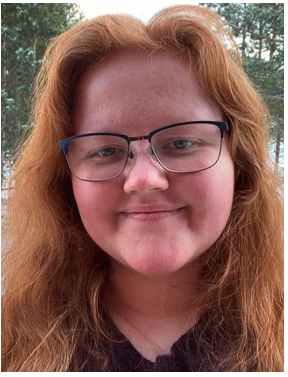 Tonje Reinholdt Haugen is a Ph.D student at UiT The Arctic University of Norway where she also obtained her Master in Science degree (2021). She wrote her master thesis on small cyclic peptides and has continued this work in her Ph.D. Her focus is now on how these cyclic peptides interact with different lipid bilayers of different complexity and to increase our understanding of how they work as antimicrobial peptides.
Title: Investigating cyclic peptides interactions with lipid bilayers using computational methods
Abstract: Antimicrobial resistance (AMR) has become one of the most pressing global health challenges over the last decades. First reported in 1940 by Oxford researched in E. coli, AMR has since then rapidly evolved, compromising the effectiveness of antibiotics and other antimicrobial agents that were once considered super effective. The increasing prevalence of resistant pathogens has made it imperative to explore new therapeutic strategies to combat infectious diseases. In this context, antimicrobial peptides (AMPs) have emerged as a promising avenue to find new and promising antimicrobial molecules. Antimicrobial peptides are a diverse group of molecules that play a crucial role in the innate immune defence systems of a diverse range of organisms, ranging from fungi and bacteria to plants and mammals. Since their initial discovery in 1939, AMPs have been recognized not only for their antimicrobial properties but also for their versatility, including destruction of cancer cells, fungi, and viruses. Unlike traditional antibiotics, which target specific bacterial processes and can lead to resistance, AMPs typically work by disrupting the integrity of the bacterial membranes, making it significantly harder to develop resistance against them. In this presentation I will introduce 4 different cyclic peptides that have been shown to have antibacterial properties and show how we look at their interaction with different models of the inner membrane of gram-negative bacteria. I will explain how the 4 peptides work and their different interactions, and what we can learn from them for further development of other cyclic peptides used as AMPs.
Almlöf—Gropen Young Speaker: Marinella de’Giovanetti
Hylleraas Centre, University of Oslo
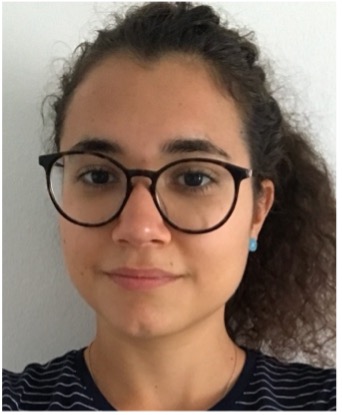 Marinella de’Giovanetti received her bachelor’s degree in chemistry from the University of Pavia, Italy, in 2019. She then moved to the University of Copenhagen, Denmark, where she specialised in theoretical and computational Chemistry, with a focus on computational spectroscopy. She graduated with a master’s degree in physical chemistry in 2021, and later that year she joined the Hylleraas Centre at the University of Oslo, Norway, for her PhD. Here, she is currently developing neural network potentials to study Grignard systems.
Title: Grignard meets machine learning: cracking Grignard chemistry with neural network potentials
Abstract: Grignard reagents are vital tools in organic Chemistry, extensively utilised in various chemical processes for forming carbon-carbon bonds. When combined with lithium halides, they create “Turbo Grignard” systems, potent bimetallic formulations that allow for metal-halogen exchange reactions which are not accessible with traditional Grignard reagents. Despite their significance in Chemistry, the intricate behaviour of these systems remains elusive and still poorly understood. Traditional experimental methods struggle with their complexity, making computational modelling a crucial strategy. Yet, accurate modelling necessitates a realistic representation of all reaction components, including solvent, in a dynamic approach. While molecular dynamics offers a natural solution to this problem, the high-dimensional free energy surfaces associated with Grignard Chemistry poses significant challenges, even when coupled to enhanced sampling techniques.
In this talk, I will present our work in developing neural network potentials to model Grignard systems and their lithium halide additives. I will demonstrate how neural network potentials can effectively represent high-dimensional potential energy surfaces of quantum-mechanical accuracy at a much more accessible cost, thereby extending the scope of molecular dynamics simulations. I will show how this approach has provided new insights into the role of lithium additives in Turbo Grignard reagents, revealing previously inaccessible details about their Chemistry and behaviour in solution.