New opportunities for cancer treatments
The PhD candidates will be trained to become independent researchers and will specialize in this emerging field. Previous research showed that the dark proteome offers opportunities for new treatments for various diseases. With fifteen PhD candidates focusing on this group of previously unknown proteins, an increasingly better understanding of this research field and of the possibilities to apply it to new therapies, for example pediatric cancer, is gained.
The researchers will work in fifteen research groups across different European countries. In addition to their research, the PhD candidates will follow a joint training program. They will receive both professional and scientific training and will undertake internships with participating companies. As a result, promising discoveries can be translated more quickly into clinical applications. Collaboration is central to this.
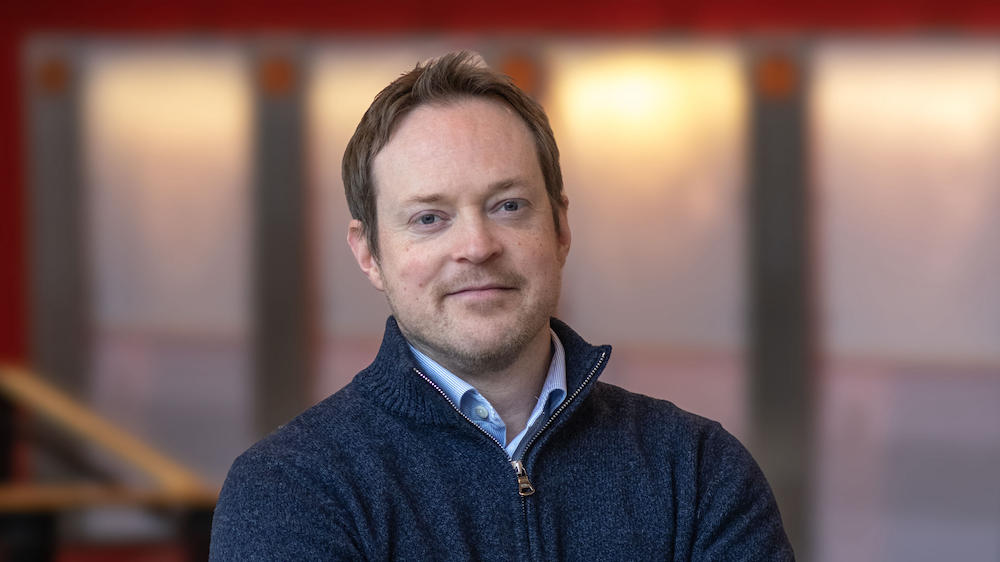
The University of Oslo is one of the participating research institutions, with Professor Eivind Valen at the Department of Biosciences as a project coordinator at the University of Oslo.
"One of the major revelations over the lasts decade has been the discovery that cells translate far more than just conventional protein-coding genes. We still know remarkably little about most of these translated regions whether they produce functional molecules, regulate gene expression, or whether most of them are just biological noise. With ORFeus we try to tackle this challenge head-on and develop methods to detect, validate and characterize these hidden products with the aim to make sense of this vast unexplored landscape", Eivind Valen says.

The ORFeus program
The ORFeus program will start in October with the recruitment of students and has a duration of four years. It is coordinated by the Princess Máxima Center for pediatric oncology and consists of 26 international partners.
ORFeus is funded by the European Union’s Horizon Europe research and innovation program under the Marie Skłodowska-Curie actions, grant agreement no. 101309891.
The participating research institutions are: Princess Máxima Center for Pediatric Oncology (NL, coordinator), Hubrecht Institute – KNAW (NL), Antoni van Leeuwenhoek / Netherlands Cancer Institute (NL), Ghent University (BE), University of Dundee (UK), The Institute of Cancer Research, London (UK), University of Leeds (UK), University of Southampton (UK), University College Cork (IE), University of Oslo (NO), Hospital del Mar Research Institute (ES), Albert Ludwig University of Freiburg (DE), Max Delbrück Center for Molecular Medicine (DE), and the University of Lausanne (CH).
The participating companies and research partners are: Enara Bio (UK), Oxford Nanopore Technologies (UK), EIRNA Bio (IE), Bruker (DE), myNEO (BE), Boehringer Ingelheim (AT), Immudex (DK), Immagina Biotechnology (IT), Tesorai (US), ProFound Therapeutics (US), and EMBL-EBI (European Bioinformatics Institute, UK/DE). In addition, Oncode Institute (NL) provides training in intellectual property and entrepreneurship.