Gjesteforelesninger og seminarer - Side 2
Pardon recently established a type of "cohomology ring of enumeration problems" that all reasonable curve counting theories pair with to produce their invariants. A technical regularization procedure then allows him to prove that, for 3-folds, this ring is generated by local curve elements in the relevant degrees, from which the MNOP correspondence (for primary insertions) between different curve counting theories follows, since it was previously proven in the local curve case. Our work extends this framework to the CY4-fold case, which allows us to prove several curve counting conjectures in the CY4 case. Among the additional technical difficulties in this case is that a more complicated virtual dimension formula leads to more generators than just local curves. In this talk, I will give an overview of this framework and explain the main techniques involved. This is joint work in progress with Ivan Karpov, and partially based on separate work with Jim Bryan.
PDE seminar by Jinghao Cao (Caltech)
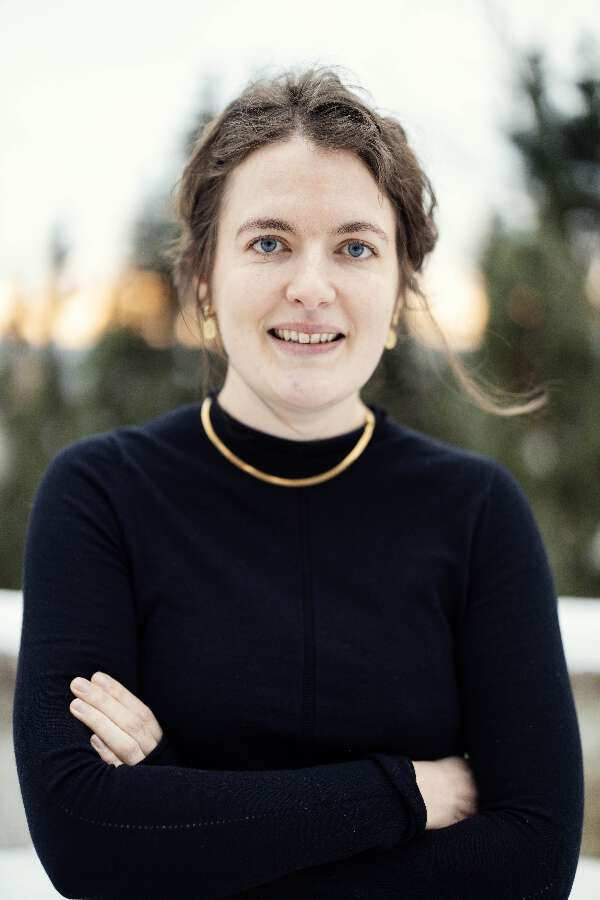
Céline Cunen is a researcher at the Oslo Centre for Biostatistics and Epidemiology (OCBE) at the Oslo University Hospital. There she works on a variety of topics within methodological and applied statistics, including clinical trials. She also holds a part-time position at Peace Research Institute Oslo (PRIO) where she does research on the evaluation of conflict forecasts. She received her PhD in statistics from the University of Oslo in 2018.
A primitive element of a Galois field F is a generator of the group of units F*. Finding such elements is entirely non-trivial and this search has given rise to many interesting results in number theory. If one is willing to assume the generalised Riemann hypothesis, then every (non-silly) integer is primitive to infinitely many prime order fields. Moreover, the least primitive element in such fields is less than the square root of the order. I will present an effective method for finding primitive elements in Galois fields with prime-power order. This method is an amalgamation of my hybrid bound on prime divisors and joint work with J. Punch on prime sieves. I will also discuss some of my recent work on least primitive elements.

QOMBINE seminar by Markus Grassl (International Centre for Theory of Quantum Technologies, University Gdansk)

PDE seminar by Konstantina Trivisa (University of Maryland)
Jan Skotheim is Professor of Biology at Stanford University and Professor, by courtesy, of Chemical and Systems Biology. His research focuses on understanding how cells grow and how cell growth triggers cell division, a fundamental process with important implications for normal physiology and diseases such as cancer.
Skotheim leads an interdisciplinary research program that combines mathematics, physics, engineering, biochemistry, genetics, and cell and systems biology. His laboratory primarily studies cell-size control and the cell cycle using budding yeast as a model organism, with the goal of uncovering the molecular mechanisms that connect cellular growth to division.
He did his PhD in Applied Mathematics from the University of Cambridge in 2004. He subsequently conducted postdoctoral research in genetics, cell biology, and systems biology at The Rockefeller University before joining Stanford’s faculty.
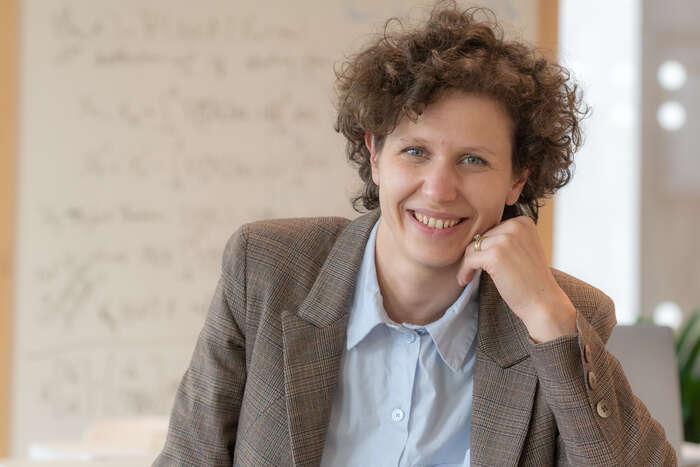
Alice Corbella is an Assistant Professor in Applied Statistics at the University of Warwick. Her research centres on Markov chain Monte Carlo (MCMC) methods, with a particular focus on Zig-Zag sampling and its application to Bayesian inference of infectious disease dynamics from epidemic data.
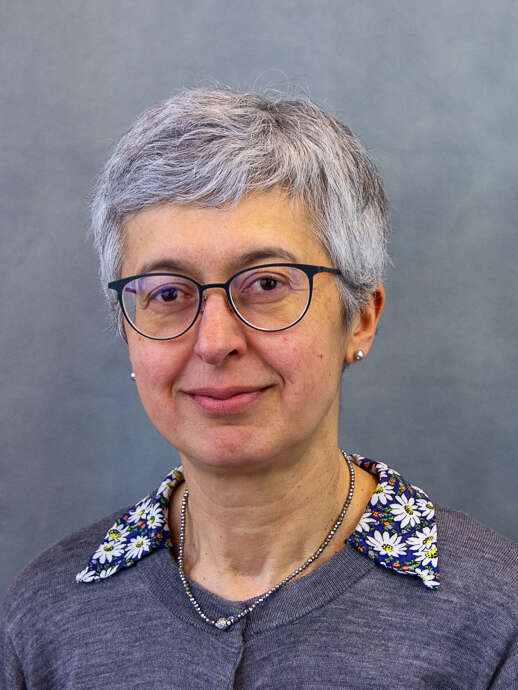
Nadia S. Larsen tildeles pris fra Professor Ingerid Dal og søster Ulrikke Greve Dals legat for fremragende arbeid innen teoretisk matematikk.
C*-algebra seminar by Seung-Hyeok Kye (Seoul National University)
PDE seminar by Konstantina Trivisa (University of Maryland)
PDE seminar by Konstantina Trivisa (University of Maryland)
Anton Souslov is an Associate Professor in the Theory of Condensed Matter group at the Cavendish Laboratory, University of Cambridge. He is a theoretical physicist whose research focuses on soft matter, mechanical and optical metamaterials, active matter, topology, and polymer physics. He obtained his B.S. in Physics and Mathematics from Florida State University in 2006 and his Ph.D. in Physics from the University of Pennsylvania in 2011. Before joining Cambridge in 2024, he held research and academic positions at Georgia Tech, Leiden University, the University of Chicago, and the University of Bath.
His research explores how the collective behaviour and structure of materials can give rise to unusual physical properties. His work spans active materials, mechanical metamaterials, topological systems, and, more recently, topological photonics and structured optical fibres. His research has been recognised through awards and grants including an EPSRC New Investigator Award and a Royal Society Research Grant. At Cambridge, he continues to investigate how concepts from topology and condensed-matter physics can be used to design novel materials and devices with potentially useful mechanical and optical properties.
We will give an introduction to constructive analysis following Errett Bishops book "Foundations of Constructive Analysis". We start by covering elementary real analysis, and the aim is to cover Chapter 5 on Complex Analysis.
Speaker: Erlend F. Wold
Lecture I: Introduction, and start on Chapter 2 in Bishop.
Professor Ivan C. Christov is a Professor of Mechanical Engineering and Mathematics (by courtesy) at Purdue University. He leads research at the intersection of applied mathematics, fluid mechanics, and solid mechanics, with particular interests in soft hydraulics, non-Newtonian fluid mechanics, multiphase and particulate flows, nonlinear waves, and computational and data-enabled science and engineering.
His research combines mathematical modeling, theoretical analysis, computation, and experiments to investigate complex fluid–structure interactions and transport phenomena, with applications spanning biomedical engineering, advanced materials, and micro- and nanotechnology.
Professor Christov received his Ph.D. from Northwestern University in 2011, following degrees from Northwestern University, Texas A&M University, and MIT. His honors include the Fulbright U.S. Scholar Award, the NSF Mathematical Sciences Postdoctoral Research Fellowship, and the Richard P. Feynman Distinguished Postdoctoral Fellowship at Los Alamos National Laboratory.