Delta på disputasen
PhD disputasen og prøveforelesningen vil foregå 100% fysisk. Rommet åpnes for deltakelse like før disputasen starter, og stenger for nye deltakere omtrent 15 minutter etter at disputasen har startet.
Delta på prøveforelesning - 28. januar kl. 10:15 (Aud. 209, Svein Rosselands Hus)
"The promise (and practicality) of astronomy from the lunar surface"
Kreeringssammendrag
Denne avhandlingen er et bidrag til effektiv og robust statistisk analyse av store datasett i observasjonell kosmologi. Avhandlingen forbedrer analyse-metodene brukt i eksperimentet COMAP, og presenterer programvaren Commander4 for analyse av den kosmiske bakgrunnsstrålingen.
Hovedfunn:
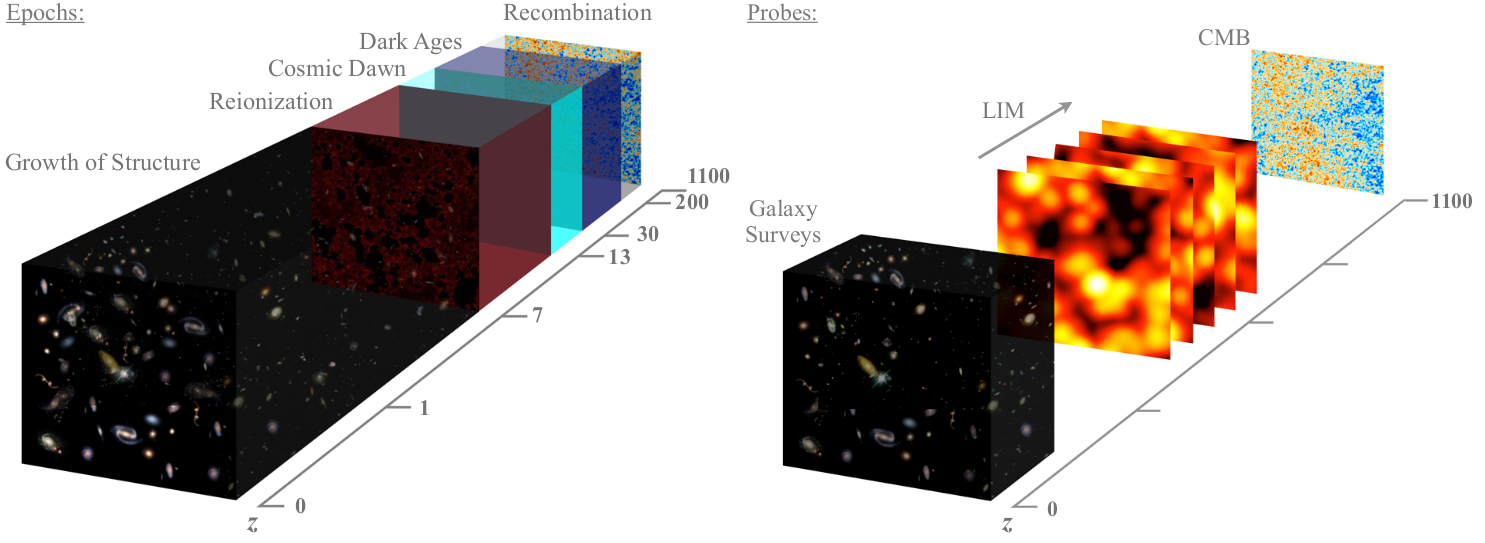
Line Intensity Mapping (LIM) is an emerging observational field in astronomy, aiming to provide a more complete and unbiased picture of the Universe across vast cosmic space and time. It does this by measuring the diffuse emission from various gases in the Universe. The primary contribution of this thesis is improved analysis methods for the CO Mapping Array Project (COMAP), a LIM experiment targeting emission from star-forming carbon monoxide gas 11-12 billion years ago, during the Epoch of Galaxy Assembly.
The CO signal is incredibly faint and must be disentangled from signal contaminations, both from the sky and the instrument itself. This thesis discusses how systematic errors in the petabyte-sized COMAP dataset can be handled efficiently and robustly. This effort culminated in the COMAP Season 2 results, which improved upon existing constraints of the cosmic CO signal by an order of magnitude, bringing COMAP closer to the world's first detection of this faint signal.
Many similar data analysis challenges are also encountered in observations of the Cosmic Microwave Background (CMB). This thesis also contributes to the CMB field by introducing a prototype of Commander4, a massively parallel Gibbs sampling software aimed at high-precision analysis of current and future CMB datasets.