Summary
Kristine E. H. Bonnevie (1872-1948) was an outstanding zoologist and biologist, and a pioneer in the field of genetics. She became the first female member of the Norwegian Academy of Science and Letters in 1911, and the first female professor in Norway the following year. The Kristine Bonnevie lectures are held in her memory annually as part of the University anniversary.
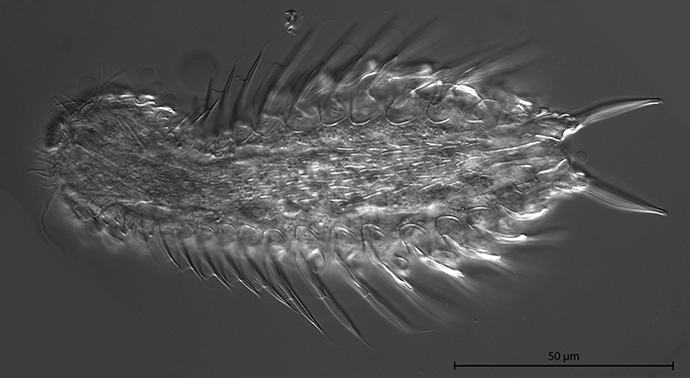
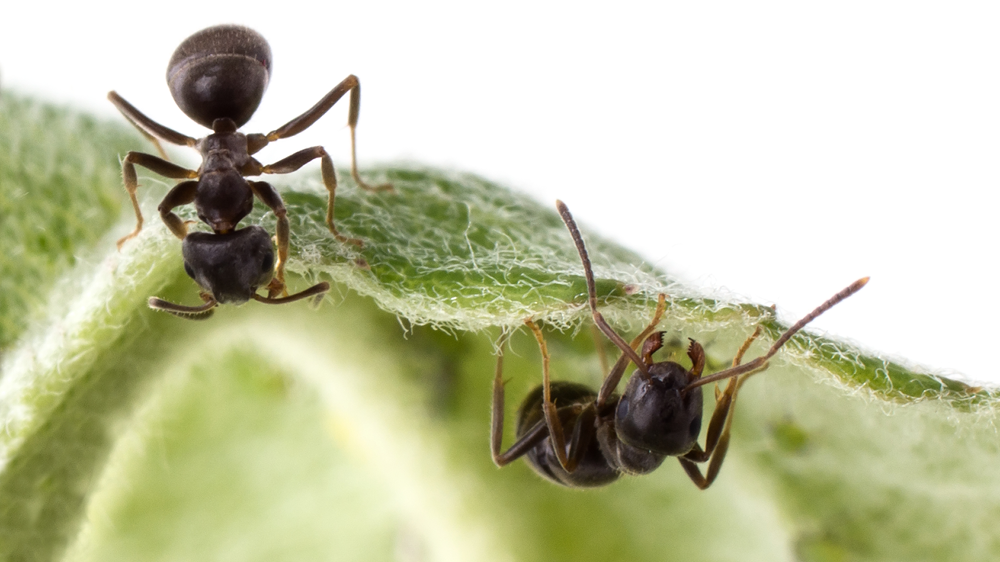
This year’s Kristine Bonnevie lectures explore the theme of biodiversity from land to sea. Corrie S. Moreau, Cornell University, will present “Symbiosis and the Tree of Life: Piecing Together the Puzzle to Understand the Evolution of the Ants”, revealing how these remarkable insects evolved through intricate partnerships with other species. Torsten H. Struck, University of Oslo, will follow with “Assessing the Unknown – Digging into Marine Biodiversity”, taking us beneath the waves to uncover the diversity of life in our oceans.
All are welcome
Open for all. The event is held in English. Pre-registration is not necessary. The event will not be streamed or recorded.
Programme
10.15-10.30. Opening remarks
Bjørn Jamtveit, Pro-Rector, University of Oslo
and Kjetill S. Jakobsen, Chair of CEES, IBV, University of Oslo
10.35-11.10. Symbiosis and the Tree of Life: Piecing Together the Puzzle to Understand the Evolution of the Ants
Corrie S. Moreau, Professor and Curator, Cornell University, USA
11.15-11.50. Assessing the Unknown – Digging into Marine Biodiversity
Torsten H. Struck, Professor and Curator, Natural History Museum, University of Oslo, Norway
11.55-12.20. Conversation and Q&A with Corrie S. Moreau and Torsten H. Struck
Chaired by Nils Chr. Stenseth, University of Oslo
12.25-12.30. Closing remarks
Kjetill S. Jakobsen, Chair of CEES, IBV, University of Oslo
ABSTRACTS AND BIOGRAPHIES
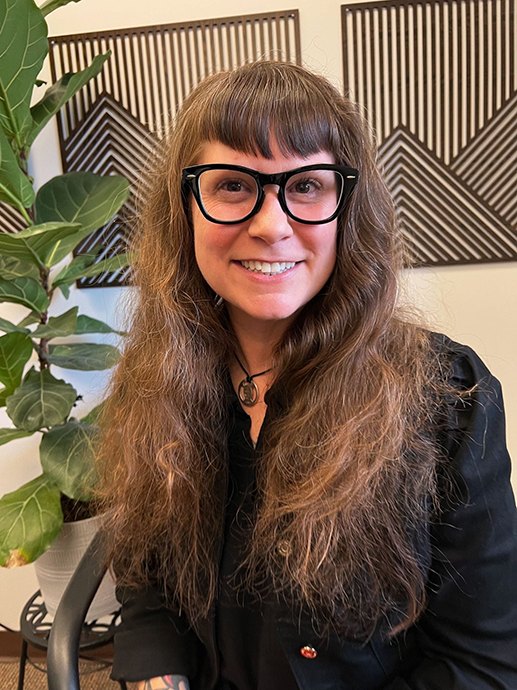
Corrie S. Moreau
Lecture title
Symbiosis and the Tree of Life: Piecing Together the Puzzle to Understand the Evolution of the Ants
Abstract
To truly understand the incredible diversity of life on Earth, today’s scientists combine traditional fieldwork with cutting-edge DNA and genomic tools. These approaches help us uncover how species form, how they are connected, and why protecting them matters.
In this talk, I’ll show how studying DNA allows us to trace the tree of life and reveals deep connections between ants and plants. For example, ants became major players in ecosystems after flowering plants rose to prominence. Genomic studies have also shown how living in close partnerships, or symbioses, can shape both behavior and the evolution of entire genomes.
We now know that ants’ remarkable traits—like the evolution of specialized soldier ants in turtle ant colonies—emerged through flexible developmental pathways. By combining diet studies with genetic analysis of ants’ gut microbes, we have discovered how bacteria helped ants adapt to plant-based diets. Even ants’ protective armor shows signs of being influenced by their microbial partners.
Together, these discoveries paint a richer picture of ant evolution and highlight the powerful role of symbiosis in generating and sustaining Earth’s biodiversity.
Biography
Dr. Corrie Moreau is the Moser Endowed Professor of Entomology and Ecology and Evolutionary Biology at Cornell University and Director and Head Curator of the Cornell University Insect Collection. Dr. Moreau earned her Ph.D. in Evolutionary Biology from Harvard University and for her postdoctoral work was a Miller Fellow at the University of California, Berkeley. Before this she completed her undergraduate and master's degrees at San Francisco State University.
Dr. Moreau’s work focuses on the evolution of species interactions and features a broad range of taxa including insects, plants, fungi, and microbes, especially those that symbiotically associate with ants. She couples tropical fieldwork with genomic tools to address the origin of species and how symbiotic systems evolve. She has been a leader in the field of insect phylogenetics, comparative genomic analysis of ant-plant interactions, biogeography and trait evolution, and insect-associated microbiomes to better understand broad-scale evolutionary patterns of life. She has published over 125 scientific papers, including 5 book chapters. In addition to her passion for scientific research, Dr. Moreau is also actively engaged with efforts to promote science communication and increase diversity and inclusion in the sciences.
Dr. Moreau has received numerous awards including being elected a Fellow of the Royal Entomological Society in 2021, a Fellow of the Entomological Society of America in 2020, a Fellow of the American Association for the Advancement of Science in 2018, a Kavli Fellow of the National Academy of Sciences in 2016, a National Geographic Explorer in 2014, and highlighted as a Woman of Impact by the National Geographic Society in 2018. In addition, she has one genus and three species named after her!
Moreau's profile page at Cornell University.
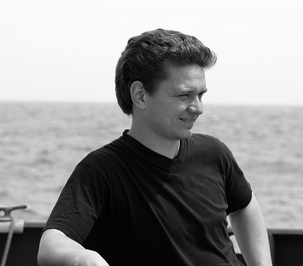
Torsten H. Struck
Lecture title
Assessing the Unknown – Digging into Marine Biodiversity
Abstract
When we think about animals, we usually have large-sized vertebrates in mind. However, by far the most part of animal diversity are not vertebrates and is not large. For example, of all animal species in Norway only 2% are vertebrates, but only 5% are assumingly unknown. In contrast, arthropods (including insects, spiders, and crustaceans) and other invertebrates comprise 75% and 23%, respectively. Of arthropods, we know about 79% of the species, while for the other invertebrates is only about half of them (54%). Additionally, a large proportion of animal occurs in the sea; only 2 out of the 32 animal phyla not occurring in it. Moreover, a large proportion are very small with less than a 1 cm in body length and are found in 24 of the phyla. In the marine realm, they can for example be found in the space between the sand grains of marine sediments like sandy beaches. However, even though they occur all over the world and often in high abundance, we know very little about them, even in well-studied countries like Norway.
In this presentation, I first will present these fascinating animals and their habitats. Then I will present modern research about them. This will include different biological aspects like their distribution around the globe, the species richness, their evolution and their genomes. I will thereby also highlight the potential they have for basic research such as taxonomy and evolutionary biology and for applied research such as habitat restoration and conservation. However, I will also address the challenges we are facing with them and point to possible ways forward. Hence, the presentation will be less conclusive and more exploratory, hopefully sparking further interest in these fascinating, but badly unknown animals.
Biography
Torsten Struck is Professor of Evolutionary Genomics and curator of the Invertebrate collection at the Natural History Museum of UiO. He received both his Diploma and Ph.D. at the University of Osnabrueck (Germany). He also held positions at Auburn University (US) and Zoological Research Museum Koenig (Germany). He was also for several years an Affiliated Assistant Professor at Auburn University.
His research focuses on the evolution of genomes and phenotypes and their stability as well as understanding the biodiversity and phylogeny of marine invertebrates. He is especially interested in annelids and meiofaunal taxa. His research determines the phylogeny and taxonomy to establish a reliable basis for comparative studies. This is based on different data sources and includes developing new bioinformatic tools. It investigates changes in the biodiversity through mapping projects and phylogeographic studies of species complexes. He investigates interesting groups like cryptic species for phenomena like morphological stasis using an integrative approach. Methodically, he is at the forefront using genome-scale even though working with non-model organisms.
His research was published in 79 manuscripts including 8 book chapters. This includes journals like Nature, TREE, Current Biology, Evolution, and Systematic Biology. It is already included into undergraduate and graduate textbooks like Campbell or Brusca & Brusca. Moreover, his research was already early on supported by fellowships including the competitive Heisenberg fellowship. Struck has also an active outreach profile by contributing to blogs (blog.annelida.de) and writing popular science articles.
Struck's page at the University of Oslo.