
PhD candidate
Research group | Deep Earth (CEED)
Main supervisor | Razvan Caracas
Co-supervisor | Carmen Gaina
Affiliation | Department of Geosciences, UiO
Contact | anaanz@uio.no
Short bio
2022 - Present: Ph.D. Research Fellow, CEED, University of Oslo
- By combining geosciences background and computational skills, I apply machine learning to problems in geochemistry.
2019 - 2022: Master’s degree in Geosciences, University of Zagreb
- In my master thesis I sampled metamorphic rocks in East Serbia and analyzed them to write a petrological and geochemical study with implications for tectonic setting of the area.
Research interests and hobbies
My research interests revolve around applying computational mineral physics to better understand the functioning of planetary interiors. I will employ machine learning to build a deep learning based model of interatomic potential energy and force fields which will allow to simulate larger systems in a computationally more efficient way.
In my leisure time I like to read, play volleyball, and enjoy all sorts of outdoor activities, most notably cycling and hiking.
CompSci project
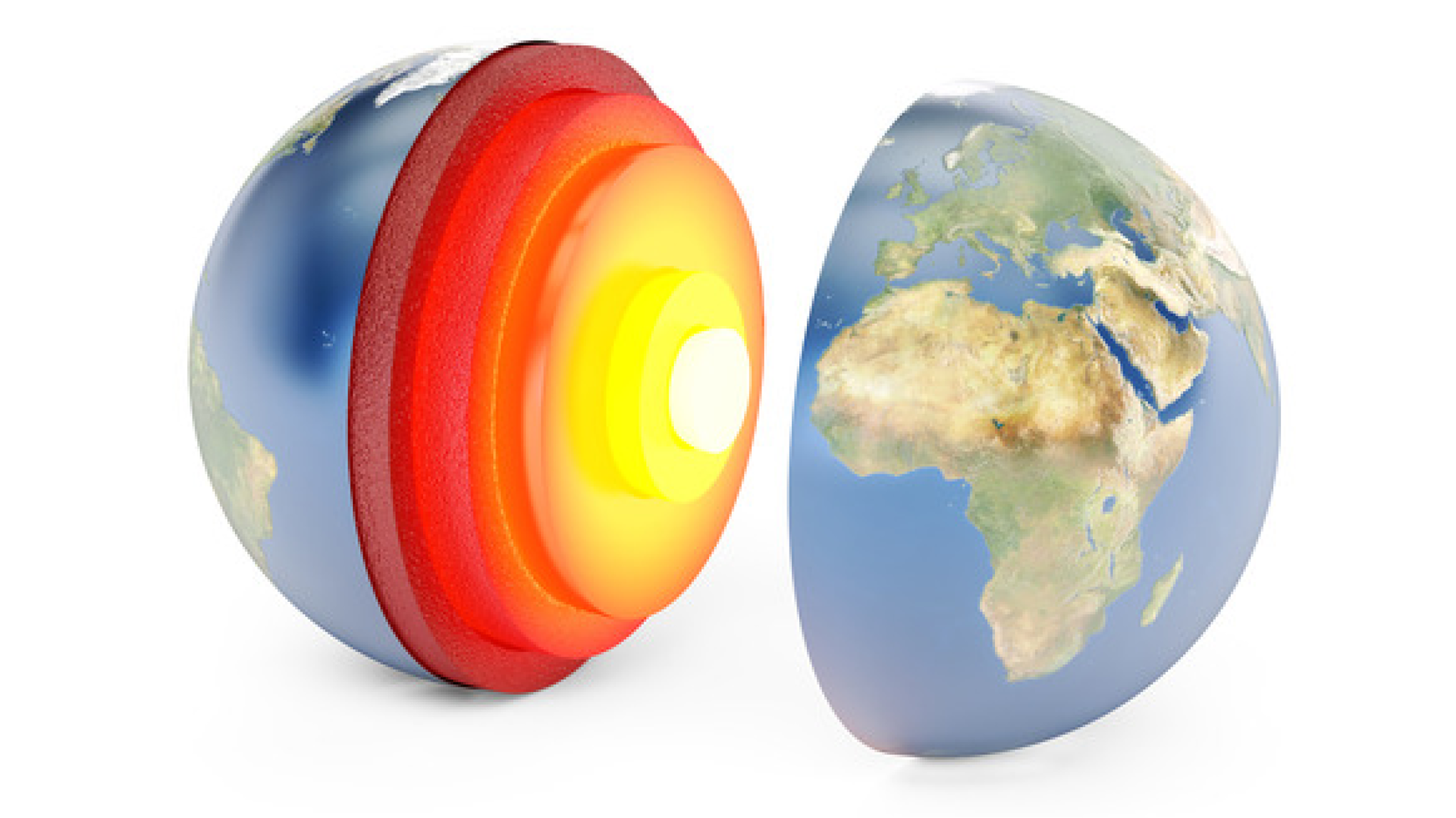
Modelling impact of melts on mantle diffusion and viscosity with geodynamic implications
In this project both the first principles and the reactive force fields molecular dynamics will be used to simulate silicate melts and analyze their structural and dynamical properties. The focus of the project is on kimberlites, ultramafic magmas rich in volatiles, associated with the large igneous provinces and the breakup of supercontinents. The deep-seated mantle source of kimberlites makes them a valuable source of information about the mantle. We will analyze their chemical speciation, and the buoyancy relations to the surrounding mantle. After determining their transport properties, i.e. diffusion and viscosity, this information will be used to understand their geological setup. We will integrate the computed physical properties of the melts into large-scale modeling of tectonic processes, correlate their eruptions with continental cycles, and interpret gravimetric isostasy data.
Doctoral thesis
Volatile control on kimberlite melt structure, density, and viscosity: Atomistic study with implications for kimberlite volcanism
The way a magma erupts is largely controlled by its volatile content, primarily carbon dioxide (CO₂) and water. This is particularly true for volatile-rich kimberlite magmas, which originate deep in the upper mantle beneath thick, cool continental lithosphere. Kimberlites are known for their rapid ascent and ability to transport mantle fragments to the surface; these characteristics make them the natural transport mechanism and primary host rocks of diamonds. As kimberlite magmas no longer erupt, our understanding of their volcanism relies on studying the altered rocks explosively emplaced in carrot-shaped volcanic pipes.
To investigate the drivers of kimberlite volcanism, Ana Anzulović has developed an atomistic model of a kimberlite melt. The findings in the doctoral thesis work indicate that the deciding factor for a successful eruption is magma’s CO₂ content; at least 8.2 wt% is required for the melt to reach the surface.
Simulting melt chemistry shows that carbon plays a dual role. At high pressure, it polymerizes the melt structure, but at lower pressure, it exsolves from the melt, driving vaporization. Both carbon and water lower the melt's density and viscosity, but water has a particularly strong depolymerizing effect, making the melt highly mobile.
Publications
CompSci publications
- Ana Anzulović, Anne H. Davis, Carmen Gaina, and Razvan Caracas (2025) “Buoyancy of volatile-rich kimberlite melts, magma ascent, and xenolith transport” Geology 53, 919-923
https://doi.org/10.1130/g53387.1 | Full text in Research Archive - Ana Anzulović, Anne H. Davis, and Razvan Caracas (2025) “Chemical speciation and structure of kimberlite melts from ab initio molecular dynamics simulations” Geochimica et Cosmochimica Acta 410, 203-217
https://doi.org/10.1016/j.gca.2025.10.016 | Full text in Research Archive - James K. Russell, Kai-Uwe Hess, Ana Anzulović, and Donald B. Dingwell (2025) “Basalt melts under pressure: Is there really a viscosity minimum?” Chemical Geology 695, 123051
https://doi.org/10.1016/j.chemgeo.2025.123051 | Full text in Research Archive
Previous publications
None.
