
PhD candidate
Research group | Meteorology
Main supervisor | Nikki Vercauteren
Co-supervisor | Terje Koren Berntsen
Affiliation | Department of Geosciences, UiO
Contact | amandine.kaiser@geo.uio.no
Short bio
Since 2021: Ph.D. Research Fellow, Dept. of Geosciences, University of Oslo
2019 – 2021: Data Manager, German Climate Computing Center
2019: Research Assistant, Dept. of Mathematics and Computer Sciences, Freie Universität Berlin
2016 – 2019: Master of Science, Institute of Mathematics, Technische Universität Berlin
Research interests and hobbies
My research interests include processes in the atmospheric boundary layer, atmospheric turbulence, and land-atmosphere interactions. By combining methods from statistical modelling, dynamical systems, numerical analysis, and machine learning I aim to further understand regime transitions in the atmospheric boundary layer.
CompSci project
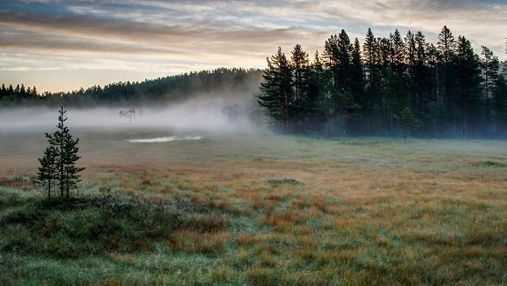
Modelling microscale atmospheric turbulence in the surface layer
The atmospheric boundary layer (BL) is the part of the troposphere that is directly affected by the Earth's surface. It is in this region that we live and where most human activities take place. Detailed knowledge of the processes occurring in the BL is extremely important and of great interest for various fields of research since many of these processes directly or indirectly affect our lives.
One of the main features of the BL is the change of its structure with the diurnal cycle. As the night progresses, contact with the ground transforms the lower part of the residual layer into a stable boundary layer (SBL). Generally, a stable stratification forms in the boundary layer due to the advection of warm air over a colder surface. As a result of long-wave radiative cooling, a stably stratified boundary layer often forms at night over land, where it is called the nocturnal boundary layer (NBL), or under Arctic conditions due to the presence of cold snow and the ice surface.
The dynamics in the SBL are very complex and therefore difficult to describe and model. Nevertheless, there are several approaches. These approaches are generally based on the identification of several regimes of dynamics in the SBL. A subdivision of these is often made into weakly stable and very stable regimes.
The overall goal for my Ph.D. thesis is to study the transitions between these two regimes or more generally the reaction of the BL to transient phenomena. I will investigate the role of seemingly random, small-scale, natural fluctuations of atmospheric processes in triggering regime transitions in the SBL. For this purpose, I will extend a numerical single-column model of the SBL to include stochastic perturbations of the wind field and cloud cover. This computational tool will be used as a basis to investigate noise-induced regime transitions in the SBL.
Doctoral thesis
Exploring stable atmospheric boundary layer regimes: a stochastic perspective conceptual and numerical study on regime transitions, turbulence parameterizations and model uncertainties
Accurately modeling the stably stratified atmospheric boundary layer (SBL) is crucial for reliable weather forecasts and climate projections, particularly in polar regions. Despite its importance, current numerical weather prediction and climate models have issues with the representation of SBL regimes and transitions between them, leading to errors such as excessive mixing or runaway cooling in the stable regime.
This thesis and doctoral work by Amandine Kaiser address these challenges by investigating the factors driving SBL regime transitions and proposing ways to improve their representation in numerical models. Results show that small-scale transient phenomena play a key role in driving regime transitions and can be effectively incorporated through perturbed tendencies or stochastic parameterizations. Furthermore, an analysis of observational data reveals that the noise structure in the temperature inversion strength varies between SBL regimes, highlighting the need for regime-dependent stochastic approaches. In conclusion, this research provides new strategies for advancing SBL modelling.
Publications
CompSci publications
- Amandine Kaiser, Nikki Vercauteren, and Sebastian Krumscheid (2024) “Sensitivity of the polar boundary layer to transient phenomena” Nonlinear processes in geophysics 31 (1) 45–60
https://doi.org/10.5194/npg-31-45-2024 | Full text in Research Archive - Amandine Kaiser, Nikki Vercauteren, and Sebastian Krumscheid (2025) “Capturing the variability of the nocturnal boundary layer through localized perturbation modeling” Journal of the Atmospheric Sciences 82 (1) 119–138
https://doi.org/10.1175/JAS-D-24-0036.1 | Full text in Research Archive
Previous publications
- Ganske, A., Heydebreck, D., et al. (2020) ‘A short guide to increase FAIRness of atmospheric model data’, Meteorologische Zeitschrift, pp. 483–491. doi:10.1127/metz/2020/1042.
- Ganske, A., Kraft, A., et al. (2020) ‘ATMODAT Standard (v3.0)’. World Data Center for Climate (WDCC) at DKRZ. doi:10.35095/WDCC/atmodat_standard_en_v3_0.
- Ganske, A. et al. (2021) ‘EASYDAB (Earth System Data Branding) for FAIR and Open Data’. EGU General Assembly 2021, online, 19–30 Apr 2021. doi:10.5194/egusphere-egu21-2139.
- Ganske, A., Kaiser, A. and Kraft, A. (2020) ‘Warum und wie Sie Klimamodelldaten veröffentlichen sollten’. 12. Deutsche Klimatagung, online, 15 March–18 Mar 2021, DKT-12-7. doi:10.5194/dkt-12-7.
- Gehlen, K.P. et al. (2021) ‘Applying FAIRness evaluation approaches to (meta)data preserved at the World Data Center for Climate (WDCC): results, lessons learned, recommendations’. EGU General Assembly 2021, online, 19–30 April 2021. doi:10.5194/egusphere-egu21-12560.
- Kaiser, A. (2016) Stably Stratified Atmospheric Boundary Layers: Event Detection and Classification for Turbulent Time Series. Bachelor Thesis. Freie Universität Berlin. Available at: http://publications.imp.fu-berlin.de/2340/1/Bachelorarbeit.pdf
- Kaiser, A. (2019) Data-driven approaches to study the dynamical stability of the stably stratified boundary layer. Master Thesis. Technische Universität Berlin. Available at: http://publications.imp.fu-berlin.de/2361/1/Masterarbeit.pdf
- Kaiser, A. et al. (2020) ‘Detecting Regime Transitions of the Nocturnal and Polar Near-Surface Temperature Inversion’, Journal of the Atmospheric Sciences, 77(8), pp. 2921–2940. doi:10.1175/JAS-D-19-0287.1.
- Lammert, A. et al. (2021) ‘A Standard for the FAIR publication of Atmospheric Model Data developed by the AtMoDat Project’. EGU General Assembly 2021, online, 19–30 April 2021. doi:10.5194/egusphere-egu21-8144.
- Nevo, G. et al. (2017) ‘Statistical-mechanical approach to study the hydrodynamic stability of the stably stratified atmospheric boundary layer’, Physical Review Fluids, 2(8), pp. 1–14. doi:10.1103/PhysRevFluids.2.084603.
- Vercauteren, N. et al. (2019) ‘Statistical Investigation of Flow Structures in Different Regimes of the Stable Boundary Layer’, Boundary-Layer Meteorology, 173(2), pp. 143–164. doi:10.1007/s10546-019-00464-1.
