Previous events - Page 25

Turning a promising discovery into an approved medicine is as much about strategy and compliance as it is about science.
Francesco Pietro Massel, FI & USN
Weekly Theory Seminar.

This spring researchers at the Department of Biosciences are offered in-house innovation guidance from the UiO Growth House.

Welcome to the GeoWednesday talk "The secret world of Seamounts", by Professor Carmen Gaina from Centre for planetary habitability, University of Oslo.
The talk will be given by Maria Elena:
High-fidelity quantum state preparation is fundamentally limited by non-unitary dynamics and environmental decoherence. While gradient-based Optimal Quantum Control methods—such as GRAPE—are effective for unitary evolution, they often encounter significant computational bottlenecks when integrated with the Lindblad Master Equation in high-dimensional Hilbert spaces. In this talk, we present AI-based frameworks designed to autonomously discover control protocols in dissipative environments and also some results.
Maria Elena is a PhD student at UiA working with Prof. Francesco Massel at USN.

Welcome to a trial lecture by Oliver Pabst!
Late Lunch Talk by Bin Sun (CEES)

Hylleraas seminar, hosted in Tromsø

Doctoral candidate Huiling You at the Department of Informatics, Faculty of Mathematics and Natural Sciences, is defending the thesis Event Extraction from News: Resources, Methods and Application for the degree of Philosophiae Doctor.
Welcome to our GeoHyd Lunch Seminar on Friday 30rd of January @ 12:15 in Aud. 1 in the Geology Building. The seminar is held by Andreas Kääb and Juditha Aga (University of Oslo).

Do you wish there were more opportunities to sit down with students and colleagues to talk about education? And discuss with experts on Educational Development as well?
Then we are excited to invite YOU to two student-staff workshops that are part of the iEarth Co-Creation Forum!

Doctoral candidate Gerald Leo Decelles Ill at the Department of Geosciences, Faculty of Mathematics and Natural Sciences, is defending the thesis Exploring the features and impact of student-staff partnerships in learning and teaching for the degree of Philosophiae Doctor.
To each matroid we associate a class in the Chow ring of the Grassmannian. We develop a new combinatorial approach for computing these Chow classes, by first focusing on snake matroids and then extending our results via valuativity to Lattice path matroids, and further to any matroid. Our main contribution identifies the Poincaré dual of the Chow class of a snake matroid with a specific ribbon Schur function, providing an explicit formula for its coefficients in the Schubert basis as the number of standard Young tableaux of a given shape with a prescribed descent set. As consequences, we recover and simplify classical results such as Gessel--Viennot’s enumeration of permutations with fixed descent sets, and formulas for the volume of lattice path matroids. Furthermore, we use our results to show that certain Schubert coefficients are positive for all connected paving matroids.
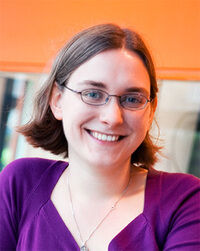
Title: Global warming and Statistics: A statisticians view of the surge in warming debate
Speaker: Rebecca Killick, Lancaster University

Lots of research data have a high reuse value and should be preserved after the project is finished, but not all of them can be shared openly. Join us for this Open Science Lunch to learn from FEGA Norway for archiving omics data that need restricted access.
We invite you to the January RoCS Solar/Stellar Lunch. You are invited to discuss your work with colleagues.

Doctoral candidate Jonas Gahr Sturtzel Lunde at the Institute of Theoretical Astrophysics, Faculty of Mathematics and Natural Sciences, is defending the thesis "Mapping the large-scale Universe with COMAP and Commander4" for the degree of Philosophiae Doctor.

Doctoral candidate Lewis Raymond Williams at the Department of Technology Systems, Faculty of Mathematics and Natural Sciences, will be defending the thesis:
"Deployable Antennas For Small Spacecraft: Broadband UHF antennas for New Space"
Silvia Lucia Correa Angel, FI & UFRN Natal
Weekly Theory Seminar.

by Elisa Piispa
University of Iceland

What does it take to take project from academia, hospital or the institute sector to a successful start-up; and how do you develop a start-up into a scale-up. What funding sources are out there; and how do you make an investor notice you?
We start with a quantum sensing theory workshop led by Francesco Massel.

Rebecca Killick received their PhD degree in Statistics from Lancaster University, where they hold Professor and Director of Research positions. In 2019 they were the first UK recipient of the “Young Statistician of the Year” award from the European Network for Business and Industrial Statistics which recognizes the work of young people in introducing innovative methods, promoting the use of statistics and/or successfully using it in daily practice. Rebecca sees their research as a feedback loop, being inspired by problems in real world applications, creating novel methodology to solve those problems and then feeding these back into the problem domain. Their primary research interests lie in development of novel methodology for the analysis of univariate and multivariate nonstationary time series models. This covers many topics including developing models, model selection, efficient estimation, diagnostics, clustering and prediction. Rebecca is highly motivated by real world problems and has worked with data in a range of fields including Bioinformatics, Energy, Engineering, Environment, Finance, Health, Linguistics and Official Statistics. Rebecca is passionate about ensuring the availability and accessibility of research in the form of open-source software. As part of this they advocate to the statistical community the importance of recognition of research software as an academic output, are co-Editor in Chief of the Journal of Statistical Software and a member of the rOpenSci statistical software peer review board.
Colour of sex - Investigating a possible relationship between flower colour and reproduction strategy in Arctic flowering plants.