Previous events - Page 31

PhD candidate Katariina Mamia at the Department of Biosciences will give a trial lecture on 'Haemopoetic stem cells as cause of cancer' as part of the disputation.

Doctoral candidate Ove Westermoen Haugvaldstad at the Department of Geosciences, Faculty of Mathematics and Natural Sciences, is defending the thesis Drivers and impacts of windblown dust in a changing climate for the degree of Philosophiae Doctor.
Combining Traditional Image Analysis and Deep Learning for Enhanced Atg8 Spot Analysis in Autophagy Research
The NorMIC workshop series aims to teach biological researchers the principles of biological microscopy and image processing.

Title: The atmospheric dust cycle: From small-scale processes to large-scale impacts
Speaker: Kerstin Schepanski, Freie Universität Berlin

Doctoral candidate Hoa Thi Nguyen at the Department of Informatics, Faculty of Mathematics and Natural Sciences, is defending the thesis Continuous Learning and Adaptation in Autonomic Systems for Industrial Applications for the degree of Philosophiae Doctor.

Electric Wind: An Energy History of Modern Britain
For invited people.

Rich is a geologist, specialising in geochronology, geochemistry and microanalysis. He is currently working at Zeiss Microscopy in Cambridge, UK.
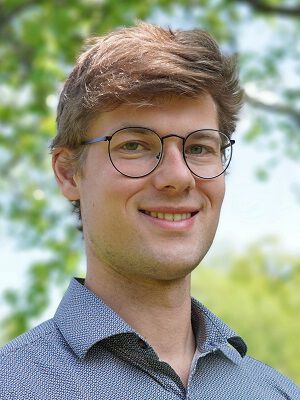
Hylleraas seminar, hosted in Oslo
Welcome to our GeoHyd Lunch Seminar on Friday 21th of November @ 12:15 in Aud. 2 in the Geology Building. The seminar is held by Federico Covi (UiO).

Ambre Bouillant is a CNRS researcher, interested in phenomena that lie at the frontier between phase transitions, interfacial phenomena, and viscoelasticity. Her previous researches, mainly experimental, were focusing on the Leidenfrost effect, thermo-capillary stabilisation of thin films, the coalescence of viscoelastic droplets, and the condensation of vapours on deformable surfaces.

Welcome to a seminar for employees who will work in the Life Science Building.
Velkommen til seminar for deg som skal ha Livsvitenskapsbygget som arbeidssted.
C*-seminar by Are Austad (University of Oslo).

Title: Detection of structural deficiencies in a global aerosol model to explain limits in parametric uncertainty reduction
Speaker: Léa Prévost, University of Leeds

Welcome to this week's lunch seminar with DSTrain Postdoctoral Fellow Jonathan Goldenberg. He will present the SHARKSense project, which investigates whether shark skin darkness can serve as a simple, non-invasive indicator of pollution and ecosystem health.

Jonas Wallin is an Associate Professor of statistics in the Department of Statistics at Lund University in Sweden. He is a mathematical statistician working with spatial statistics, Gaussian processes, optimisation and high dimensional regularisation.

PhD candidate Laurent Fontaine at the Department of Biosciences, Faculty of Mathematics and Natural Sciences, is defending the thesis 'Statistical Analysis and Modeling of Microbial Communities in Aquatic Ecosystems' for the degree of PhD.

Doctoral candidate Katherine Wyers at the Department of Informatics, Faculty of Mathematics and Natural Sciences, is defending the thesis Information Infrastructural Violence - A Critical, Intersectional Study of the Consequences of Gender Recategorization in Government Information Infrastructures for the degree of Philosophiae Doctor.

PhD candidate Laurent Fontaine at the Department of Biosciences will give a trial lecture on 'The use of microbial indicators in aquatic sciences: from pollution tracking to ecosystem health' as part of the disputation.
Joakim Bergli:
Quantum synchronization is often studied using a master equation, typically the Lindblad equation. This gives the time evolution of the density matrix. If we study the response to a periodic external signal, synchronization is detected by a steady state density matrix that is in phase with the external signal.
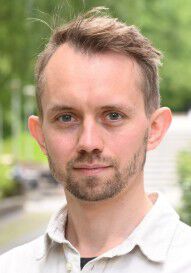
Students use AI. This can be beneficial, but it also creates challenges in the classroom. Careless use of AI can make students expose their sensitive data, bypass their own learning and harm their teachers' trust. Teachers see these risks, but lack the time explore AI tools themselves and develop effective pedagogy.

This talk details how we have come to understand the microbial ecosystem in sewage conveyance systems and the ways we use this information to track pollution in surface waters, identify risk and opportunity for wastewater treatment, and determine the role of urban wastewater systems in antimicrobial resistance dissemination.